Best Puppy Teething Toys 2026: Psychology & Pain Relief
Discover the psychology behind puppy chewing and explore the best teething toys of 2026 to soothe pain, redirect behavior, and support brain development.
The Psychology of Puppy Chewing: Why They Destroy Everything
Welcome to the chaotic, heartbreaking, and entirely natural phase of puppyhood: teething. If you are reading this in 2026, you likely have a puppy between the ages of three and six months who has decided your favorite shoes, the baseboards, and your own fingers are the perfect chew toys. While it is easy to view this behavior as mere destruction, veterinary behaviorists and canine psychologists urge us to look deeper. Teething is not just a physical milestone; it is a profound neurological and psychological event. Understanding the 'why' behind your puppy's insatiable need to gnaw is the first step toward saving your furniture and supporting your dog's cognitive development.
The timeline of canine dental development is a rapid and often uncomfortable process. Puppies are born without teeth. By the time they are three to four weeks old, their deciduous teeth, commonly known as milk teeth, begin to erupt. Around three to four months of age, the adult teeth start pushing through the gums, forcing the baby teeth out. By six months, most dogs have their full set of 42 adult teeth. This transition is incredibly painful. The gums become inflamed, swollen, and highly sensitive. From a psychological standpoint, chewing provides immediate counter-pressure to the gums, which temporarily alleviates the throbbing pain of erupting teeth. Furthermore, the act of chewing stimulates the release of endorphins and dopamine in the canine brain. This neurochemical reward system reinforces the chewing behavior, turning it into a vital self-soothing mechanism.
How the Right Teething Toy Shapes Canine Behavior
In 2026, the paradigm of canine enrichment has shifted significantly. We now understand that a successful teething toy must engage multiple senses to hold a puppy's attention and provide genuine psychological satisfaction. Puppies explore their environment primarily through their olfactory and gustatory systems, combined with tactile feedback from their mouths. A toy that is visually appealing to a human but lacks scent, flavor, or textural variety will quickly be abandoned in favor of a wooden table leg, which offers complex resistance and interesting tastes.
The best teething toys on the market today are designed with proprioceptive feedback in mind. Proprioception is the body's ability to perceive its own position in space and the amount of force being exerted. When a puppy bites down on a toy with the correct density and yield, the sensory receptors in their jaw joints and periodontal ligaments send calming signals to the brain. According to the American Veterinary Medical Association (AVMA), hard plastics, antlers, or real bones are strongly discouraged by modern veterinarians. They lack the appropriate 'give' and can cause micro-fractures in developing teeth, leading to long-term dental anxiety, chronic pain, and expensive veterinary interventions.
Top Teething Toys of 2026: Matched to Canine Instincts
1. KONG Puppy (Classic Pink/Blue Rubber)
The KONG Puppy Toy remains a cornerstone of canine behavioral therapy in 2026. Available in softer pink and blue rubber formulations specifically designed for developing jaws, the KONG addresses several psychological needs simultaneously. First, its unpredictable bounce pattern engages the puppy's predatory chase instinct, providing mental stimulation that tires them out just as effectively as physical exercise. Second, its hollow center allows for 'stuffing,' which taps into the dog's natural foraging and scavenging instincts. By filling the KONG with puppy-safe peanut butter, plain yogurt, or soaked kibble and freezing it, you create a multi-sensory puzzle. The freezing process provides cryotherapy, numbing inflamed gums, while the act of licking and digging out the food releases sustained dopamine, keeping the puppy engaged in a calm, focused state for extended periods.
2. Benebone Puppy Wishbone
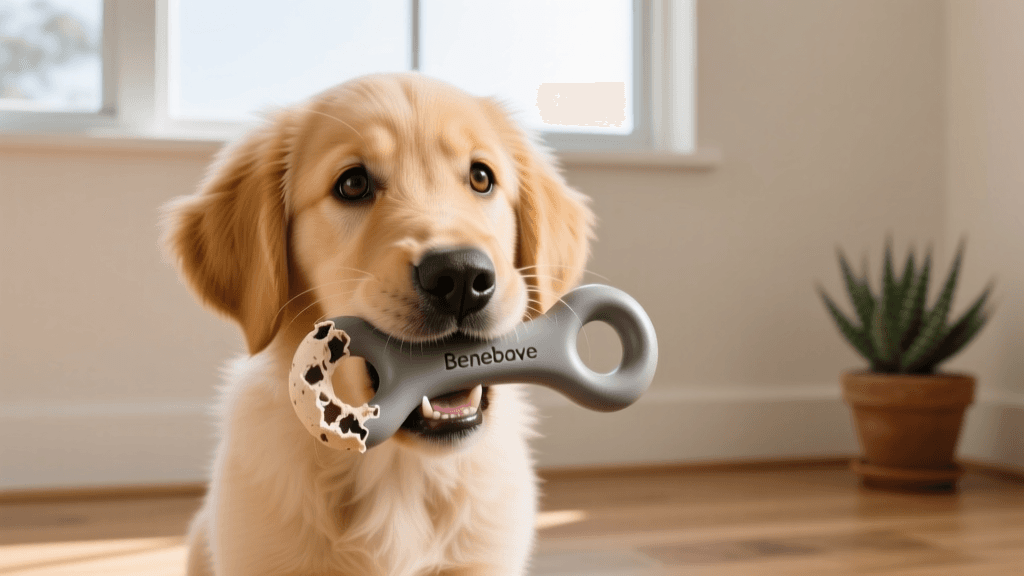
The Benebone Puppy Wishbone represents a triumph in ergonomic toy design. Unlike traditional stick-shaped chews that require a puppy to chase them across the floor, the Wishbone features a curved, paw-friendly design. This allows the puppy to pin the toy down with their front paws while gnawing, perfectly mimicking the natural predatory sequence of 'catch, kill, hold, and consume.' This ergonomic advantage reduces physical frustration and allows the puppy to enter a deep state of flow. Infused with real, sustainably sourced bacon or chicken flavoring throughout the nylon, the Benebone engages the olfactory system continuously. The texture is firm enough to scrape away plaque and massage the gums but engineered with a slight yield to protect the fragile enamel of emerging adult teeth.
3. Nylabone Puppy Chew Freezer Bone
For puppies experiencing severe gum inflammation, the Nylabone Puppy Chew Freezer Bone offers targeted physiological relief. This toy features a softer, thermoplastic polymer center surrounded by a slightly more textured outer ring. The core is designed to be soaked in water or low-sodium chicken broth and frozen. The psychological benefit here is rooted in immediate pain mitigation. The cold temperature constricts blood vessels in the gums, reducing swelling and numbing the nerve endings. As the puppy chews, the textured nubs gently massage the gum line, helping to loosen stubborn baby teeth that are ready to fall out. This dual-action approach addresses both the physical discomfort and the psychological irritation that often leads to destructive chewing sprees.
Comparison Chart: 2026 Teething Toys & Behavioral Benefits
| Toy Model | Primary Behavioral Benefit | Texture & Yield | Best For |
|---|---|---|---|
| KONG Puppy (Classic) | Foraging instinct & mental fatigue | Soft rubber, high yield | Food-motivated puppies needing distraction |
| Benebone Puppy Wishbone | Predatory hold & flow state | Infused nylon, moderate yield | Determined gnawers with strong jaw drive |
| Nylabone Freezer Bone | Pain mitigation & cryotherapy | Thermoplastic core, textured nubs | Puppies with severe gum inflammation |
Reading Your Puppy’s Body Language During Chewing
Understanding your dog requires keen observation of their body language while they interact with these toys. A puppy who is successfully self-soothing with a teething toy will display relaxed body posture. Their ears will be in a neutral or slightly back position, their eyes will be soft or half-closed, and they may lie on their side or stomach with their hind legs stretched out. You might hear rhythmic, contented gnawing or deep, relaxed sighs. This indicates that the toy is successfully fulfilling their neurological need for counter-pressure and dopamine release.
Conversely, if the toy is not providing the right sensory feedback, or if the puppy's pain is too severe, you will see signs of frustration. These include 'whale eye' (showing the whites of their eyes), stiff body posture, pinned-back ears, frantic chewing followed by sudden abandonment of the toy, or low-pitched whining. If you observe these stress signals, it is time to intervene, perhaps by offering a frozen alternative or engaging them in a different calming activity like a snuffle mat or gentle massage.
Safety Protocols and Redirection Strategies
According to the ASPCA, managing destructive chewing is primarily about supervision and redirection. Never leave a teething puppy unattended with any chew toy, regardless of the brand's durability claims. Puppies have incredibly sharp, scissor-like teeth that can sheer off pieces of rubber or nylon, posing a severe choking or intestinal blockage hazard.
When you catch your puppy chewing on an inappropriate item, avoid punitive measures, which only increase anxiety and exacerbate the need for self-soothing. Instead, use the 'trade-up' method. Offer a high-value teething toy, such as a freshly stuffed and frozen KONG, and praise them enthusiastically when they release the forbidden object. Furthermore, as your puppy grows and their adult teeth fully set, you must transition them to adult-formulation toys. A toy that was perfectly safe for a three-month-old puppy may become a choking hazard for a six-month-old adolescent with a fully developed bite force. Regularly inspect all toys for signs of wear, deep grooves, or missing chunks, and replace them immediately to ensure ongoing safety.
Conclusion
Navigating the teething phase requires patience, empathy, and the right tools. By understanding the profound psychological and physiological drivers behind your puppy's chewing behavior, you can transform a frustrating developmental stage into an opportunity for bonding and cognitive enrichment. The best teething toys of 2026 are not just distractions; they are vital instruments for pain relief, sensory exploration, and behavioral shaping. Equip yourself with knowledge, stock up on multi-sensory chews, and guide your puppy through this milestone with confidence and compassion.
anouk-beaumont
All our authors care for dogs every day — read more of their work on the authors page.