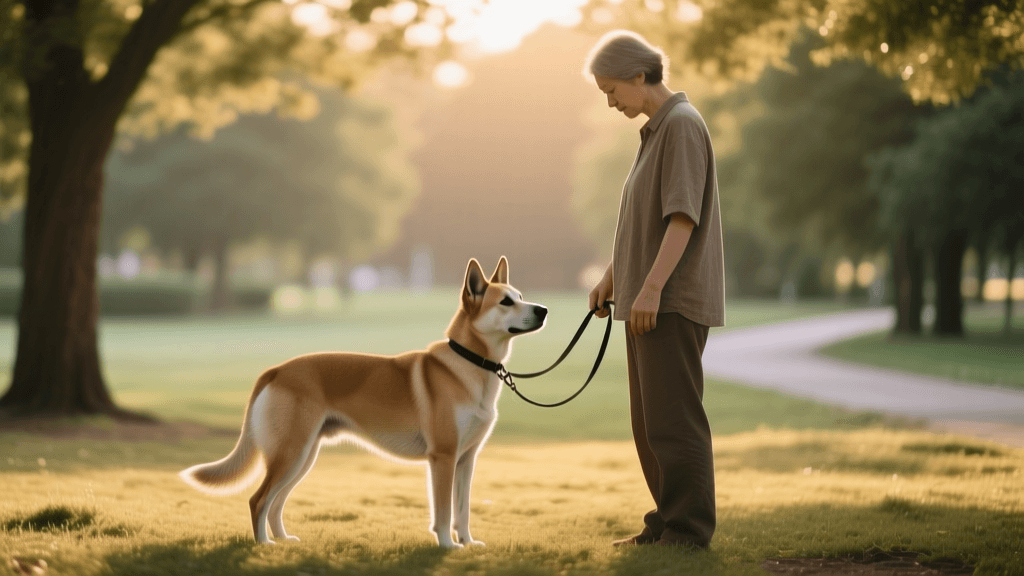
Dog Leash Reactivity: Diagnosing Fear vs Frustration
Is your dog reactive on leash? Learn how to diagnose fear versus frustration and apply targeted, actionable training solutions to restore peaceful walks.

The Complex Psychology of Leash Reactivity
Leash reactivity is one of the most common, yet deeply misunderstood, behavioral issues in modern dog ownership. Characterized by barking, lunging, growling, or pulling intensely when encountering other dogs, people, or vehicles, reactivity can turn a simple daily walk into a stressful ordeal. However, treating all reactive dogs with the same blanket training methods is a recipe for failure. To effectively solve the problem, owners must first become amateur behaviorists, diagnosing the underlying emotional driver of the outburst.
According to the American Kennel Club, leash reactivity is rarely born out of genuine malice or a desire to cause harm. Instead, it is almost always rooted in one of two distinct psychological states: fear-based anxiety or barrier frustration. Misdiagnosing a fearful dog as a frustrated dog can lead to flooding and increased trauma, while misdiagnosing a frustrated dog as a fearful one can result in missed opportunities to build impulse control. Understanding the nuance between these two emotional states is the critical first step toward rehabilitation.
Diagnosing the Root Cause: Fear vs. Barrier Frustration
To accurately diagnose your dog's reactivity, you must observe their body language before, during, and immediately after the reactive episode. Canine communication is subtle, and the leash itself acts as a physical and psychological barrier that alters how a dog processes environmental stimuli.
Fear-Based Reactivity (Distance-Increasing)
A fearful dog is reactive because they feel trapped. The leash restricts their natural flight response, forcing them into a 'fight' display to make the scary stimulus go away. Their primary goal is to increase the distance between themselves and the trigger. Veterinary behaviorists at VCA Animal Hospitals note that fearful dogs will often display submissive or appeasement signals before escalating to defensive aggression if their warnings are ignored.
Frustration-Based Reactivity (Barrier Frustration)
Conversely, a frustrated dog is reactive because they desperately want to approach the trigger but are physically restrained by the leash. This is often seen in highly social dogs who lack impulse control. The leash creates a barrier that builds psychological pressure, resulting in an explosive outburst of barking and pulling. Their primary goal is to decrease the distance to the trigger to initiate play or greeting.
Body Language Comparison Chart
| Behavioral Marker | Fear-Based Reactivity | Frustration-Based Reactivity |
|---|---|---|
| Ear Position | Pinned flat back against the skull | Pricked forward or swiveling toward trigger |
| Tail Carriage | Tucked tightly between legs or stiff and low | High, stiff, or wagging in a rapid, wide arc |
| Body Posture | Weight shifted backward, crouching, or leaning away | Weight shifted forward, chest puffed, pulling into harness |
| Post-Encounter | Shakes off, hides behind owner, refuses treats | Whines, paws at owner, immediately seeks to chase/greet |
| Off-Leash Behavior | Submissive, avoids other dogs, or snaps defensively | Playful, overly exuberant, ignores recall commands |
Problem-Solving Fear-Based Leash Reactivity
If your diagnosis points to fear, your training protocol must focus on desensitization and counter-conditioning (DS/CC). The goal is to change the dog's emotional response to the trigger from 'threat' to 'predictor of good things.'
Step 1: Establish the Sub-Threshold Distance
You must find your dog's 'threshold'—the exact distance at which they notice the trigger but do not react. For some dogs, this is 50 feet; for others, it is 150 feet. If your dog is barking, you are too close, and learning has shut down. Begin your training sessions at a distance where your dog can observe the trigger while still willingly eating high-value treats.
Step 2: The Engage/Disengage Game
This protocol requires precise timing. When your dog looks at the trigger (Engage), mark the behavior with a verbal 'Yes!' or a clicker within 0.5 seconds. When they turn their head back to you for the reward (Disengage), deliver a high-value treat. Over a period of 3 to 6 weeks of consistent daily practice, the dog learns that seeing a strange dog means they should immediately look at their owner for a payout, rather than panicking.
'Punishing a fearful dog for growling or barking on leash is like punishing a smoke alarm for beeping. You may suppress the noise, but the fire—the underlying fear—remains and will eventually escalate into a bite without warning.' — Certified Applied Animal Behaviorists
Problem-Solving Frustration-Based Leash Reactivity
If your dog is frustrated, DS/CC will not solve the problem because the dog is not afraid; they are simply throwing a tantrum because they cannot get what they want. The ASPCA emphasizes that barrier frustration requires rigorous impulse control training and boundary setting.
Step 1: The '1-2-3' Walking Method
To teach a frustrated dog to walk calmly, you must remove the reward of forward momentum when they pull. Use a structured counting method. When the leash is loose, count out loud: 'One, two, three,' and deliver a treat at your hip. If the dog pulls toward another dog, stop immediately. Do not speak. Wait for the leash to slacken, then resume counting. This teaches the dog that a loose leash is the only key that unlocks forward movement.
Step 2: 'Sit to Say Please' Protocol
Frustrated dogs lack emotional regulation. Implement a 'Nothing in Life is Free' protocol at home. Before receiving meals, treats, or door access, the dog must offer a calm, seated position. This builds the neural pathways required for impulse control, which will eventually translate to their behavior on the leash when they see another dog.
Essential Gear and Cost Breakdown for Rehabilitation
Using the correct equipment is vital for safety and clear communication. Avoid retractable leashes and choke chains, which increase tension and exacerbate both fear and frustration. Below is a recommended gear list with estimated costs to set up a successful training environment.
| Equipment | Purpose | Estimated Cost |
|---|---|---|
| Front-Clip Harness (e.g., Freedom No-Pull or Rabbitgoo) | Redirects forward momentum safely without choking; essential for frustrated pullers. | $30 - $45 |
| Fixed-Length Biothane Leash (6 to 8 feet) | Provides consistent boundary feedback; waterproof and easy to clean. | $25 - $40 |
| High-Value Treat Pouch (e.g., Doggone Good Train Away) | Allows for 0.5-second reward delivery timing; keeps hands free. | $20 - $30 |
| High-Value Training Treats (e.g., Ziwi Peak Beef or boiled chicken) | Necessary for counter-conditioning fear; must be more enticing than the environment. | $15 - $35 |
| Box Clicker or TreatMinder | Provides precise acoustic marking for Engage/Disengage exercises. | $5 - $15 |
Total Initial Investment: $95 - $165. This is a fraction of the cost of a single emergency veterinary visit resulting from a leash snap or dog fight, making it a critical investment in your dog's behavioral health.
When to Call a Professional
While many cases of mild to moderate reactivity can be managed with dedicated owner training, severe cases require professional intervention. If your dog has a history of biting, escapes harnesses, or exhibits redirected aggression (biting the owner when frustrated on leash), seek help immediately. Look for professionals certified by the IAABC (International Association of Animal Behavior Consultants) or CPDT-KA (Certified Professional Dog Trainer) who utilize force-free, science-based methodologies. Avoid 'board and train' programs that rely on e-collars or prong collars, as these suppress the symptoms of reactivity without addressing the underlying psychological diagnosis, often leading to a more dangerous, unpredictable dog in the long run.
By accurately diagnosing whether your dog is acting out of fear or frustration, you can tailor your approach, select the right tools, and ultimately transform your daily walks from a source of dread into an opportunity for connection and mutual trust.
aaron-whyte
All our authors care for dogs every day — read more of their work on the authors page.