Expert Q&A: Puppy Socialization and Early Training Tips
Veterinarians and certified trainers answer top puppy socialization and early training questions. Discover timelines, safety tips, and milestones.

Meet Our Puppy Care Experts
Welcome to the Paws-Tales Expert Q&A series. Navigating the first year of a puppy's life can feel overwhelming. Between veterinary schedules, potty training accidents, and the critical socialization window, new owners often have more questions than answers. To help you raise a confident, well-adjusted dog, we sat down with two leading experts: Dr. Elena Rostova, a veterinarian with over fifteen years of clinical experience, and Marcus Vance, a Certified Professional Dog Trainer (CPDT-KA) specializing in early canine development.
Q1: When exactly does the socialization window close, and why is it so critical?
Dr. Rostova (Veterinarian): The primary socialization window for puppies is remarkably short. It begins at around three weeks of age and starts to close rapidly between 12 and 14 weeks. During this period, a puppy's brain is uniquely wired to accept new experiences, sounds, surfaces, and people without fear. If a puppy is isolated during this time, they are at a significantly higher risk of developing lifelong behavioral issues, including fear-based aggression and severe anxiety. According to the American Veterinary Society of Animal Behavior (AVSAB), the risk of a puppy developing behavioral problems from lack of early socialization is actually greater than the risk of contracting an infectious disease, provided the owner takes sensible precautions.
Q2: How do I socialize my puppy before their vaccines are finished?
Marcus Vance (Dog Trainer): This is the most common dilemma I hear. You cannot wait until your puppy is fully vaccinated (usually around 16 weeks) to start socializing, because the window will have closed. The secret is controlled exposure. Avoid high-risk areas like public dog parks, pet store floors, or unknown dog feces. Instead, carry your puppy in a sling or use a pet stroller to visit busy outdoor cafes, hardware stores that allow dogs, and local parks. Let them watch the world from a safe distance. Invite friends with fully vaccinated, healthy adult dogs to your home for supervised playdates.
Dr. Rostova: Exactly. The American Kennel Club (AKC) outlines a core vaccination schedule that leaves puppies vulnerable in those early months. However, diseases like Parvovirus are transmitted via contaminated feces and soil, not the air. As long as you control the environment and ensure any interacting dogs are fully vaccinated, the benefits of early exposure far outweigh the risks.
Recommended Safe Socialization Gear
- Pet Stroller ($40 - $80): Allows your puppy to experience busy environments without their paws touching contaminated public soil.
- Dog Sling Carrier ($25 - $50): Keeps the puppy close to your body, providing security while exposing them to new sights and sounds.
- High-Value Training Treats ($8 - $12): Brands like Zuke's Mini Naturals are perfect for creating positive associations with loud noises or strangers.
Q3: What is the most effective potty training schedule for a young puppy?
Marcus Vance: Potty training is entirely about management and routine. A general rule of thumb is that a puppy can hold their bladder for one hour per month of age, up to a maximum. Therefore, a two-month-old puppy needs a bathroom break every two hours, including during the night. I recommend taking the puppy out immediately after they wake up, immediately after eating or drinking, and immediately after a vigorous play session.
When you take them outside, use a specific verbal cue like 'Go Potty'. The moment they finish, reward them heavily with a treat and verbal praise. If an accident happens indoors, never punish the puppy. Punishment only teaches them to hide from you when they need to eliminate. Instead, clean the spot thoroughly with an enzymatic cleaner like Nature's Miracle Advanced Stain and Odor Eliminator ($15 - $20) to completely break down the uric acid crystals and prevent repeat offenses.
Q4: How do we survive the puppy biting and teething phase?
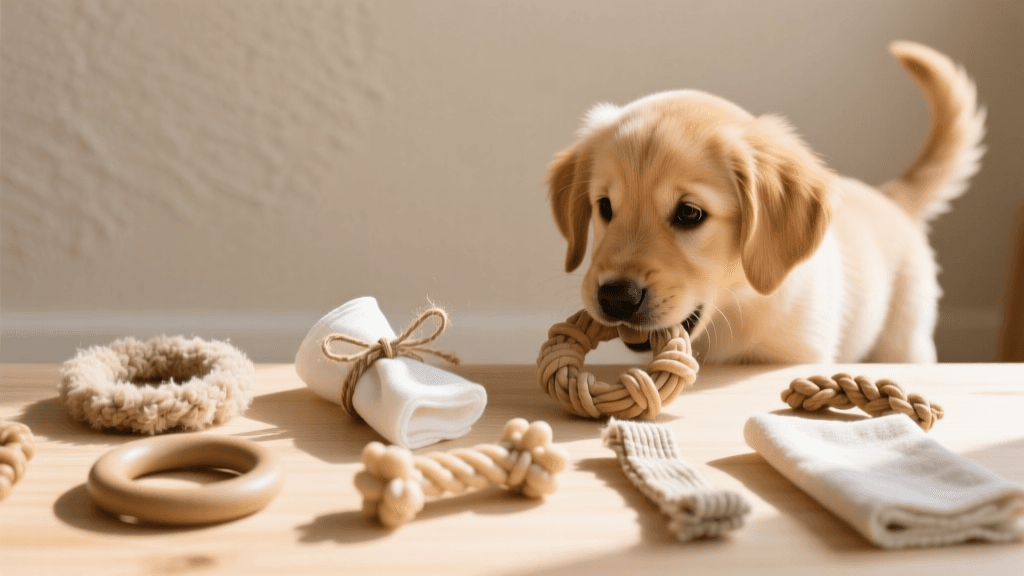
Dr. Rostova: Puppies explore the world with their mouths, and between 12 and 16 weeks, their baby teeth begin to fall out to make way for adult teeth. This process causes significant gum discomfort. Providing appropriate outlets for chewing is a medical and behavioral necessity. I recommend freezing wet washcloths or offering rubber toys like the KONG Classic ($15 - $25) stuffed with plain pumpkin puree and frozen overnight.
Marcus Vance: To stop puppy biting directed at human skin, you must use redirection. The ASPCA recommends that the moment the puppy's teeth touch your skin, you let out a high-pitched yelp or say 'Oops!' to mimic a littermate, then immediately withdraw your attention for ten seconds. Once they calm down, offer an approved chew toy. Consistency from every family member is the only way this works.
Puppy Development and Training Timeline
| Age Range | Developmental Milestone | Primary Action Item | Estimated Cost / Time |
|---|---|---|---|
| 8 - 10 Weeks | Fear Period & Bonding | Establish crate routine; begin gentle handling exercises. | $50 - $100 (Crate & Bed) |
| 10 - 12 Weeks | Curiosity Peaks | Carry puppy to public spaces; start basic name recognition. | 15 mins daily |
| 12 - 16 Weeks | Teething Begins | Introduce frozen chew toys; enroll in puppy kindergarten. | $150 - $300 (Classes) |
| 4 - 6 Months | Independence & Testing | Reinforce recall commands; increase physical exercise. | 30 - 45 mins daily |
| 6 - 12 Months | Adolescence | Advanced socialization; impulse control and leash manners. | $40 - $60 (Long line & harness) |
Q5: How can I prevent separation anxiety from developing early on?
Marcus Vance: Separation anxiety often stems from a puppy learning that their owner's departure is a cause for panic, or from never learning how to self-soothe. From the very first week, practice short departures. Step out of the front door for five seconds, then return before the puppy becomes distressed. Gradually increase the time to one minute, five minutes, and so on.
Additionally, avoid making a massive emotional fuss when you leave or return home. Keep arrivals and departures incredibly boring. I highly recommend using a Snuggle Puppy with a heartbeat and heat pack ($40 - $50) during the first few weeks to help them sleep comfortably in their crate, simulating the presence of their littermates. By building a foundation of independence and confidence, you set your puppy up for a lifetime of emotional stability.
Final Thoughts from the Experts
Raising a puppy requires patience, consistency, and a willingness to learn. By prioritizing early, safe socialization, adhering to a strict potty schedule, and addressing teething with empathy, you are laying the groundwork for a well-mannered adult dog. Always consult your local veterinarian and a certified positive-reinforcement trainer if you encounter behavioral hurdles along the way.
aaron-whyte
All our authors care for dogs every day — read more of their work on the authors page.