Science-Backed Puppy Socialization: Navigating Fear Periods
Discover science-backed strategies for puppy socialization. Learn to navigate fear periods, use threshold training, and build lifelong confidence.

The Neurology of Puppy Socialization
When we discuss puppy socialization from a science-backed perspective, we are fundamentally talking about neurobiology. During the first few months of a dog's life, their brain undergoes rapid synaptogenesis—the formation of synapses between neurons. This neurological plasticity allows puppies to process, categorize, and habituate to novel stimuli at a rate that will never be replicated in adulthood. According to veterinary behaviorists, the amygdala (the brain's fear center) and the prefrontal cortex (responsible for emotional regulation) are highly malleable during this window. Proper exposure literally wires the puppy's brain for resilience, whereas traumatic or insufficient exposure can wire it for chronic anxiety and reactivity.
The Primary Window: Weeks 3 to 14
The primary socialization window opens at approximately three weeks of age, when a puppy's sensory organs become fully functional, and begins to close around 12 to 14 weeks. During this critical period, the neurological threshold for fear is remarkably low. Puppies are biologically programmed to approach novel stimuli with curiosity rather than avoidance. However, as the puppy approaches 14 weeks, a natural evolutionary mechanism called 'neophobia' (fear of the new) begins to emerge. This is a survival trait designed to keep adolescent wolves from wandering into dangerous territories.
A common and dangerous misconception among new owners is that puppies must be kept isolated until they complete their full vaccination series at 16 weeks to prevent infectious diseases like parvovirus. The American Veterinary Society of Animal Behavior (AVSAB) strongly advises against this isolation. Their position statement highlights that the risk of behavioral euthanasia due to under-socialization and fear-based aggression far outweighs the risk of disease transmission, provided the puppy is socializing in controlled, safe environments such as sanitized puppy kindergartens and private homes.
Understanding Puppy Fear Periods
Even within the broader developmental timeline, puppies experience distinct 'fear impact periods.' These are transient developmental windows where the puppy's brain becomes hyper-vigilant, and previously benign stimuli may suddenly trigger a fear response. Navigating these periods requires precise, science-backed interventions. The American Kennel Club (AKC) notes that mishandling a fear period can result in lifelong phobias, while careful management can build profound confidence.
| Age Range | Developmental Stage | Science-Backed Action Plan | Recommended Tools & Costs |
|---|---|---|---|
| 3 to 14 Weeks | Primary Socialization Window | Introduce up to 100 novel stimuli using classical conditioning. Keep all experiences strictly 'under threshold' to prevent amygdala hijacking. | High-value treats, clicker ($5) |
| 8 to 10 Weeks | First Fear Impact Period | Avoid overwhelming environments (e.g., loud dog parks, chaotic children). Focus on positive, controlled, and quiet exposures. | Adaptil Junior collar ($25), Lickimat ($12) |
| 6 to 14 Months | Second Fear Impact Period | Increase distance from triggers. Do not force interactions. Revert to basic operant conditioning and desensitization protocols. | Snuffle Mat ($20), 15ft biothane long-line ($35) |
First Fear Period (8 to 10 Weeks)
This period often coincides with the puppy transitioning to a new home. The neurological shift causes the puppy to become hyper-aware of potential threats. If a puppy shows fear toward a specific stimulus (e.g., the vacuum cleaner or a loud truck), do not force them to confront it. Instead, utilize classical counter-conditioning. Present the trigger at a very low intensity (e.g., the vacuum is turned off and in another room) and pair it with high-value food. This creates a positive conditioned emotional response (+CER).
Second Fear Period (6 to 14 Months)
Often called the 'fear of situations' period, this aligns with sexual maturity and a surge in hormones like testosterone and estrogen. A puppy that previously loved greeting strangers may suddenly bark or hide. The science-backed protocol here is 'Spontaneous Recovery' management. Give the puppy space, increase your physical distance from the trigger, and reward any calm behavior or voluntary disengagement. Never punish fear-based reactivity, as this only suppresses the warning signs and exacerbates the underlying neurological stress.
Science-Backed Socialization Protocols
Threshold Training and Desensitization
In behavioral science, 'threshold' refers to the exact distance or intensity at which a puppy notices a trigger but remains emotionally regulated. If a puppy is 'under threshold,' they can take treats, respond to cues, and learn. If they are 'over threshold,' the sympathetic nervous system (fight or flight) takes over, and learning is biologically impossible.
- Identify the Threshold: If your puppy reacts to other dogs at 10 feet, their threshold is likely 15 feet.
- Work at Sub-Threshold Distances: Begin training at 20 feet. Reward the puppy for simply looking at the trigger and then back at you (the 'Look at That' game pioneered by Leslie McDevitt).
- Systematic Desensitization: Decrease the distance by only 2 to 3 feet per session, provided the puppy remains relaxed and continues to eat treats.
Operant Conditioning and Reward Mechanics
During socialization, the timing and value of your rewards are critical. The American Veterinary Medical Association (AVMA) emphasizes that positive reinforcement is the gold standard for behavioral development. To maintain a puppy's food drive without causing gastrointestinal upset or rapid weight gain, utilize micro-treats.
Rule of Thumb: Treats should be no larger than a pea and contain fewer than 5 calories each. A puppy can consume 30 to 50 micro-treats in a 15-minute socialization session without exceeding their daily caloric limit.
Recommended Product: Zuke's Mini Naturals (approx. 2 calories per treat, costing around $8 for a 6oz bag). Their soft texture allows for rapid consumption, which is vital for maintaining the neurological association between the stimulus and the reward.
Practical Toolkit: Products, Measurements, and Costs
Building a confident puppy requires an investment in the right tools. Here is a science-backed toolkit designed to promote habituation and lower cortisol levels:
1. Pheromone Therapy (Adaptil Junior)
Adaptil releases a synthetic analogue of the Dog Appeasing Pheromone (DAP), which is naturally secreted by nursing mothers. Studies show that DAP can significantly reduce stress vocalizations and pacing in puppies. Cost: ~$25 for a collar that lasts 30 days. Usage: Put it on the puppy 24 hours before their first puppy kindergarten class or veterinary visit.
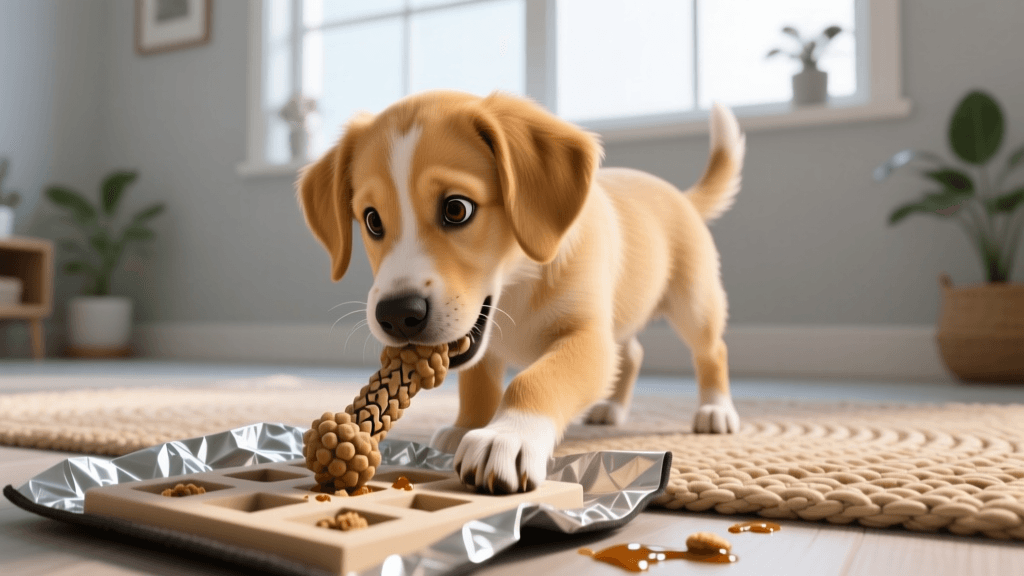
2. Enrichment Feeders (Kong Classic & Snuffle Mats)
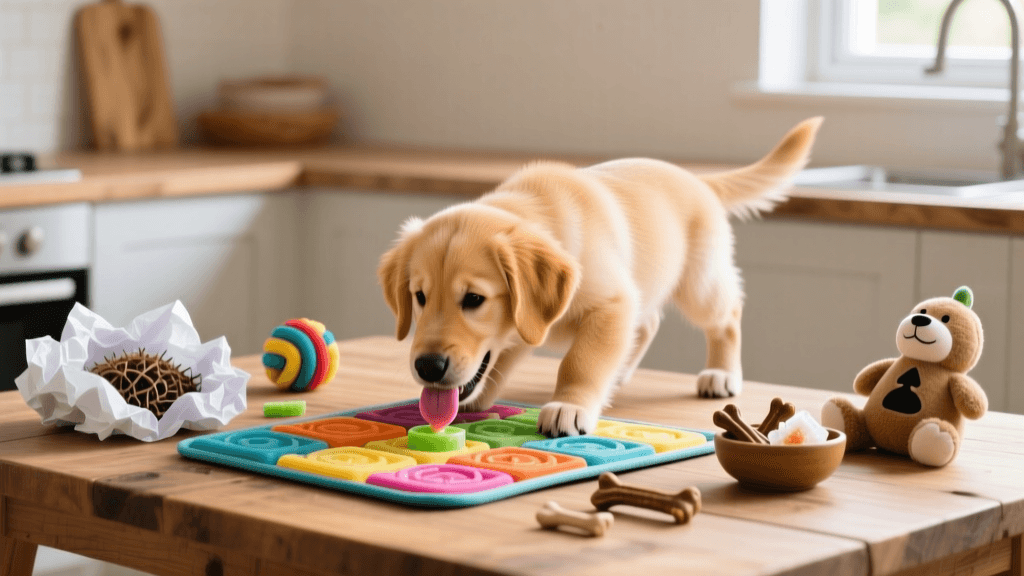
Foraging and licking stimulate the parasympathetic nervous system, promoting a 'rest and digest' state. Use a Small Red Kong Classic ($15) stuffed with frozen pumpkin and plain yogurt to keep the puppy occupied during car rides or when guests arrive. Snuffle mats ($20) encourage olfactory engagement, which tires the puppy's brain out faster than physical exercise and builds confidence in problem-solving.
3. Professional Puppy Kindergarten
Enrolling in an APDT (Association of Professional Dog Trainers) certified puppy class is non-negotiable for optimal socialization. These classes provide controlled exposure to other puppies and humans in a sanitized environment. Cost: Typically $150 to $250 for a 6-week course. This upfront cost is minuscule compared to the $2,000 to $5,000 required for behavioral rehabilitation later in life.
Conclusion
Science-backed puppy socialization is not merely about letting your puppy play with other dogs; it is a deliberate, neurological conditioning process. By respecting the primary socialization window, carefully navigating fear impact periods, and utilizing threshold training, you lay the structural foundation for a resilient, well-adjusted adult dog. Invest the time, utilize the right tools, and rely on veterinary behavioral science to guide your puppy through their most critical developmental year.
aaron-whyte
All our authors care for dogs every day — read more of their work on the authors page.