Puppy Separation Anxiety Training: Top Smart Cameras 2026
Discover how to cure puppy separation anxiety in 2026 using top smart cameras like Furbo and Petcube. Expert training tips and interactive treat routines.
Understanding Puppy Separation Anxiety in 2026
Welcoming a new puppy into your home is an exhilarating experience, but it often comes with a significant behavioral hurdle: separation anxiety. As we navigate 2026, the lingering effects of hybrid work schedules mean that many puppies are experiencing intense distress when left alone for the first time. Separation anxiety is not merely a case of a puppy missing you; it is a profound panic response that can lead to destructive chewing, excessive vocalization, and inappropriate elimination. According to the ASPCA, separation anxiety is one of the most common behavioral issues reported by dog owners, requiring a structured, empathetic, and technologically assisted approach to resolve effectively.
In the past, owners had to rely solely on guesswork or expensive in-home trainers to monitor their puppy's distress. Today, the integration of advanced smart home pet technology allows owners to observe, interact with, and soothe their puppies in real-time. By combining modern smart cameras with evidence-based desensitization protocols, you can transform your puppy's alone time from a period of terror into a relaxing, predictable routine.
Why Smart Cameras Are Essential for Alone Time Training
Training a puppy to be alone requires precise timing. If you return home while the puppy is in a state of panic, you inadvertently reinforce the anxious behavior. Smart cameras eliminate this guesswork. The latest 2026 models feature advanced AI bark detection, automated treat tossing, and two-way audio with acoustic echo cancellation, ensuring your voice sounds natural and calming rather than distorted and frightening. Furthermore, AI-driven behavioral tracking can now alert your smartphone the moment your puppy begins to exhibit pre-anxiety pacing, allowing you to intervene before a full-blown panic attack occurs.
Top Smart Pet Cameras for Puppy Training (2026 Models)
Furbo 360 Dog Camera
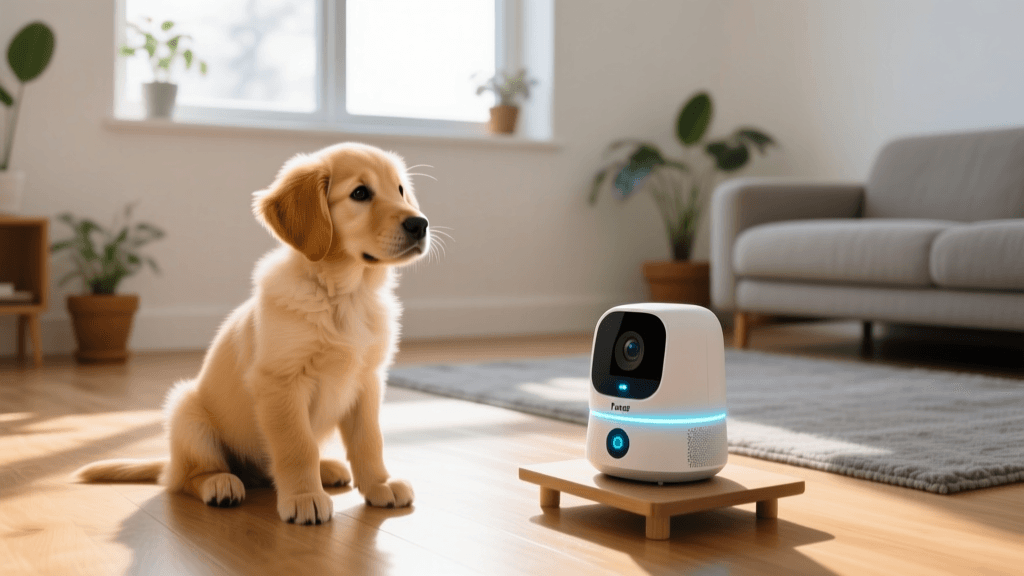
The Furbo 360 remains the gold standard for interactive puppy monitoring in 2026. Its motorized base provides a full 360-degree panoramic view, ensuring that no matter where your puppy hides or paces, you can track their movements. The latest firmware update introduced an enhanced 'Pup Parent AI' that specifically differentiates between playful barks and distress cries, sending highly accurate alerts to your phone. The treat-tossing mechanism is fully adjustable, allowing you to gently launch kibble or training treats across the room to engage your puppy's foraging instincts and redirect their anxiety into a positive activity. Retailing at approximately $210, it is an investment that pays dividends in behavioral health.
Petcube Bites 2 Lite
For owners looking for a multi-functional approach, the Petcube Bites 2 Lite is a phenomenal choice. Priced around $150, this camera not only features a reliable treat dispenser but also includes a built-in laser pointer. While laser pointers should be used carefully to avoid frustration, they are excellent for burning off a puppy's excess energy right before you leave the house, promoting sleepiness during your absence. The 2026 Petcube app includes a direct integration with on-demand veterinary telehealth services, allowing you to consult a professional immediately if your puppy exhibits severe physical signs of stress, such as excessive drooling or self-injury.
Wyze Pan v3 (Budget Pick)
If you are on a strict budget but still need reliable monitoring, the Wyze Pan v3 is an unbeatable option at roughly $40. While it lacks a built-in treat tosser, its 360-degree pan-and-tilt functionality and exceptional color night vision make it perfect for observing your puppy in low-light conditions. The two-way audio is surprisingly crisp for the price point, and the customizable motion detection zones allow you to focus solely on your puppy's crate or bed, ignoring the rest of the room to save battery and reduce false notifications.
Comparison Chart: Best Cameras for Anxious Puppies
| Camera Model | Field of View | Treat Toss | AI Distress Alerts | 2026 Est. Price |
|---|---|---|---|---|
| Furbo 360 | 360° Panning | Yes (Adjustable) | Advanced | $210 |
| Petcube Bites 2 Lite | 160° Wide Angle | Yes (Standard) | Standard | $150 |
| Wyze Pan v3 | 360° Panning | No | Motion/Sound Only | $40 |
Step-by-Step Desensitization Protocol Using Smart Cameras
Owning the right technology is only half the battle. To successfully cure separation anxiety, you must pair your smart camera with a rigorous, gradual desensitization protocol. The American Kennel Club emphasizes that puppies have strict physical and mental limits regarding how long they can be left alone, largely dictated by their bladder control and developmental stage. Always adhere to the 'one hour per month of age' rule for maximum crate or alone time.
Phase 1: Pre-Departure Cue Desensitization
Puppies are incredibly observant and will trigger their anxiety response the moment you pick up your keys or put on your shoes. Spend two weeks simply performing these actions without actually leaving. Pick up your keys, toss a treat via your Furbo camera, and sit back down. Put on your coat, interact with your puppy through the Petcube's two-way audio, and take the coat off. This breaks the associative bond between your departure cues and the impending isolation.
Phase 2: The 5-Minute Camera Check
Once your puppy ignores your departure cues, begin leaving the house for exactly five minutes. Set up your camera and watch the live feed from your car or the sidewalk. If your puppy settles down, waits quietly, or plays with a chew toy, return home calmly. Do not make a big fuss upon re-entry. If the puppy panics, wait for a brief moment of silence—even just three seconds of quiet—before entering, so you do not reward the vocalization.
Phase 3: Interactive Treat Tossing
As you extend your absences to 15 and then 30 minutes, use your camera's treat-tossing feature to create positive associations with your absence. Set a timer on your phone to toss a high-value treat every 10 minutes. The puppy will begin to view your departure as the start of a rewarding, interactive game rather than a period of abandonment. This engages their brain and shifts their emotional state from fear to anticipation.
Phase 4: Extending the Duration
Gradually increase the time you are away in 15-minute increments. Use the AI behavioral tracking features in your camera app to review the footage upon your return. Look for signs of relaxation, such as the puppy lying on their side, sleeping, or engaging in solitary play. If you notice regression, drop back down to the last successful duration and proceed more slowly.
Common Mistakes to Avoid During Alone Time Training
When dealing with a distressed puppy, human emotions often lead to counterproductive actions. The Humane Society of the United States strongly advises against punishing a puppy for destructive behavior or accidents that occur while you are away. The puppy cannot connect your anger upon returning home with the act of chewing a baseboard three hours prior; they will only learn to fear your return, exacerbating the anxiety.
Additionally, avoid the temptation to 'sneak out' while the puppy is sleeping. While this might spare you the immediate heartbreak of hearing them cry, it destroys the puppy's trust and creates a state of hyper-vigilance, as they will never know when you might vanish. Always use a consistent, low-key departure phrase like 'See you later,' and utilize your smart camera to monitor their state objectively rather than relying on your own guilt-driven assumptions.
When to Seek Professional Help
While smart cameras and structured training can resolve mild to moderate separation anxiety, severe cases may require pharmacological intervention alongside behavioral therapy. If your puppy is injuring themselves trying to escape their crate, refusing to eat high-value treats when left alone, or exhibiting continuous panic despite weeks of desensitization, consult a certified veterinary behaviorist. Your smart camera footage will be an invaluable diagnostic tool, providing the behaviorist with exact data regarding your puppy's triggers, the duration of their panic, and their recovery time, ensuring a tailored, effective treatment plan for your furry friend.
anouk-beaumont
All our authors care for dogs every day — read more of their work on the authors page.