Case Study: Curing Puppy Separation Anxiety in 30 Days
Discover how a 12-week-old Labrador overcame severe separation anxiety in 30 days using proven desensitization protocols, crate training, and enrichment.

The Case of Cooper: A Baseline Assessment
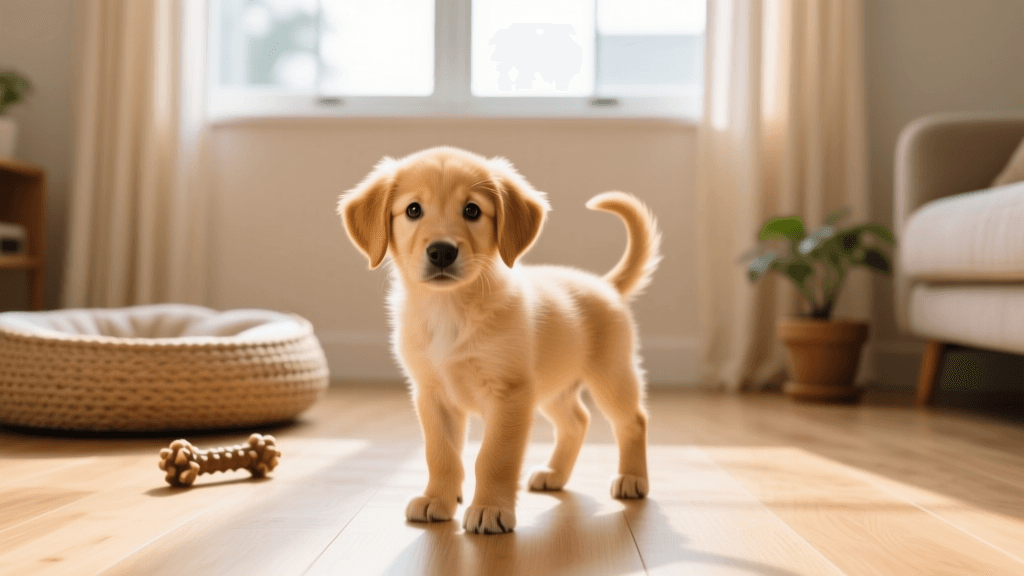
When most people think of puppy care, they envision potty training, teething, and basic obedience. However, one of the most pervasive and distressing behavioral challenges that arise during a dog's first year is separation anxiety. To illustrate how to tackle this issue, we are examining the real-world case study of Cooper, a 12-week-old Labrador Retriever who exhibited severe separation distress within his first month in a new home.
Cooper’s owners, a young couple working hybrid schedules, noticed that the moment they stepped out of their apartment, Cooper would engage in frantic howling, destructive scratching at the front door, and inappropriate elimination. Video monitoring revealed that his panic began the second the door clicked shut, escalating into a state of hyper-arousal that lasted for hours. This is a classic presentation of early-onset separation distress, a condition that requires immediate, structured intervention to prevent it from becoming a lifelong phobia.
The Science of Puppy Separation Distress
Before diving into the intervention, it is crucial to understand the ethology behind the behavior. Puppies are biologically hardwired to stay close to their littermates and mother for survival. When isolated, their natural instinct is to vocalize to summon the group. According to the ASPCA, separation anxiety is triggered when a dog becomes overly attached to their guardian and experiences extreme stress when left alone. In young puppies, this is often less about clinical anxiety and more about a lack of learned independence and confinement training.
The American Veterinary Society of Animal Behavior (AVSAB) emphasizes that punishment-based methods, such as bark collars or scolding a puppy upon returning home, are entirely contraindicated. These methods only suppress the outward symptoms (vocalization) while increasing the internal panic, ultimately worsening the underlying emotional state. Our goal with Cooper was to change his emotional response to isolation through systematic desensitization and counter-conditioning.
The 30-Day Intervention Plan
Cooper’s rehabilitation was broken down into three distinct phases, focusing on environmental management, pre-departure cue desensitization, and graduated absence training.
Phase 1: Environmental Management & Enrichment
The first step was to stop the rehearsal of the panic response. Every time Cooper practiced frantic door-scratching, the neural pathways associated with that panic were strengthened. We implemented strict management: Cooper was no longer left alone in the main living area. Instead, we introduced a wire crate placed in a quiet corner of the living room, draped with a breathable cover to create a den-like atmosphere. To build a positive conditioned emotional response (+CER) to the crate, all high-value meals and long-lasting chews were exclusively provided inside the crate while the owners were home.
Phase 2: Systematic Desensitization Protocol
Dogs are highly observant of pre-departure cues. Picking up keys, putting on shoes, or grabbing a coat can trigger a puppy's anxiety before the owner even leaves. We spent the first week desensitizing Cooper to these triggers. The owners would put on their shoes, sit on the couch, and watch TV. They would pick up their keys, jingle them, and then put them back down. By removing the predictive value of these cues, Cooper’s baseline arousal levels dropped significantly.
Once the pre-departure cues were neutralized, we began the graduated absence training. This required meticulous tracking of time and threshold management. Below is the exact protocol we utilized for Cooper over a four-week period.
| Week | Target Duration | Pre-Departure Cue | Success Criteria |
|---|---|---|---|
| 1 | 10 seconds - 2 minutes | None (No shoes/keys) | Puppy remains relaxed, chewing on a Kong, no vocalization |
| 2 | 5 minutes - 15 minutes | Partial (Shoes on, no keys) | Puppy settles on bed, heart rate remains normal via camera |
| 3 | 20 minutes - 45 minutes | Full (Shoes, keys, coat) | Puppy sleeps or rests quietly, no door fixation |
| 4 | 1 hour - 3 hours | Full + Leaving the property | Puppy wakes up, stretches, plays with toys, no distress |
Phase 3: Independence Training While Home
A common mistake owners make is assuming separation anxiety only happens when they leave the house. Puppies that follow their owners from room to room (often called "Velcro dogs") are practicing hyper-attachment. We implemented the "Place" command, teaching Cooper to settle on a raised cot across the room while the owners cooked or worked. This built his confidence in occupying space independently, which directly translated to his ability to be alone in the crate.
Furthermore, we incorporated hide and seek games in the house. The owners would place Cooper in a sit-stay in the living room, hide in the bedroom, and call him. This taught Cooper that people disappearing is actually a fun game that results in a reward, rather than a reason to panic. This cognitive shift is vital for young, developing brains that are highly plastic and receptive to new emotional associations.
Product Toolkit & Costs
Successful behavior modification relies on the right tools to facilitate positive associations. Here is the exact toolkit used in Cooper's case study, including approximate costs:
- KONG Classic (Red, Size Medium): $15.00. Stuffed with a mixture of plain pumpkin puree, kibble, and frozen bone broth. This provided a 20-minute licking engagement, which naturally releases endorphins and soothes the canine nervous system.
- Snuggle Puppy Heartbeat Toy: $45.00. The simulated heartbeat and heat pack mimic the feeling of littermates, significantly reducing nighttime whining and initial crate panic.
- Adaptil Junior Pheromone Collar: $25.00. Releases synthetic dog-appeasing pheromones (DAP) that mimic those produced by a nursing mother dog, promoting a baseline sense of security.
- Wyze Cam v3: $35.00. Essential for monitoring the puppy's body language and vocalizations in real-time, allowing the owners to return before the puppy crossed the threshold into panic.
Results: Week 4 and Beyond
By day 28, Cooper was able to tolerate a three-hour absence in his crate without any vocalization, pacing, or elimination. The destructive scratching at the door was entirely extinguished. More importantly, his owners reported a massive reduction in their own separation guilt, which often inadvertently reinforces a puppy's anxious energy during departures and arrivals.
It is important to note that puppies go through multiple fear periods during their first year, typically around 8-11 weeks and again between 6-14 months. During these windows, a previously confident puppy may suddenly regress and show renewed signs of separation distress. Cooper experienced a mild regression at 7 months old during a teething and developmental fear period. Because his owners understood the science of fear periods, they simply dropped their departure durations back to the Week 2 protocol for a few days, successfully supporting him through the developmental leap without undoing months of progress.
The key to curing puppy separation distress is not rushing the timeline. If your puppy panics at minute four, you cannot push to minute ten. You must drop back to minute two and rebuild the foundation of safety. — Certified Applied Animal Behaviorist
Key Takeaways for Puppy Owners
If you are raising a puppy and noticing early signs of isolation distress, remember these critical rules:
- Never punish fear: Scolding a puppy for crying when left alone will only teach them to be afraid of you, not to be comfortable alone.
- Keep arrivals and departures boring: Ignore your puppy for the first five minutes when you return home. This lowers the contrast between your presence and absence.
- Invest in a camera: You cannot manage what you cannot measure. A simple Wi-Fi camera is the most valuable tool in your behavioral toolkit.
- Seek professional help early: If your puppy is injuring themselves trying to escape confinement, consult a veterinarian or a certified behaviorist immediately to discuss temporary anti-anxiety medication alongside training.
Cooper’s case proves that with patience, structured data tracking, and empathetic management, even the most distressed puppies can learn to thrive in their own company. The first year of a dog's life sets the foundation for the next decade; investing time in behavioral health is just as vital as investing in their physical health.
marcus-aldridge
All our authors care for dogs every day — read more of their work on the authors page.