Puppy Return-to-Office Transition & Anxiety Guide 2026
Master the 2026 return-to-office transition with your puppy. Learn actionable desensitization protocols, tech tools, and tips to prevent separation anxiety.
The 2026 Shift: Understanding Puppy Separation Anxiety
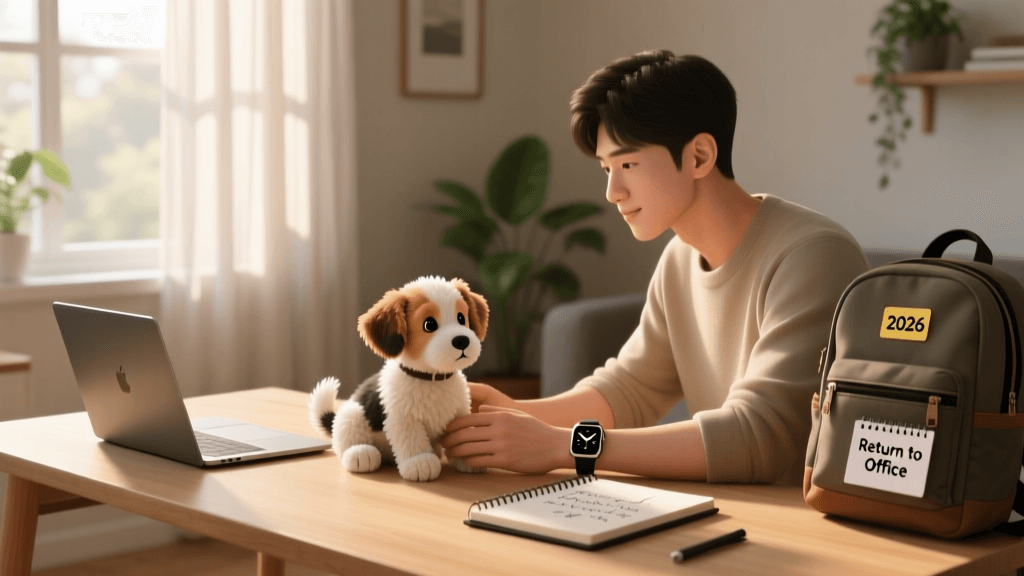
As workplace policies continue to evolve in 2026, many pet parents are facing a significant life transition: returning to the office or shifting to a stricter hybrid schedule after months of working from home with a new puppy. This sudden change in routine is one of the most common triggers for canine separation anxiety. Puppies thrive on predictability, and when their primary attachment figure suddenly disappears for eight hours a day, the resulting stress can manifest in destructive chewing, excessive vocalization, and inappropriate elimination.
According to the American Society for the Prevention of Cruelty to Animals (ASPCA), separation anxiety is triggered when dogs become overly attached to their guardians and experience panic when left alone. For a puppy in their critical developmental window, this transition must be managed with extreme care to prevent long-term behavioral issues.
Preparing Your Puppy for the Return-to-Office Transition
Transitioning a puppy to a new routine requires proactive planning. You cannot simply leave your puppy alone for a full workday and expect them to adapt. The American Kennel Club (AKC) emphasizes that crate training and gradual desensitization are the cornerstones of helping puppies build independence. In 2026, veterinary behaviorists recommend starting your transition protocol at least four weeks before your actual return-to-office date.
The 4-Week Desensitization Protocol
This structured timeline helps your puppy adjust to your absence without triggering a panic response.
- Week 1: Micro-Departures. Begin by leaving the room for just 10 to 30 seconds. Do not make a fuss when you leave or return. Ignore your puppy for the first three minutes after you re-enter the room to lower the emotional weight of your comings and goings.
- Week 2: Extending Time and Adding Cues. Increase your absences to 5, 10, and then 20 minutes. Introduce your 'departure cues' during these practice runs. Put on your work shoes, pick up your keys, and grab your laptop bag, but then sit back down on the couch. This breaks the associative chain that keys equal abandonment.
- Week 3: The 'Fake Commute'. Leave the house entirely for 30 to 60 minutes. Drive around the block or take a short walk. This acclimates your puppy to the actual physical sensation of you being off the property.
- Week 4: Half-Day Simulations. Extend your absences to 3 or 4 hours. If you have access to a pet camera, monitor your puppy's stress levels. If they pace, pant heavily, or bark continuously for more than 15 minutes, you have moved too fast and need to step back to Week 3.
Top 2026 Tech & Tools for Monitoring Your Puppy
Technology has advanced significantly, offering pet parents unprecedented peace of mind during the workday. While tech should never replace proper behavioral training, it is an invaluable tool for monitoring your puppy's stress levels and providing remote enrichment. Below is a comparison of the top-rated pet monitoring systems utilized by dog owners in 2026.
| Device Category | Top 2026 Recommendation | Key Features | Estimated Cost (2026) |
|---|---|---|---|
| Interactive Treat Camera | Furbo 360 Premium | 360-degree auto-rotation, AI bark alerts, treat tossing, 1080p night vision | $189 - $219 |
| Smart Laser & Camera Combo | Petcube Bites Lite | Built-in laser pointer, two-way audio, treat dispenser, vet chat integration | $149 - $169 |
| Budget Environmental Monitor | Wyze Cam Pan v3 | 360-degree panning, color night vision, local SD storage, motion tracking | $39 - $49 |
| Automated Puzzle Feeder | Wickedbone Smart Interactive Toy | App-controlled, auto-play modes, durable polycarbonate shell | $79 - $99 |
When utilizing cameras like the Furbo or Petcube, it is crucial to use the two-way audio feature judiciously. While hearing your voice might seem comforting, for some puppies with severe separation anxiety, hearing you without being able to find you can actually escalate their frustration and panic. Test your puppy's reaction to your voice through the camera during your Week 3 'Fake Commute' practice runs to determine if audio soothing helps or hinders their relaxation.
Creating a Safe 'Transition Zone' in Your Home
A puppy left alone for the workday needs a designated safe space. Free-roaming in a large house can be overwhelming and increases the likelihood of destructive behavior. In 2026, the gold standard for puppy confinement is a hybrid setup: a sturdy exercise pen (x-pen) attached to a properly sized wire crate.
Optimizing the Confinement Area
- The Crate: The crate should be large enough for your puppy to stand up, turn around, and lie down comfortably, but no larger. If it is too large, they may use one corner as a bathroom. Cover the top and sides with a breathable crate cover to create a den-like, secure atmosphere.
- The X-Pen: Attach the x-pen to the open door of the crate. This gives your puppy a larger area to stretch, play, and access their water bowl without giving them the run of the entire house.
- Substrate Training: Place a high-quality, washable potty pad or a real-grass subscription pad in the far corner of the x-pen, away from their sleeping and eating areas. This accommodates their small bladders while you are at the office.
- Enrichment Toys: Leave your puppy with long-lasting, safe chew toys. A frozen Kong stuffed with puppy-safe peanut butter and plain yogurt can keep them occupied for up to 45 minutes, releasing endorphins that naturally calm their nervous system.
Sensory Support for the Confinement Area
Beyond physical boundaries, managing the auditory and olfactory environment is crucial for a puppy left alone. In 2026, veterinary behaviorists highly recommend the use of continuous white noise machines or specialized canine calming music playlists to mask unpredictable outdoor sounds like delivery trucks or neighborhood dogs. Additionally, plug-in synthetic dog-appeasing pheromone (DAP) diffusers can be placed near the x-pen. These diffusers release synthetic copies of the comforting pheromones produced by nursing mother dogs, providing a subtle but effective biological cue that helps lower the puppy's heart rate and reduce pacing behaviors while you are at the office.
Managing the Morning and Evening Rush
The transition isn't just about the hours you are away; it is also about how you handle the moments before you leave and after you return. Puppies are highly attuned to our energy. If you are rushing around in a panic, looking for your keys and spilling your coffee, your puppy will absorb that frantic energy and enter a state of high arousal before you even walk out the door.
Implement a 'calm morning' routine. Wake up 30 minutes earlier than you think you need to. Take your puppy for a rigorous, sniff-heavy walk. Mental stimulation through sniffing is just as tiring for a puppy as physical exercise. A tired puppy is a sleeping puppy, and a sleeping puppy is not practicing separation anxiety.
When you return home in the evening, enforce the 'no-touch, no-talk, no-eye-contact' rule until your puppy has all four paws on the floor and is completely calm. Greeting an overly excited puppy only reinforces the idea that your return is a massive, high-stakes event, which in turn makes your departure seem equally catastrophic to them.
When to Seek Professional Help in 2026
Despite your best efforts, some puppies struggle profoundly with the return-to-office transition. If your puppy is injuring themselves trying to escape their crate, refusing to eat high-value treats when left alone, or exhibiting signs of extreme distress (such as drooling excessively, vomiting, or destroying door frames), it is time to seek professional intervention.
In 2026, the field of veterinary behavior has expanded, offering more accessible telehealth consultations and specialized certified separation anxiety trainers (CSATs). Do not rely on outdated 'cry it out' methods or punitive bark collars. These methods suppress the outward symptoms of anxiety without addressing the underlying panic, often leading to worse behavioral fallout down the line. Consult your veterinarian to discuss whether short-term anti-anxiety medication, combined with a modified behavior modification plan, is appropriate for your puppy's specific neurochemistry.
Conclusion
Navigating the return-to-office transition with a puppy requires patience, empathy, and a structured approach. By utilizing gradual desensitization, leveraging modern monitoring technology, and creating a secure environment, you can help your puppy build the confidence they need to thrive independently. Remember that every puppy develops at their own pace. Celebrate the small victories, remain consistent with your protocols, and give your puppy the grace they need to adjust to this major life change.
hannah-wickes
All our authors care for dogs every day — read more of their work on the authors page.