Puppy Proofing Your Home: Diagnosing Hazards & Solutions
Discover how to diagnose hidden household hazards and implement practical puppy-proofing solutions before bringing your new dog home.
The Hidden Dangers in Your Home: A Diagnostic Approach
Bringing a new puppy or adult rescue dog home is an exhilarating milestone. However, the transition from a shelter or breeder environment to your living room often reveals a harsh reality: our homes are obstacle courses of hidden dangers. When new owners call trainers or veterinarians in a panic, the root cause is rarely a 'bad dog.' Instead, it is a failure to properly diagnose environmental hazards. This problem-solving guide will help you identify common household threats and implement actionable, cost-effective solutions before your new dog ever crosses the threshold.
Problem 1: The Teething Menace (Cords, Shoes, and Baseboards)
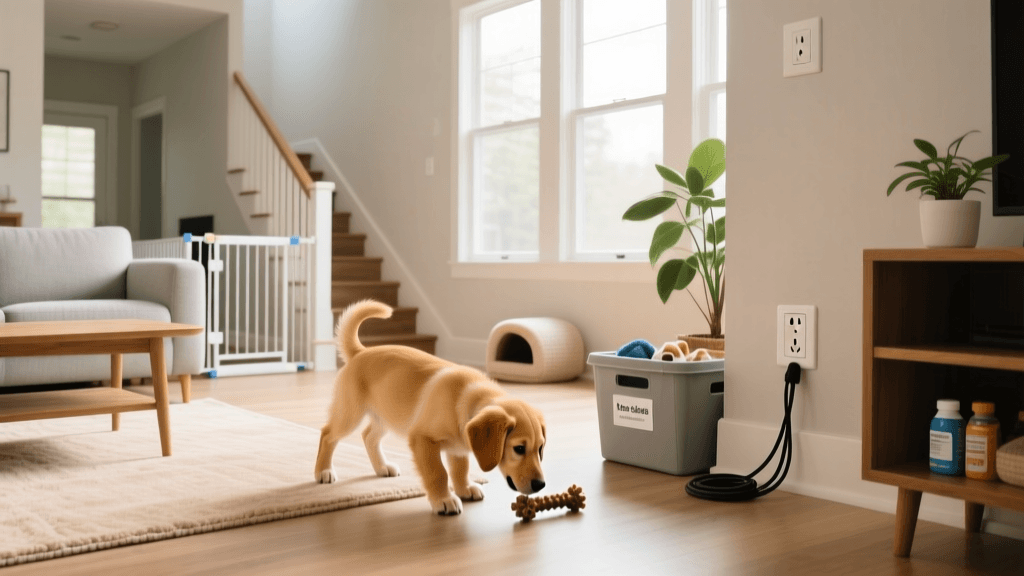
Diagnosis: Puppies between the ages of three and six months are in the peak teething phase. They explore the world using their mouths, and the texture of rubber electrical cords or leather shoes mimics the chew toys you intend to buy. Furthermore, baseboards often become targets due to their accessibility and the cool relief they provide to sore gums.
Solution: Do not rely on supervision alone; you cannot watch a dog 24/7.
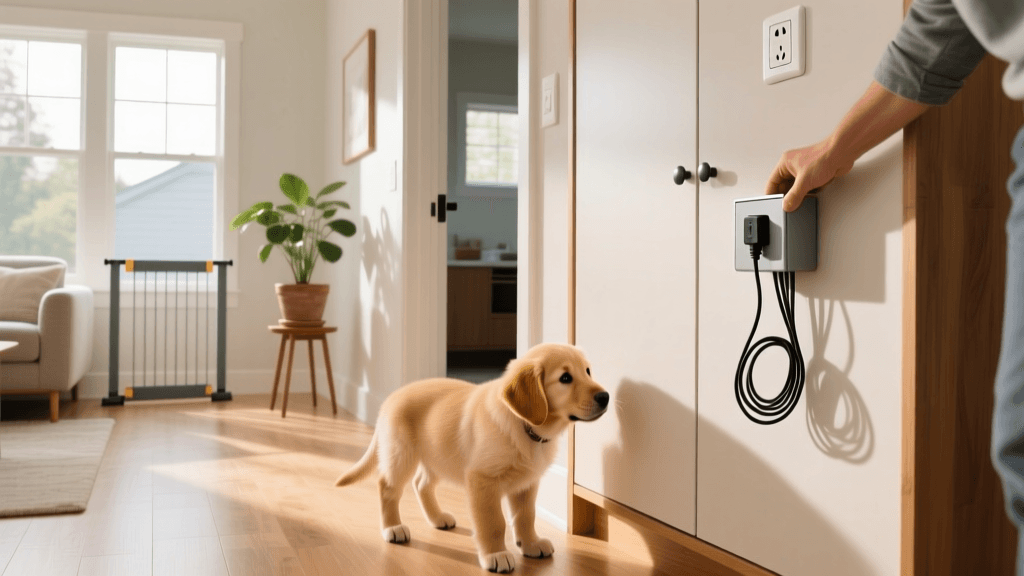
- Cord Concealment: Purchase split-loom tubing or rigid PVC cord channels (available at hardware stores for about $15-$25 per 10-foot roll). Route all TV and computer wires through these channels and secure them to the back of furniture using zip ties.
- Taste Deterrents: Apply a bitter-tasting spray, such as PetSafe Bitter Apple, to baseboards and wooden furniture legs. Reapply daily for two weeks to break the habit.
- The 'Shoe Amnesty' Bin: Place a lidded storage bin near the entryway. Train all family members to drop shoes inside immediately upon entering the home.
Problem 2: Botanical and Chemical Toxins
Diagnosis: Many popular houseplants and human foods are highly toxic to canines. The ASPCA Animal Poison Control Center frequently treats dogs for ingesting Sago Palms, Lilies, and Pothos, which can cause acute liver failure or severe gastrointestinal distress. Additionally, sugar-free gums and peanut butters containing xylitol are lethal even in small doses, a danger highlighted by the U.S. Food and Drug Administration (FDA).
Solution:
- The Plant Audit: Walk through every room with the ASPCA's toxic plant list. Relocate hazardous plants to high, unreachable hanging planters, or rehome them entirely. Replace them with dog-safe alternatives like Spider Plants or Boston Ferns.
- Cabinet Locks: Install magnetic childproof locks on all lower kitchen and bathroom cabinets where cleaning supplies, medications, and xylitol-containing products are stored. Pressure-mounted latches are easily broken by medium-to-large breeds; opt for hardware-mounted magnetic locks (costing roughly $20 for a multi-pack).
Problem 3: Unrestricted Roaming and Fall Risks
Diagnosis: Allowing a new dog free roam of the house before they understand the rules is a recipe for disaster. Puppies can easily tumble down hardwood staircases, leading to orthopedic injuries, or wander into bathrooms and ingest toilet bowl cleaners.
Solution: Implement a 'zoning' strategy using baby gates.
- Hardware-Mounted Gates: For the top of stairs, you must use hardware-mounted gates screwed directly into the wall studs. Pressure-mounted gates can be dislodged by a dog leaning against them, resulting in severe falls. Measure your doorways and stairwells carefully; standard gates fit openings between 28 and 42 inches wide.
- Exercise Pens (X-Pens): When you are home but distracted (e.g., cooking or working), confine the puppy to a 4-panel or 8-panel metal exercise pen. This provides a safe, spacious area that prevents roaming without resorting to crate confinement for extended periods.
Problem 4: The Great Outdoors (Yard Escapes and Digging)
Diagnosis: A fenced yard does not guarantee safety. Many dogs, particularly terriers and hounds, are instinctual diggers. Others are 'Houdinis' capable of squeezing through gaps wider than their heads, or jumping fences under 6 feet tall.
Solution:
- The L-Footer Method: To stop diggers, attach a 2-foot wide strip of heavy-gauge chicken wire or hardware cloth to the bottom of your existing fence. Bury it 12 inches into the soil, bending it outward in an 'L' shape so the grass grows through it. When the dog digs, they hit the wire and stop.
- Gate Latch Security: Dogs can learn to nudge or jump to open simple gravity latches. Secure all yard gates with a locking carabiner or a dual-action latch that requires a thumb press and a lift to open.
Problem 5: Trash and Recycling Foraging
Diagnosis: Dogs are scavengers by nature. The smell of discarded meat wrappers or cooking scraps in an open or easily tipped trash can is an irresistible lure. Ingesting cooked bones, corn cobs, or plastic wrap can lead to life-threatening intestinal blockages requiring emergency surgery.
Solution:
- Locking Trash Cans: Invest in a heavy-duty, locking trash can, or place your current bin inside a latched lower cabinet. Simplehuman makes excellent dog-proof models with secure latches.
- Recycling Rinsing: Ensure all recycling bins are kept behind closed doors. If they must be in the open, rigorously rinse all food containers before discarding them to remove scent triggers.
Puppy-Proofing Product Checklist and Cost Breakdown
| Item | Problem Solved | Product Example | Est. Cost |
|---|---|---|---|
| Cord Channels | Chewing electrical wires | PVC Split Loom Tubing | $15 - $25 |
| Bitter Spray | Chewing furniture/baseboards | PetSafe Bitter Apple | $8 - $12 |
| Magnetic Locks | Access to toxic cleaners | Safety 1st Magnetic Locks | $18 - $25 |
| Hardware Gate | Stair falls and room access | Cardinal Gates Stairway Special | $60 - $85 |
| Exercise Pen | Unsupervised roaming | MidWest 8-Panel Metal X-Pen | $45 - $65 |
| Locking Carabiner | Yard gate escapes | Nite Ize S-Biner MicroLock | $5 - $10 |
Behavioral Solutions: The Ultimate Preventative Measure
Physical barriers are only half the equation. The American Kennel Club (AKC) notes that a bored, under-exercised dog will actively seek out ways to entertain themselves, often resulting in destructive behavior.
Diagnosis: Destructive chewing and trash-raiding are often symptoms of insufficient mental and physical enrichment.
Solution:
- Food Puzzles: Ditch the food bowl. Feed your dog using Kong Classic toys stuffed with frozen kibble and low-sodium chicken broth, or snuffle mats. This turns a 5-minute meal into a 20-minute mental workout, satisfying their natural foraging instincts.
- Scheduled Decompression: For newly adopted rescue dogs, implement the '3-3-3 Rule.' Allow three days for decompression, three weeks to learn your routine, and three months to feel fully at home. Limit overwhelming stimuli and enforce mandatory crate naps to prevent overtired, bitey behavior.
Conclusion
Diagnosing your home from a dog's perspective requires getting down on their level—literally. Crawl around on your hands and knees to spot dangling cords, accessible toxins, and small objects that could be swallowed. By combining physical barriers with proactive behavioral enrichment, you will create a safe, stress-free environment that sets your new dog up for lifelong success.
aaron-whyte
All our authors care for dogs every day — read more of their work on the authors page.