The Ultimate Puppy Proofing Guide For First-Time Owners
Discover essential puppy-proofing tips for first-time owners. Learn room-by-room safety steps, recommended products, and how to prepare your home.

Why Puppy-Proofing is Non-Negotiable for First-Time Owners
Bringing a new puppy home is one of the most exciting milestones in life, but it also introduces a whirlwind of chaos into your living space. For first-time dog owners, the reality of a curious, teething puppy can quickly turn a dream into a stressful ordeal if the home is not properly prepared. Puppies explore the world primarily through their mouths, and without proper boundaries, this natural behavior can lead to destroyed belongings, costly emergency veterinary visits, or even fatal accidents.
According to the ASPCA Animal Poison Control Center, tens of thousands of pets are exposed to toxic substances in the home every year, with a significant percentage involving young, inquisitive dogs. Puppy-proofing is not just about hiding your favorite shoes; it is a critical safety protocol that protects your dog's life and preserves your sanity. This comprehensive guide will walk you through the exact steps, measurements, and products you need to secure your home before your new furry family member arrives.
The Teething Timeline: Understanding the Urge to Chew
To effectively puppy-proof, you must understand why puppies chew. The most intense chewing phases align directly with their dental development. Anticipating these windows will help you deploy the right deterrents at the right time.
- 2 to 4 Weeks: Deciduous (baby) teeth begin to emerge. Puppies are usually still with their breeder or rescue during this phase.
- 5 to 6 Weeks: All 28 baby teeth are fully erupted. Chewing becomes more pronounced as they transition to solid food.
- 12 to 16 Weeks: Baby teeth begin to fall out, and adult teeth push through the gums. This is the peak of oral discomfort and the most destructive chewing phase.
- 6 Months: All 42 adult teeth should be fully in place. While the biological urge to chew subsides, behavioral chewing may continue without proper training and enrichment.
Pro Tip: Keep a stash of frozen, puppy-safe chew toys (like a Kong Classic stuffed with wet food and frozen) on hand during the 12-to-16-week window to numb their gums and save your baseboards.
The Room-by-Room Puppy-Proofing Checklist
The Kitchen: The Ultimate Danger Zone
The kitchen harbors the highest concentration of toxic foods and hazardous items. Dogs have an incredible sense of smell and will go to great lengths to reach dropped food or unsecured trash.
- Secure the Trash: Invest in a heavy, locking trash can. The Simplehuman Locking Trash Can (approx. $120) features a secure lid that prevents clever paws and snouts from foraging.
- Cabinet Locks: Install magnetic or sliding childproof locks on all lower cabinets, especially those housing cleaning supplies, onions, garlic, and trash bags.
- Toxic Food Awareness: Ensure all family members know that xylitol (found in sugar-free gum and some peanut butters), chocolate, grapes, raisins, and macadamia nuts are highly toxic. Store these items in upper cabinets or inside the pantry.
The Living Room: Chew Central
This is where your puppy will spend most of its time, making it a prime target for destruction and electrical hazards.
- Cord Management: Puppies love the texture of rubbery electrical cords, which can cause severe electrical burns or electrocution. Use split loom tubing or cord concealers (available at hardware stores for about $15-$25) to encase all visible wires. Alternatively, use bitter-tasting deterrents like Grannick's Bitter Apple Spray ($10) on cords and furniture legs.
- Houseplant Audit: Many common houseplants, including pothos, monstera, and sago palms, are highly toxic to dogs. Consult the ASPCA's Toxic and Non-Toxic Plants list and relocate any dangerous greenery to high shelves or hanging planters out of jumping range.
- Small Object Sweep: Get down on your hands and knees to view the room from a puppy's perspective. Pick up coins, children's toys, hair ties, and remote controls. A swallowed hair tie can easily cause a life-threatening intestinal blockage requiring surgery costing upwards of $3,000.
The Bathroom and Laundry Room
Bathrooms are full of chemical hazards and small, swallowable items.
- Medication Storage: Never leave vitamins, painkillers, or supplements on the counter. Dogs can easily chew through plastic pill bottles. Store all medications in high, closed cabinets.
- Toilet Safety: Get into the habit of keeping the toilet lid closed. Puppies can fall in and drown, or drink from the bowl, which is especially dangerous if you use automatic toilet bowl cleaners that contain bleach or other harsh chemicals.
- Laundry Hazards: Keep laundry baskets elevated or inside closed closets. Puppies love to chew on socks and underwear, which are notorious for causing gastrointestinal obstructions.
The Yard and Outdoor Spaces
If you have a yard, it must be a secure fortress. The American Kennel Club (AKC) emphasizes that physical boundaries are just as important outdoors as they are indoors.
- Fencing Measurements: For small breeds, a 4-foot fence is generally sufficient. For large, athletic breeds (like Huskies or German Shepherds), a minimum 6-foot fence is required. Inspect the perimeter for gaps wider than 2 inches.
- Digging Barriers: If your puppy is a digger, bury chicken wire 1 to 2 feet deep along the fence line, or install a concrete footer to prevent them from tunneling out.
- Mulch and Fertilizers: Avoid cocoa bean mulch, which smells like chocolate and is highly toxic if ingested. Opt for cedar or pine mulch, and ensure any lawn fertilizers are pet-safe and fully watered in before allowing the puppy outside.
Essential Puppy-Proofing Products & Budget
Equipping your home requires a strategic investment. Below is a breakdown of essential puppy-proofing products, their purposes, and estimated costs to help first-time owners budget effectively.
| Product Category | Recommended Type/Brand | Purpose | Est. Cost |
|---|---|---|---|
| Freestanding Pet Gate | Carlson Pet Products Super Wide | Blocking off kitchens or stairs without wall damage. | $70 - $120 |
| Hardware-Mounted Gate | Regalo Easy Step Walk Thru | Securing high-traffic doorways and top-of-stairs. | $40 - $60 |
| Cord Protector | JOTO Split Loom Tubing (1/2 inch) | Preventing electrocution and cord destruction. | $15 - $25 |
| Bitter Deterrent | Grannick's Bitter Apple Spray | Discouraging chewing on furniture and baseboards. | $10 - $15 |
| Locking Trash Can | Simplehuman Step Can (Locking) | Preventing access to toxic foods and dangerous bones. | $100 - $150 |
| Puppy Playpen | MidWest Homes for Pets Foldable | Creating a safe, confined zone when unsupervised. | $40 - $80 |
Setting Up a Safe 'Puppy Zone'
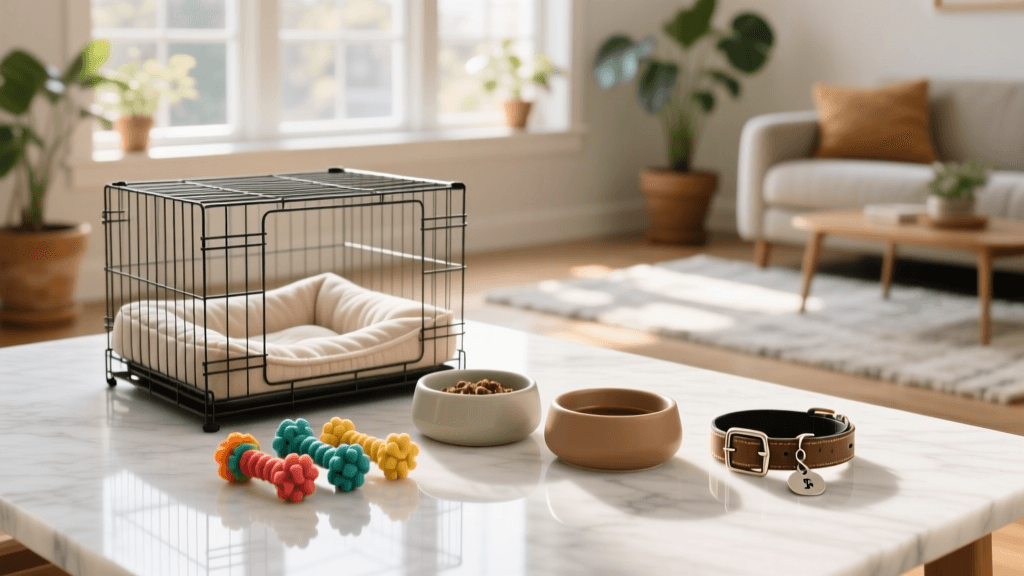
No matter how thoroughly you puppy-proof, you cannot supervise your dog 24/7. First-time owners must establish a designated 'Puppy Zone'—a safe, confined area where the dog can relax without access to hazards. This is typically achieved using a wire crate or an exercise pen.
Crate Sizing Guide: A crate should be large enough for the puppy to stand up, turn around, and lie down comfortably, but not so large that they can use one end as a bathroom. Measure your puppy from the tip of their nose to the base of their tail, and add 2 to 4 inches. For growing puppies, purchase a crate with a movable divider panel so you can expand the space as they grow.
Place the crate in a quiet but socially integrated area of the home, like a corner of the living room. Outfit it with a chew-proof bed (like the K9 Ballistics Tough Crate Pad) and a safe chew toy. This zone becomes their sanctuary and is an invaluable tool for housebreaking and preventing separation anxiety.
Emergency Protocols: What to Do If Things Go Wrong
Even with meticulous preparation, accidents happen. First-time owners must have an emergency action plan in place before the puppy arrives.
- Save Emergency Numbers: Program your local emergency veterinary clinic and the Pet Poison Helpline (855-764-7661) into your phone. Note that poison helplines typically charge an incident fee (around $59), but the expert guidance is invaluable in a crisis.
- Assemble a Pet First Aid Kit: Include styptic powder (to stop nail bleeding), hydrogen peroxide 3% (only use to induce vomiting if explicitly instructed by a vet), digital thermometer, and gauze.
- Know the Signs of Distress: Vomiting, lethargy, pale gums, excessive drooling, and uncoordinated movements are red flags. If you suspect your puppy has ingested a toxin or a foreign object, do not wait for symptoms to worsen—seek immediate veterinary care.
Conclusion: Peace of Mind for the Journey Ahead
Puppy-proofing your home is a proactive act of love. By taking the time to secure toxic substances, manage electrical hazards, and establish safe zones, you are setting the stage for a harmonious relationship with your new dog. While the initial investment of time and money may seem daunting, it pales in comparison to the cost of an emergency vet visit or the heartbreak of a preventable accident. Embrace the process, stay vigilant during those critical teething months, and enjoy the incredible journey of raising a happy, safe, and well-adjusted dog.
hannah-wickes
All our authors care for dogs every day — read more of their work on the authors page.