Puppy-Proofing & Essential Starter Gear for First-Time Owners
Discover the ultimate first-time owner guide to puppy-proofing your home and buying essential starter gear, complete with costs, measurements, and tips.
Welcome Home: The First-Time Owner's Guide to Puppy-Proofing and Gear
Bringing a new dog into your life is a profound commitment and an incredibly exciting milestone. However, for first-time owners, the transition from an empty house to a puppy-filled home can quickly become overwhelming. Puppies explore the world with their mouths and possess a boundless curiosity that can lead them straight into danger. Before your new furry friend crosses the threshold, it is critical to prepare your living space and invest in the right equipment. This comprehensive guide will walk you through the exact steps to puppy-proof your home, the essential starter gear you actually need (with specific product recommendations and costs), and how to establish a safe, structured routine from day one.
Room-by-Room Puppy-Proofing Checklist
The most effective way to puppy-proof is to get down on your hands and knees. Viewing your home from a puppy's eye level reveals hazards you might otherwise miss. According to the American Kennel Club (AKC), securing your environment is the first line of defense against accidental injuries and destructive behaviors.
The Kitchen and Dining Area
The kitchen is arguably the most dangerous room for a curious puppy. Your primary focus here should be securing trash and eliminating access to toxic foods.
- Trash Cans: Puppies are natural scavengers. Invest in a heavy-duty, step-on trash can with a secure lid, such as the Simplehuman 50 Liter Semi-Round Kitchen Step Trash Can (approx. $80). Ensure it is tucked into a corner or inside a latched cabinet.
- Xylitol and Toxic Foods: Xylitol, an artificial sweetener found in sugar-free gum, some peanut butters, and baked goods, is highly toxic to dogs and can cause rapid liver failure. Store all human food in upper cabinets. Keep grapes, raisins, onions, garlic, and chocolate completely out of reach.
- Lower Cabinets: Install magnetic childproof locks (approx. $15 for a multi-pack) on all lower cabinets containing cleaning supplies, dish soap, or plastic bags.
The Living Room and Common Areas
Living rooms are filled with electrical hazards and chewable temptations.
- Electrical Cords: Puppies love the texture of rubbery cords. Use split-loom tubing or cord concealers like the J-Cord Cable Management Sleeves (approx. $15) to bundle and hide TV and lamp wires. Alternatively, apply a bitter-tasting deterrent spray like Grannick's Bitter Apple Spray (approx. $12) to cords and baseboards.
- Houseplants: Many common houseplants, including Pothos, Philodendron, and Sago Palms, are highly toxic. Consult the ASPCA's Toxic and Non-Toxic Plants list to audit your indoor greenery. Move toxic plants to high, unreachable shelves or replace them with pet-safe alternatives like Spider Plants or Boston Ferns.
- Small Objects: Remove coins, children's toys, shoes, and remote controls from coffee tables and floors to prevent intestinal blockages.
Bathrooms and Laundry Rooms
These rooms contain concentrated chemicals and medications.
- Medications: Never leave pill bottles on the bathroom counter. A puppy can easily chew through a plastic bottle and ingest a lethal dose of ibuprofen or acetaminophen. Store all medications in high, latched medicine cabinets.
- Toilets and Laundry Pods: Keep toilet lids closed at all times to prevent drinking from chemically treated water or drowning. Store laundry detergent pods in locked cabinets; their bright colors and squishy texture make them look like toys, but they can cause severe chemical burns to a puppy's mouth and esophagus.
Essential Starter Gear: What to Buy and What to Skip
Pet stores are designed to make you buy everything on the shelf. As a first-time owner, it is easy to overspend on gimmicks. Here is a practical, actionable list of the exact gear you need to set your puppy up for success, complete with estimated costs.
1. The Crate and Bedding
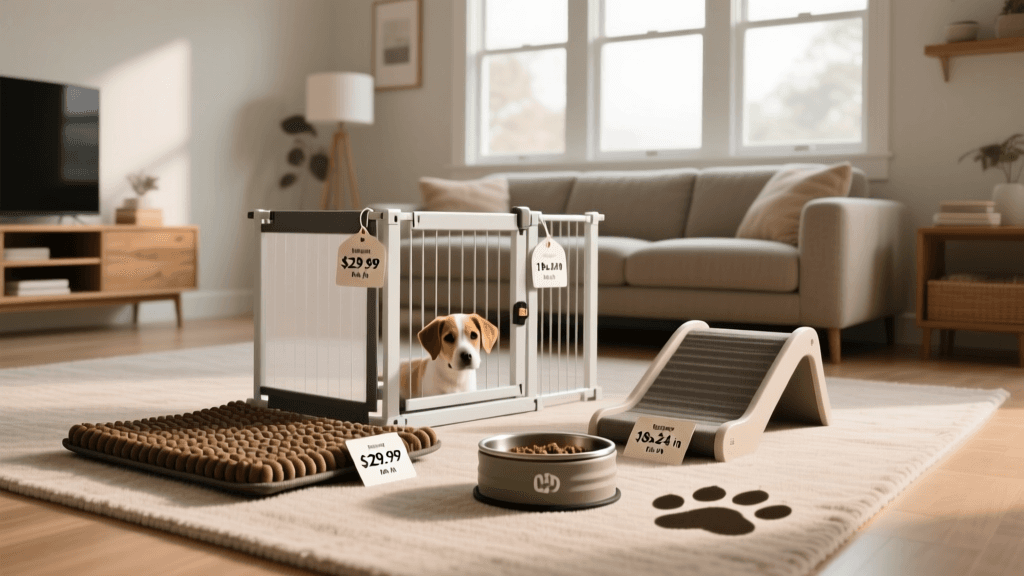
A crate is not a cage; it is your puppy's den and the most effective tool for potty training and preventing destructive behavior. The MidWest Homes for Pets iCrate (approx. $50-$80 depending on size) is an industry standard. Sizing Tip: Buy a crate that will fit your dog's expected adult size, but use the included wire divider panel to restrict the space. The puppy should have just enough room to stand up, turn around, and lie down. If the space is too large, they will use one corner as a bathroom.
2. Walking and Potty Gear
Skip the retractable leash. They teach dogs to pull and offer zero control in emergencies. Instead, purchase a standard 6-foot nylon or leather leash (approx. $15). Pair this with a front-clip harness like the Kurgo Tru-Fit Smart Harness (approx. $30). The front D-ring gently redirects the puppy's momentum toward you when they pull, making leash training significantly easier.
3. Chew Toys and Enzymatic Cleaners
Puppies go through a teething phase that lasts until they are about six months old. You must provide appropriate outlets for their chewing. The KONG Classic Dog Toy (Red, approx. $12-$15) is indestructible for most puppies and can be stuffed with frozen peanut butter (xylitol-free) to soothe sore gums and provide mental enrichment.
Accidents will happen. Standard household cleaners do not break down the uric acid in dog urine, meaning your puppy will smell it and re-soil the same spot. Invest in a high-quality enzymatic cleaner like Nature's Miracle Advanced Stain & Odor Eliminator (approx. $15). Saturate the area, let it sit for 10 minutes, and blot it dry.
Comparison Chart: Choosing the Right Crate for Your Puppy
Selecting the right crate material depends on your puppy's temperament and your living situation. Use the table below to make an informed decision.
| Crate Type | Estimated Cost | Best For | Pros & Cons |
|---|---|---|---|
| Wire Crate | $50 - $90 | First-time owners, potty training, chewers. | Pros: Excellent visibility, foldable, includes divider. Cons: Heavy, can feel less "cozy" without a cover. |
| Plastic/Airline Crate | $40 - $75 | Travel, den-loving dogs, drafty homes. | Pros: Cozy, secure, airline-approved. Cons: Poor ventilation in summer, harder to clean. |
| Soft-Sided Crate | $30 - $60 | Fully house-trained adult dogs, camping. | Pros: Lightweight, portable. Cons: Easily destroyed by teething puppies, not for potty training. |
Establishing a Safe Zone and Daily Routine
Once your home is proofed and your gear is assembled, the final step is establishing a routine. Dogs thrive on predictability. The Humane Society of the United States emphasizes that gradual, positive crate training is essential for a well-adjusted dog.
The First 48 Hours
When you first bring your puppy home, restrict their access to just one or two puppy-proofed rooms. Set up their "Safe Zone" with their crate, a water bowl, and a few chew toys. Do not overwhelm them by introducing them to the entire house or hosting a welcome party. Allow them to decompress and explore at their own pace.
The Potty Training Schedule
A general rule of thumb for a puppy's bladder capacity is one hour per month of age. A two-month-old puppy can hold it for roughly two hours maximum. To prevent accidents, take your puppy outside:
- Immediately after they wake up from a nap or crate time.
- Within 15 minutes after eating or drinking.
- Immediately after a vigorous play session.
- Every 1 to 2 hours during the day.
Always take them to the exact same spot outside. The residual scent will trigger their instinct to eliminate. When they go, offer immediate, high-value praise and a small training treat. Consistency in the first three weeks will save you months of frustration later.
Final Thoughts for First-Time Owners
Preparing for a new dog requires time, effort, and a bit of upfront financial investment, but the payoff is immeasurable. By meticulously puppy-proofing your home, investing in durable, purpose-driven gear, and committing to a structured daily routine, you are laying the foundation for a safe, harmonious life with your new best friend. Take a deep breath, trust the process, and enjoy the incredible journey of raising your new companion.
anouk-beaumont
All our authors care for dogs every day — read more of their work on the authors page.