Puppy Proofing Your Home and Building a Dog First Aid Kit
Learn how to puppy-proof your home and build a comprehensive dog first aid kit. Discover essential safety gear, toxic hazards, and emergency prep tips.
Bringing Your New Dog Home: The Ultimate Safety and Emergency Guide
Bringing a new dog or puppy into your home is one of life’s most exciting milestones. However, the transition from a shelter or breeder to a brand-new environment comes with hidden hazards that can quickly turn a joyful occasion into an emergency. Puppies and newly adopted adult dogs are naturally curious, often exploring their new surroundings with their mouths and paws. This instinct, while normal, puts them at significant risk for choking, poisoning, and physical injury. Preparing your home and assembling a comprehensive emergency plan before your dog’s paws touch your floor is the most critical step in responsible pet ownership.
Room-by-Room Puppy Proofing Guide
According to the American Kennel Club (AKC), effective puppy-proofing requires you to get down on your hands and knees to view your home from a dog’s eye level. What looks safe from a standing height can be a deadly hazard at floor level.
The Kitchen and Laundry Room
The kitchen and laundry room contain the highest concentration of toxic substances in your home. All household cleaners, detergents, and antifreeze must be moved to upper cabinets or secured with heavy-duty childproof latches, such as the Safety 1st Magnetic Locking System. Keep toxic foods like xylitol (common in sugar-free gum and peanut butter), grapes, raisins, macadamia nuts, and chocolate completely out of reach. Ensure your trash cans have locking lids or are stored inside a latched pantry, as the scent of discarded food bones or corn cobs can cause life-threatening intestinal blockages if ingested.
Living Areas and Bedrooms
Electrical cords are a major electrocution and burn hazard. Use split-loom tubing or hard plastic cord concealers like the D-Line Cord Cover to bundle and hide wires behind entertainment centers and desks. Small items such as coins, hair ties, children's toys, and buttons must be kept in closed bins to prevent choking or gastrointestinal obstructions. When restricting access to dangerous areas like staircases or fireplaces, use hardware-mounted baby gates rather than pressure-mounted ones. For large breed puppies, ensure the gate is at least 28 to 32 inches high with vertical bar gaps no wider than 2.5 inches to prevent heads from getting stuck.
Houseplants and Outdoor Spaces
Many common houseplants are highly toxic to dogs. The ASPCA maintains a comprehensive database of toxic flora, but as a general rule, remove Sago Palms, Lilies, Oleander, and Pothos from your home entirely. Outdoors, inspect your fencing for gaps, loose boards, or digging vulnerabilities. Avoid using cocoa bean mulch in your garden beds, as its sweet scent attracts dogs but contains theobromine, the same toxic compound found in chocolate.
Building Your New Dog Emergency First Aid Kit
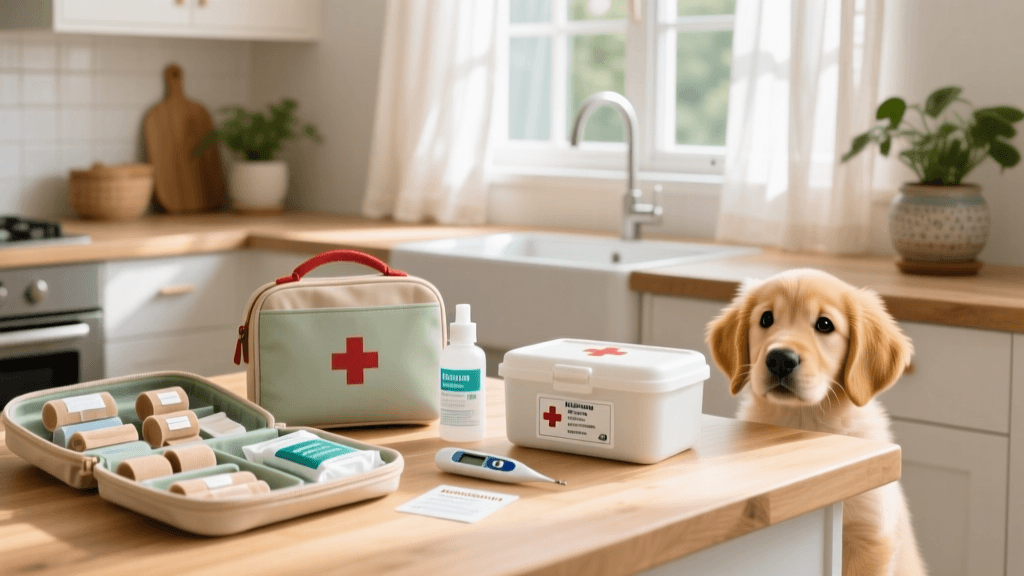
Every new dog owner must have a dedicated canine first aid kit ready before bringing their pet home. The American Red Cross emphasizes that having the right supplies on hand can stabilize your pet and prevent minor injuries from becoming major crises. Store these items in a waterproof, easily accessible tackle box or dedicated bag.
- Wound Care Supplies: Stock up on Vetwrap (self-adhering bandage material that won't stick to fur), non-stick sterile Telfa pads, and medical adhesive tape. Include a bottle of Kwik Stop styptic powder to immediately halt bleeding from torn nails or minor paw pad cuts.
- Vital Tools: A digital rectal thermometer is essential; a dog’s normal resting temperature is between 101.0°F and 102.5°F. Also include blunt-nosed scissors for safely cutting bandages or fur, a specialized tick removal tool like the Tick Twister, and a bright LED penlight for examining eyes and ears.
- Emergency Medications: Keep a fresh bottle of 3% Hydrogen Peroxide to induce vomiting, but only use it under the direct instruction of a veterinarian or poison control. Stock unflavored Diphenhydramine (Benadryl) for acute allergic reactions or bee stings; the standard emergency dosage is 1mg per pound of body weight, though you must always verify this with your vet based on your dog's specific health history.
- Soothing Agents: Include sterile saline eye wash for flushing out debris or dirt, and a water-based lubricating jelly to protect the eyes if you need to apply topical flea treatments or medications near the face.
Travel and Transit Safety
Safety extends beyond your living room; it is crucial during the car ride home and all subsequent travels. Unrestrained dogs can become dangerous projectiles in the event of a sudden stop or collision. Invest in a crash-tested harness, such as the Sleepypod Clickit Sport or the Kurgo Enhanced Strength Harness, which connects directly to your vehicle's seatbelt tether. If you prefer using a crate, ensure it is properly sized: your dog should be able to stand up without their ears touching the top, turn around comfortably, and lie down fully extended. Add 2 to 4 inches to your dog's height and length measurements to find the perfect crate dimensions. Secure the crate in the vehicle using heavy-duty ratchet straps or built-in vehicle tie-down points.
Emergency Action Plan and Cost Expectations
In a true emergency, panic is your biggest enemy. Create a physical emergency contact sheet, laminate it, and stick it to your refrigerator. Save these numbers in your phone under 'ICE' (In Case of Emergency). Understanding the potential financial impact of emergencies also helps you prepare, whether through an emergency savings fund or a comprehensive pet insurance policy.
| Emergency Type | Primary Contact | Estimated Cost / Action Required |
|---|---|---|
| Toxin Ingestion | ASPCA Animal Poison Control | $95 Consult Fee / ER Visit $500 - $2,000+ |
| Severe Trauma / HBC | Local 24/7 Emergency Vet | $1,000 - $5,000+ (Surgery & ICU Care) |
| Bloat (GDV) | Nearest Open ER Clinic | $1,500 - $7,500 (Immediate Surgery Required) |
| Choking / Airway | Emergency Vet / 911 | Perform Canine Heimlich / Rush to ER |
For toxic ingestions, the ASPCA Animal Poison Control Center (APCC) is available 24/7. While there is a consultation fee, their experts can immediately tell you if the ingested item is lethal, what symptoms to watch for, and whether you need to rush to the emergency room or simply monitor your dog at home.
Final Thoughts on Preparedness
Getting a dog is a profound commitment that extends far beyond providing food and affection. By meticulously puppy-proofing your living spaces, assembling a professional-grade first aid kit, and establishing a clear emergency action plan, you are setting the foundation for a long, healthy, and safe life together. Take the time to walk through your home today, view it through the eyes of your new best friend, and eliminate the risks before they ever cross the threshold.
priya-sutaria
All our authors care for dogs every day — read more of their work on the authors page.