Puppy Proofing Fails: Diagnosing Hazards and Solutions
Discover common puppy-proofing blind spots and actionable solutions to safely prepare your home before bringing your new puppy or rescue dog home.
Bringing a new dog into your life is a milestone filled with joy, but the "Getting a Dog" phase requires rigorous, objective preparation. Many new owners believe they have successfully puppy-proofed their homes, only to face emergency veterinary bills or destroyed property within the first 48 hours. Diagnosing household hazards from a canine perspective—rather than a human one—is the cornerstone of a safe transition. This guide diagnoses the most common puppy-proofing blind spots and provides concrete, actionable solutions to secure your home before your new companion arrives.
Diagnosing the "Eye-Level" Blind Spot
Adults navigate their homes at a height of five to six feet, completely ignoring the hazards that exist between the floor and knee-level. Puppies, however, explore the world from a vantage point of six to eighteen inches off the ground. This discrepancy leads to the most common first-week emergencies: electrocution from chewed wires and intestinal blockages from swallowed household items.
The Problem: Dangling Cords and Baseboard Hazards
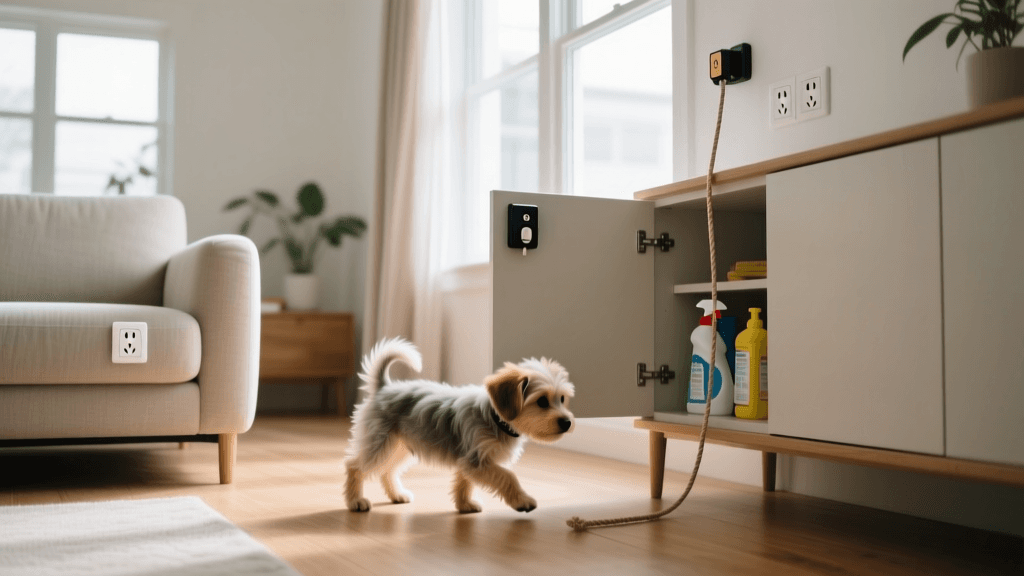
Laptop chargers, lamp cords, and dangling window blind strings are irresistible to teething puppies. A single bite into a live wire can cause severe oral burns or fatal pulmonary edema. Furthermore, rubber cord casings can splinter and cause gastrointestinal obstructions requiring surgery costing upwards of $3,000.
The Solution: Concealment and Elevation
- Cord Raceways: Purchase J-Channel cable management kits (such as the Yecaye or JOTO cable raceways, approximately $15 for 16 feet). Adhere these to the baseboards to completely enclose power strips and television cables.
- Blind Cord Safety: Zip-tie all looped window blind cords at least 48 inches above the floor, or replace them with cordless cellular shades.
- The "Snout Test": Crawl on your hands and knees through every room. If you can reach it, grab it, or chew it from the floor, your puppy will too. Relocate shoes, books, and children's toys to bins with latching lids.
Botanical Hazards: The Houseplant Trap
Houseplants add life to your decor, but many common varieties are severely toxic to dogs. According to the ASPCA Animal Poison Control Center, ingestion of certain plants can lead to acute organ failure.
The Problem: Hidden Toxins in Plain Sight
The Sago Palm, frequently used in indoor landscaping, is highly toxic. The Pet Poison Helpline warns that chewing even one seed of the Sago Palm can cause severe liver failure and death in dogs. Other common offenders include Pothos, Aloe Vera, and Peace Lilies, which cause severe oral irritation and vomiting.
The Solution: Relocation and Substitution
Audit every plant in your home and cross-reference it with the ASPCA's toxic plant database. For toxic plants, you have two options: rehome them entirely, or move them to hanging macrame planters suspended at least six feet off the ground (ensuring no fallen leaves can drift to the floor). If you wish to keep floor-level greenery, substitute toxic plants with dog-safe alternatives like the Spider Plant, Boston Fern, or Calathea.
Structural Gaps and Escape Routes
The American Kennel Club (AKC) emphasizes that dogs are natural escape artists, and inadequate containment is a leading cause of lost pets and outdoor injuries.
The Problem: Pressure-Mounted Gates and Fencing Gaps
Pressure-mounted baby gates are convenient but fundamentally flawed for medium-to-large breeds or highly motivated terriers. A 30-pound puppy can easily dislodge a pressure gate by leaning against it. Additionally, wooden privacy fences often have gaps at the bottom due to soil erosion, allowing small breeds to squeeze through.
The Solution: Hardware and Mesh Reinforcement
- Hardware-Mounted Gates: Invest in gates that screw directly into wall studs or door frames. The Carlson Pet Products Design Studio Metal Gate (approx. $50) features a walk-through door and sturdy steel construction that withstands jumping and leaning.
- Fence Gap Repair: Walk your perimeter fence. Any gap larger than two inches is a potential escape route for a puppy. Use 19-gauge hardware cloth (1/2 inch mesh wire) and heavy-duty zip ties or U-nails to secure the bottom 24 inches of your fence line to the ground.
- Door Draft Stoppers: For interior doors that don't latch properly, install a heavy-duty rubber draft stopper to prevent puppies from squeezing into off-limits rooms like bathrooms or laundry areas.
Puppy-Proofing Gear Comparison Chart
To help you budget and plan your home preparation, here is a structured comparison of essential puppy-proofing gear, including specific use cases and estimated costs.
| Item | Best For | Estimated Cost | Installation Type |
|---|---|---|---|
| Hardware-Mounted Gate | Staircases, kitchens, and high-traffic thresholds | $45 - $75 | Screw-in (Requires drill and studs) |
| J-Channel Cable Raceway | Concealing TV, lamp, and laptop power cords | $12 - $20 | Adhesive backing (Peel and stick) |
| Magnetic Cabinet Locks | Securing cleaning supplies and medications under sinks | $20 - $30 (for 8-pack) | Adhesive or Screw-in (Hidden inside) |
| 19-Gauge Hardware Cloth | Patching gaps at the base of outdoor wooden fences | $25 - $40 (per roll) | U-nails or heavy-duty zip ties |
| Bitter Apple Deterrent Spray | Discouraging chewing on baseboards and furniture legs | $8 - $15 | Spray application (Reapply daily) |
The Chemical and Cleaning Cabinet Oversight
Pushing bleach and laundry pods to the back of a lower cabinet is a critical error. Puppies can easily nudge open cabinet doors with their snouts or paws. Laundry detergent pods, in particular, pose a massive risk; their bright colors and squishy texture mimic chew toys, but biting into one releases concentrated, caustic chemicals that can burn the esophagus and cause severe respiratory distress if aspirated.
The Solution: Magnetic Locking Systems
Install a magnetic cabinet locking system (such as the Safety 1st Magnetic Locking System, approx. $25 for an 8-lock set). These locks mount inside the cabinet and remain completely invisible from the outside. They require a magnetic "key" to open, rendering the cabinets 100% inaccessible to your dog while remaining easy for you to use. Additionally, relocate all medications, vitamins, and essential oils to high shelves in a pantry or bedroom closet, as many human supplements (like xylitol-sweetened gummies or vitamin D) are lethal to dogs.
Outdoor Yard Diagnosis: Mulch, Water, and Perimeter Fails
Your living room isn't the only danger zone; your backyard requires equal scrutiny before letting your new dog off-leash.
The Problem: Toxic Landscaping and Standing Water
Cocoa bean mulch is a popular landscaping choice due to its rich color and pleasant chocolate scent. However, it contains theobromine—the same compound that makes chocolate toxic to dogs. Ingestion can lead to tremors, seizures, and cardiac events. Additionally, decorative ponds, buckets, or poorly drained areas can pose drowning risks for small breeds or puppies who fall in and cannot scale the steep edges.
The Solution: Yard Audits and Safe Alternatives
Remove all cocoa bean mulch and replace it with dog-safe alternatives like cedar mulch or pine straw. Ensure all decorative water features have a gradual, sloped exit ramp (such as the FrogLog animal escape ramp, approx. $30) so a dog can easily climb out if they fall in. Finally, inspect your fencing for protruding nails or loose wire that could tear a dog's skin or eyes during enthusiastic perimeter running.
Creating a "Decompression Zone" to Prevent Destructive Chewing
Often, what owners diagnose as a "puppy-proofing failure" (e.g., a destroyed sofa cushion or chewed drywall) is actually a behavioral issue stemming from environmental overstimulation. Puppies and newly adopted rescue dogs lack the emotional regulation to self-soothe in large, open, chaotic spaces.
The Solution: The Crate and Pen Setup
Before your dog arrives, set up a designated decompression zone in a low-traffic area of your home (like a quiet corner of the living room or a spare bedroom).
- The Crate: Use a wire crate (such as the MidWest Homes for Pets iCrate, approx. $45) sized appropriately for your dog's estimated adult weight. Use the included divider panel to shrink the space for a puppy, preventing them from soiling one end and sleeping in the other.
- The Playpen: Attach a foldable metal exercise pen to the crate door to create a safe, enclosed "apartment" when you cannot actively supervise them.
- Sensory Aids: For the first few nights, use a Snuggle Puppy Behavioral Aid (approx. $40), which includes a simulated heartbeat and heat pack to mimic littermates and drastically reduce separation anxiety and stress-chewing.
The First 48 Hours Protocol
Preparing your home is not a one-time checklist; it is an ongoing diagnostic process. During the first 48 hours, keep your new dog on a leash inside the house, even if you are sitting on the couch. This allows you to actively supervise their exploration, diagnose new blind spots you may have missed, and immediately redirect them to appropriate chew toys. By combining structural home modifications with proactive environmental management, you set the foundation for a safe, harmonious life with your new companion.
jonas-cole
All our authors care for dogs every day — read more of their work on the authors page.