Puppy Leash Reactivity in 2026: BAT Protocols & Calming Gear
Discover how to manage puppy leash reactivity in 2026 using BAT protocols, Adaptil pheromones, and expert desensitization techniques for anxious pups.
The Rise of Puppy Leash Reactivity in 2026
As we navigate the shifting landscape of urban pet ownership in 2026, veterinary behaviorists are noting a distinct rise in early-onset leash reactivity among puppies. Unlike older dogs who may develop reactivity due to prolonged negative experiences, puppy reactivity is almost exclusively rooted in fear, overstimulation, and a lack of early environmental socialization. When a puppy lunges, barks, or snaps at the end of a leash, they are not displaying dominance; they are exhibiting a distance-increasing behavior designed to make a perceived threat go away. Managing this anxiety early is critical to prevent it from hardening into lifelong behavioral issues.
Modern reactive dog management has moved entirely away from aversive corrections, which only serve to suppress warnings while increasing internal anxiety. Instead, the 2026 gold standard for managing anxious puppies relies on a combination of Behavior Adjustment Training (BAT), pheromone therapy, and sub-threshold desensitization. This guide will walk you through the exact protocols and calming gear you need to help your fearful puppy build confidence on the leash.
Understanding the Canine Fear Response and Critical Periods
Before implementing any training protocol, it is essential to understand the biological fear periods in a puppy's development. According to the American Kennel Club (AKC), puppies go through two primary fear periods: the first between 8 and 10 weeks of age, and the second, more pronounced period between 6 and 14 months. During these windows, a single traumatic event on a walk—such as being rushed by an off-leash dog or startled by loud urban machinery—can create a lasting negative association with the leash and the outdoors.
During a fear period, a puppy's amygdala (the brain's threat-detection center) is highly reactive. If you force a fearful puppy to interact with their trigger or pull them toward a scary object, you risk flooding their nervous system. Flooding does not cure fear; it induces learned helplessness or escalates defensive aggression. The goal of reactive management is to keep the puppy's nervous system regulated, allowing the prefrontal cortex to remain engaged so learning can actually occur.
Reading Canine Calming Signals
To manage reactivity, you must become fluent in canine body language. Long before a puppy barks or lunges, they will display subtle 'calming signals' to communicate their stress and attempt to de-escalate a situation. Recognizing these early warning signs allows you to increase distance before your puppy crosses their reactivity threshold. Key signals include:
- Lip Licking and Yawning: When not related to food or sleep, these are primary stress indicators.
- Whale Eye: When the puppy turns their head away but keeps their eyes fixed on the trigger, exposing the whites of their eyes.
- Sniffing the Ground: Sudden, intense sniffing when a trigger approaches is a displacement behavior used to avoid direct confrontation.
- Curving: Puppies naturally want to approach or pass triggers in a curved line rather than head-on. Forcing a straight-line passing on a narrow sidewalk often triggers a reactive outburst.
Behavior Adjustment Training (BAT) for Puppies
Developed by certified behaviorist Grisha Stewart, Behavior Adjustment Training (BAT) is a force-free protocol designed specifically for reactivity and fear. Unlike traditional counter-conditioning, which relies heavily on high-value food to change an emotional response, BAT uses 'functional rewards.' For a fearful puppy, the most valuable reward when encountering a scary trigger is not a piece of chicken—it is distance. BAT empowers the puppy to make choices and learn that they can control their environment through calm behavior.
Step-by-Step BAT Protocol for Leash Reactivity
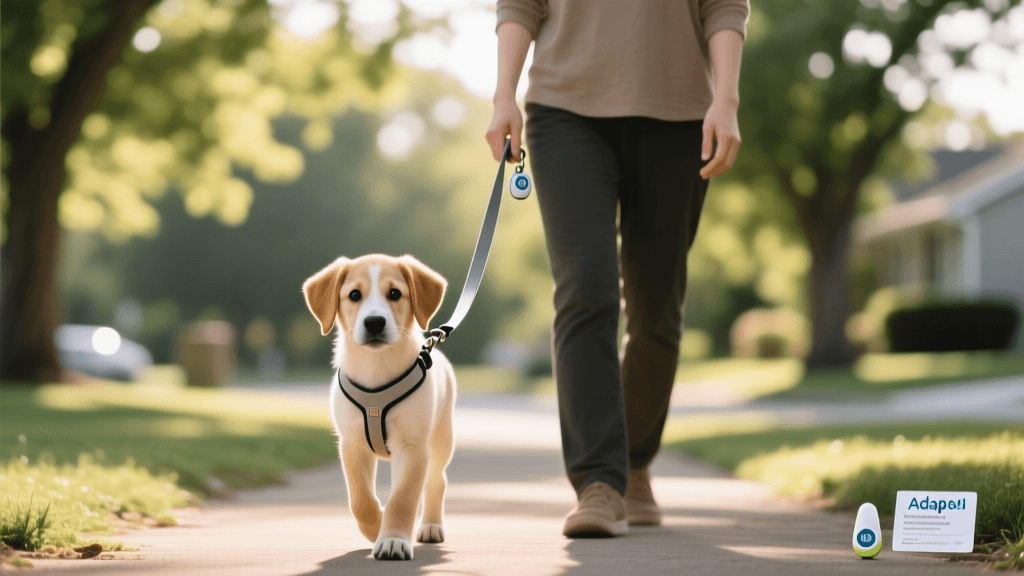
To implement BAT in 2026, you will need a 15-to-20-foot biothane long line, a well-fitted Y-front harness (to avoid tracheal pressure), and a quiet environment with controlled triggers (like a calm, distant helper dog).
- Identify the Sub-Threshold Distance: Find the exact distance at which your puppy notices the trigger but does not react. They should be able to look at the trigger and then easily look back at you. This is your 'working distance.'
- Observe and Wait: Walk slowly with your puppy on the long line. When they notice the trigger, stop walking and give them slack. Allow them to observe the trigger without any pressure on the harness.
- Mark Disengagement: The moment your puppy voluntarily looks away from the trigger, sniffs the ground, or turns their body away, use a gentle marker word like 'Yes' or a soft clicker.
- The Functional Reward: Immediately after marking, encourage your puppy to move away from the trigger with you. Moving away and increasing distance is the functional reward that reinforces their calm disengagement.
- Reset and Repeat: Once the puppy is relaxed, you can slowly decrease the distance by a few feet and repeat the process. If the puppy reacts, you have moved too close too quickly. Simply retreat to a greater distance.
By consistently practicing BAT, you teach your puppy that calm behavior makes the scary thing go away, building profound confidence and reducing leash frustration.
Top Calming Gear and Pheromone Therapy for 2026
Training protocols like BAT are significantly more effective when paired with biological calming aids. In 2026, the veterinary behavior community strongly advocates for a multi-modal approach to anxiety management. Below are the most effective, science-backed calming tools available this year.
Adaptil Junior Pheromone Therapy
Dog Appeasing Pheromone (DAP) mimics the natural pheromones released by a mother dog while nursing, signaling safety and security to her pups. The updated 2026 Adaptil Junior Collar features an improved slow-release matrix that lasts for a full 45 days, even in high-humidity environments. For leash reactivity, pairing the collar with the Adaptil Transport Spray applied to the puppy's harness 15 minutes before a walk can significantly lower their baseline cortisol levels before they even step outside.
Zylkene and L-Theanine Supplements
For puppies with high generalized anxiety, daily nutraceuticals can provide a gentle baseline of calm. Zylkene, derived from a milk protein (casein), binds to GABA receptors in the brain to promote relaxation without sedation. Similarly, L-Theanine (found in products like Virbac Anxitane) increases dopamine and serotonin levels. According to the ASPCA, these supplements are highly safe for growing puppies and are best administered 90 minutes before an anticipated stressor, such as a busy neighborhood walk or a veterinary visit.
The Thundershirt Puppy Anxiety Vest
The Thundershirt applies gentle, constant pressure to the puppy's torso, similar to swaddling an infant. The 2026 puppy-specific models utilize a highly breathable, moisture-wicking mesh that prevents overheating during summer walks. While not a cure for severe reactivity, it is an excellent tool for managing environmental anxiety, such as reactivity triggered by loud urban noises or chaotic dog parks.
2026 Calming Gear Comparison Chart
| Product | Mechanism of Action | 2026 Est. Cost | Best Use Case |
|---|---|---|---|
| Adaptil Junior Collar | Synthetic maternal pheromones | $28 - $35 | 24/7 baseline anxiety reduction |
| Zylkene (75mg) | Casein-derived GABA binding | $30 (30 caps) | Situational stress (vet, grooming) |
| Virbac Anxitane | L-Theanine amino acid | $42 (30 chews) | Pre-walk focus and impulse control |
| Thundershirt Puppy | Constant gentle torso pressure | $45 - $50 | Noise phobias and environmental chaos |
| Long Line (Biothane) | Safe distance management (BAT) | $25 - $40 | Leash reactivity training and sniffaris |
Creating a Daily Desensitization Schedule
Consistency is the cornerstone of reactive puppy management. The Fear Free Pets organization emphasizes that short, positive sessions are far superior to long, exhausting walks that end in a reactive meltdown. Here is a sample daily schedule for a reactive puppy in an urban environment:
- Morning (7:00 AM): Low-stress 'sniffari' in a quiet, enclosed area. No triggers. Allow the puppy to decompress and engage their natural foraging instincts. Use a long line.
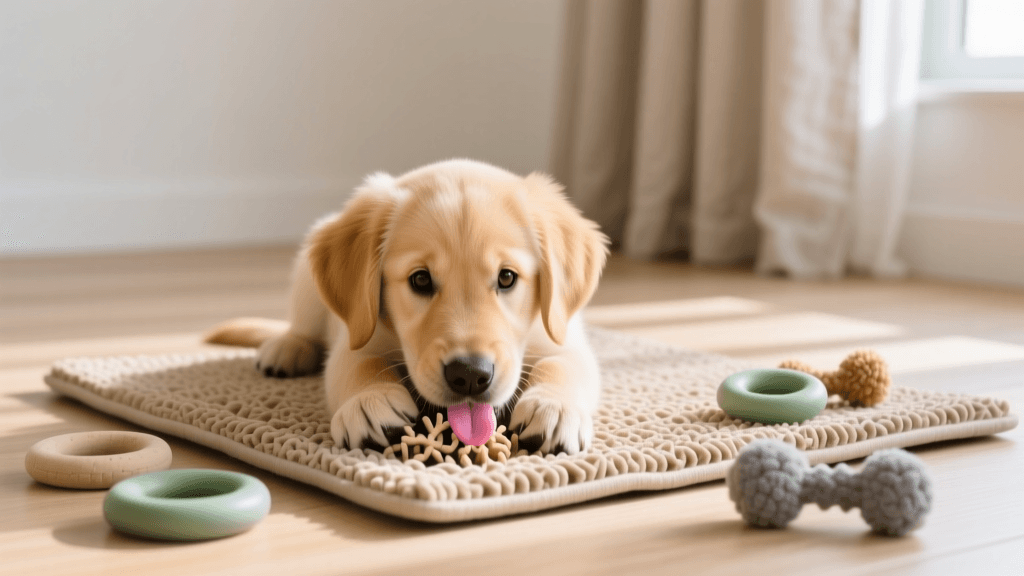
- Mid-Day (12:00 PM): Mental enrichment indoors. Use snuffle mats, Kongs, and lick mats. Licking and chewing release endorphins that naturally soothe the canine nervous system.
- Afternoon (4:00 PM): Structured BAT session. Find a controlled environment (e.g., a quiet park bench at a distance from a walking path). Practice marking and rewarding disengagement from distant triggers for a maximum of 15 minutes.
- Evening (8:00 PM): Decompression walk in a dark, quiet area. Focus entirely on loose-leash walking and sniffing. Avoid high-traffic zones entirely.
When to Seek Professional Help
While BAT and calming gear are highly effective, severe reactivity that includes redirected biting, extreme panic, or an inability to eat treats even at vast distances requires professional intervention. If your puppy's reactivity does not improve after 4 to 6 weeks of consistent sub-threshold training, consult a certified veterinary behaviorist. In 2026, early pharmaceutical intervention (such as puppy-safe SSRIs) is increasingly recognized as a humane and necessary tool to lower anxiety enough for behavioral modification to take hold. Remember, managing a reactive puppy is a marathon, not a sprint. By prioritizing their emotional well-being and utilizing modern, force-free protocols, you can help your anxious puppy grow into a confident, well-adjusted adult dog.
hannah-wickes
All our authors care for dogs every day — read more of their work on the authors page.