Early Puppy Joint Care To Prevent Senior Arthritis
Learn how early puppy joint care, proper nutrition, and exercise limits prevent senior dog arthritis and ensure lifelong mobility for your growing pup.

The Puppy-Senior Connection: Why Early Joint Care Matters
When we think of senior dog care, we often picture gray muzzles, cloudy eyes, and stiff joints. Osteoarthritis (OA) and hip dysplasia are widely recognized as conditions of aging canines. However, as veterinary science has advanced, experts have made a crucial discovery: the foundation for a senior dog's joint health is actually laid during their first year of life. Puppyhood is a period of rapid, intense skeletal growth. The decisions you make regarding your puppy's diet, exercise, and environment between eight weeks and twelve months of age will directly dictate their mobility, comfort, and quality of life in their golden years.
According to the Orthopedic Foundation for Animals (OFA), hip dysplasia and subsequent osteoarthritis are not solely genetic; environmental factors such as rapid growth, excessive weight, and inappropriate exercise during puppyhood play a massive role in disease expression. By adopting a senior-minded approach to puppy care, you can drastically reduce the wear and tear on your dog's developing joints, potentially delaying or entirely preventing the onset of debilitating arthritis later in life.
Understanding Puppy Growth Plates and Vulnerability
To understand why puppies need specialized care to protect their future senior mobility, you must understand growth plates. Growth plates (physes) are soft, cartilaginous areas at the ends of long bones in growing animals. These plates are responsible for bone lengthening. Unlike mature bone, growth plates are incredibly vulnerable to trauma, excessive stress, and repetitive impact.
When a puppy runs too far, jumps from high surfaces, or plays too roughly on hard surfaces, the micro-trauma can damage these soft plates. If the growth plates are injured, they may close prematurely or heal unevenly, leading to angular limb deformities or improper joint congruity. A joint that does not fit together perfectly will experience abnormal friction. Over the course of a decade, this friction grinds away the articular cartilage, resulting in the bone-on-bone pain characteristic of senior osteoarthritis. The American College of Veterinary Surgeons (ACVS) notes that osteoarthritis is a progressive, degenerative disease that is best managed through early prevention and weight control, as the cartilage damage is irreversible once it occurs.
The 5-Minute Rule: Safe Exercise Guidelines for Puppies
One of the most common mistakes well-meaning owners make is over-exercising their puppies. A tired puppy is a well-behaved puppy, but physical exhaustion should never come at the cost of joint damage. Forced exercise, such as leash walking, jogging, or repetitive fetching, places unnatural, sustained stress on developing joints.
Veterinarians and canine physical therapists widely recommend the 5-Minute Rule for structured, forced exercise. The rule dictates that a puppy should have no more than five minutes of structured walking per month of age, up to twice a day. This does not apply to free, unstructured play in a soft, grassy yard where the puppy can stop and rest whenever they choose.
| Puppy Age | Maximum Structured Walk (Per Session) | Total Daily Structured Exercise | Recommended Surface |
|---|---|---|---|
| 2 Months | 10 Minutes | 20 Minutes | Grass, Carpet, Dirt |
| 3 Months | 15 Minutes | 30 Minutes | Grass, Carpet, Dirt |
| 4 Months | 20 Minutes | 40 Minutes | Grass, Flat Trails |
| 5 Months | 25 Minutes | 50 Minutes | Grass, Flat Trails |
| 6 Months | 30 Minutes | 60 Minutes | Varied Terrain |
| 8 Months | 40 Minutes | 80 Minutes | Varied Terrain |
| 12 Months | 60 Minutes | 120 Minutes | All Safe Surfaces |
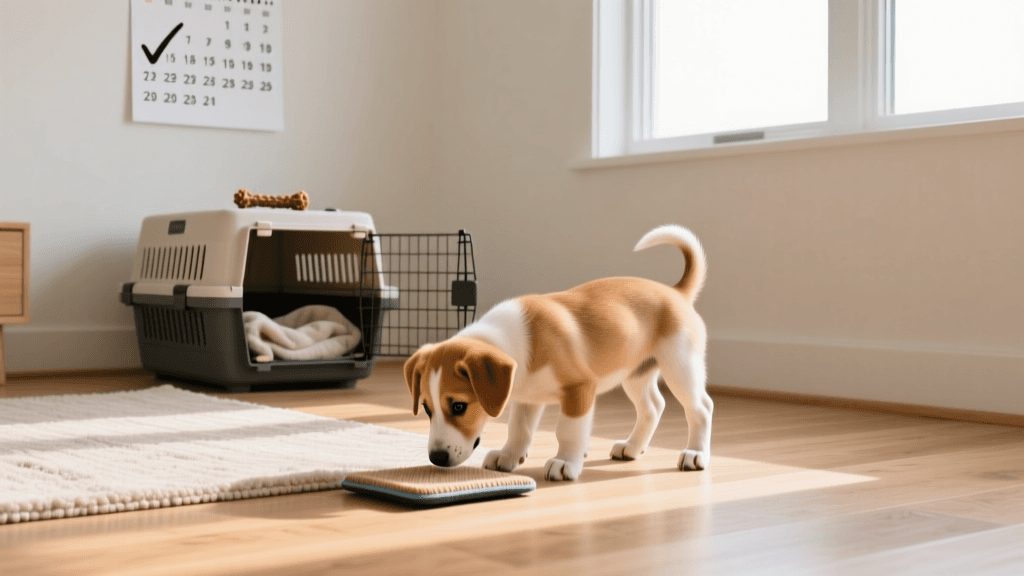
Notice that the surfaces recommended are forgiving. Concrete, asphalt, and slick hardwood floors should be avoided for structured exercise. Slipping and sliding on hardwood floors forces a puppy's legs to splay outward, placing immense strain on the hip and shoulder joints. Invest in interlocking foam mats or area rugs to cover slippery areas in your home during the puppy's first year.
Puppy Nutrition: Feeding for Senior Longevity
Nutrition is the second pillar of early joint preservation. Overfeeding a puppy to make them chubby is one of the most detrimental things you can do for their long-term orthopedic health. Excess body weight acts as a constant mechanical load on developing joints and growth plates. Furthermore, excessive caloric intake accelerates the growth rate, causing bones to grow faster than the supporting muscles and tendons can adapt.
For medium to giant breed puppies, it is critical to feed a diet specifically formulated for large breed growth. These diets are strictly regulated to maintain optimal calcium-to-phosphorus ratios and controlled caloric density. Large breed puppy foods are designed to slow the growth rate to a safe, steady pace, allowing the skeleton to mineralize properly without the risk of developmental orthopedic diseases.
Maintaining the Ideal Body Condition Score (BCS)
You should be able to easily feel your puppy's ribs without pressing hard, but you should not see them prominently jutting out. When looking from above, your puppy should have a visible waist. Keeping your puppy on the lean side of the ideal BCS (a score of 4 or 5 on a 9-point scale) significantly reduces the incidence and severity of hip dysplasia and osteoarthritis in their senior years.
Environmental Modifications and Handling
How you handle your puppy and the environment they navigate daily have lasting impacts. Puppies lack the coordination and muscle mass to safely navigate human-sized environments.
- Block the Stairs: Repeatedly climbing up and down full flights of stairs before 12 months of age places repetitive concussive forces on the spine and hind limbs. Use baby gates to block stair access and carry your puppy up and down until they are fully mature and coordinated.
- No Furniture Jumping: Jumping off a sofa or bed requires a puppy to absorb an impact equal to several times their body weight through their front carpal (wrist) joints and shoulders. Provide pet stairs or ramps, or simply lift your puppy on and off furniture.
- Proper Lifting Technique: Never pick a puppy up by their front legs or scruff. Always support their chest with one hand and their hindquarters with the other to keep the spine aligned and prevent joint subluxation.
Early Screening: PennHIP and Preliminary OFA X-Rays
If you own a breed prone to joint issues (such as German Shepherds, Golden Retrievers, Labrador Retrievers, or French Bulldogs), early screening is a proactive step toward senior care. While final OFA certifications cannot be granted until a dog is two years old, early screening methods exist.
The PennHIP distraction method can be performed as early as 16 weeks of age. This specialized X-ray technique measures joint laxity (looseness) and can accurately predict the likelihood of developing osteoarthritis later in life. Knowing your puppy's PennHIP score allows you to tailor their exercise, consider early interventions if necessary, and adjust their lifelong weight management strategy.
Mental Enrichment: Tiring Out Puppies Without Joint Stress
Because physical exercise must be strictly limited to protect developing growth plates, many owners struggle with how to burn off their puppy's boundless energy. The secret to a well-behaved puppy who will grow into a healthy senior dog lies in mental enrichment. Mental work is often more exhausting for a dog than physical exercise, and it carries zero orthopedic risk.
Instead of playing high-impact games of fetch or taking excessively long walks, incorporate the following low-impact, high-reward activities into your puppy's daily routine:
- Snuffle Mats and Scatter Feeding: Hide your puppy's kibble in a snuffle mat or scatter it across a grassy yard. This engages their natural foraging instincts and can take 20 minutes to consume what they would normally eat in two minutes.
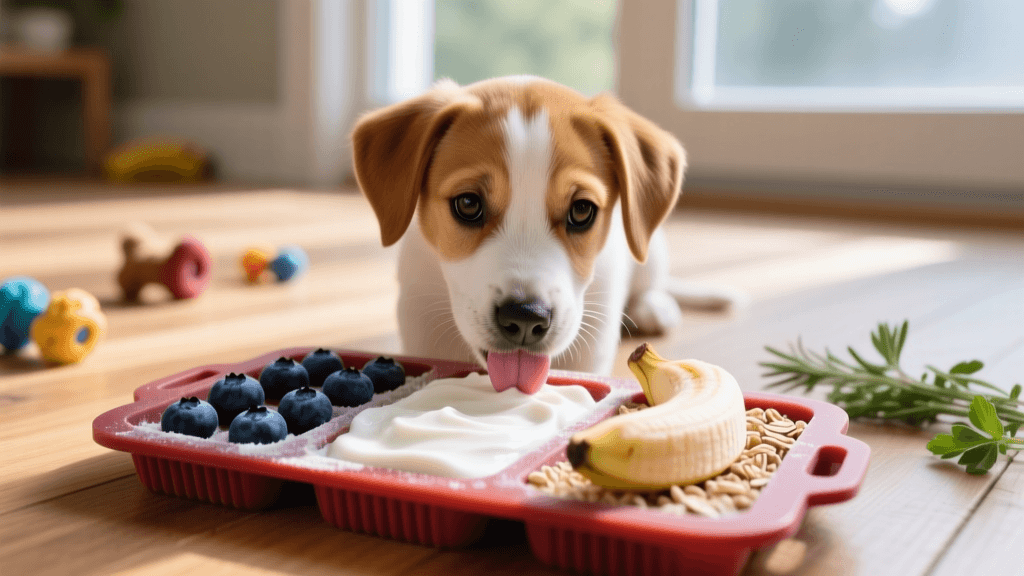
- Frozen Kongs and Lick Mats: Freezing puppy-safe peanut butter, plain yogurt, or soaked kibble inside a rubber toy provides prolonged mental stimulation and helps soothe teething gums without requiring any physical exertion.
- Short, Frequent Training Sessions: Five to ten minutes of positive reinforcement training tires a puppy's brain rapidly. This also builds a strong bond and establishes obedience that will be invaluable as they age and potentially lose their hearing or sight in their senior years.
- Scent Work Games: Hide treats around a single room and encourage your puppy to find them. Scent work is incredibly taxing on a dog's cognitive resources and is completely safe for their joints.
By swapping high-impact physical play for rigorous mental stimulation, you satisfy your puppy's need for activity while meticulously preserving their cartilage, ligaments, and growth plates for the decades ahead.
Summary Checklist for Lifelong Joint Health
Protecting your puppy's joints today is the ultimate act of senior dog care. Follow this checklist during their first year to ensure they remain active, pain-free, and happy in their twilight years:
- Adhere strictly to the 5-minute rule for structured leash walks.
- Feed a high-quality, breed-appropriate diet and avoid free-feeding to maintain a lean Body Condition Score.
- Cover slippery hardwood or tile floors with rugs or mats to prevent splaying.
- Carry your puppy up and down stairs and prevent them from jumping off high furniture.
- Discuss early orthopedic screening with your veterinarian at your 16-week wellness visit.
- Focus on mental enrichment to tire your puppy out without relying on excessive physical exertion.
By viewing puppyhood through the lens of senior care, you are giving your dog the greatest gift possible: a lifetime of pain-free movement and the ability to enjoy their golden years with the same vigor they had as a pup.
robin-maitland
All our authors care for dogs every day — read more of their work on the authors page.