The First-Time Owner Guide to Puppy Feeding Schedules
Discover the ultimate first-time owner guide to puppy feeding schedules, portion sizes, and nutrition tips for a healthy first year of growth.
Welcome to Puppy Parenthood: Why Nutrition Matters
Bringing a new puppy home is an exhilarating milestone, but it also comes with a wave of new responsibilities. As a first-time owner, one of the most common and pressing questions you will face is how to properly feed your growing dog. Puppyhood is a critical window for cognitive, muscular, and skeletal development. The food you provide, and more importantly, the schedule you establish, will dictate not only your puppy's physical health but also their behavioral habits, including potty training success.
According to the World Small Animal Veterinary Association (WSAVA), a balanced diet tailored to a puppy's specific life stage and expected adult size is paramount. Puppies require higher caloric density, specific calcium-to-phosphorus ratios, and elevated protein levels compared to adult dogs. However, simply leaving a bowl of kibble out all day—a practice known as free-feeding—is highly discouraged for first-time owners. Free-feeding makes potty training nearly impossible to predict and can lead to rapid, unhealthy weight gain. Instead, implementing a structured feeding schedule is the cornerstone of successful puppy rearing.
The First-Time Owner's Puppy Feeding Schedule
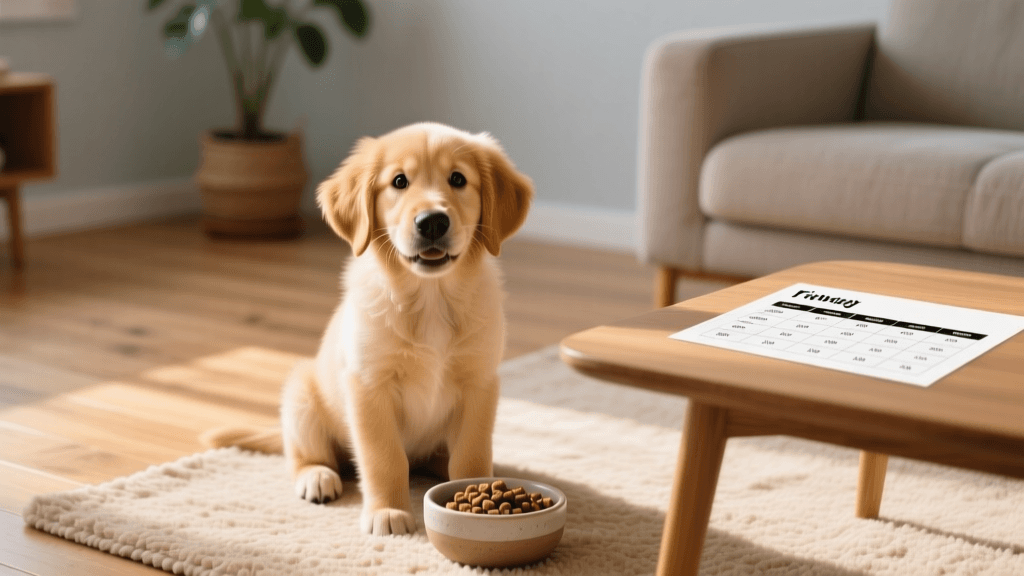
Puppies thrive on routine. A predictable feeding schedule regulates their digestive system, stabilizes their blood sugar, and gives you a reliable timetable for when they will need to eliminate. Here is a breakdown of how to structure your puppy's meals during their first year.
8 to 12 Weeks: The Frequent Feeder Phase
When you first bring your puppy home, their stomach is incredibly small, and their metabolism is running at full speed. During this phase, puppies need to eat four times a day to maintain their energy levels and prevent hypoglycemia, a dangerous drop in blood sugar common in toy and small breeds.
- 7:00 AM: Breakfast. Followed by a potty break 15-20 minutes later.
- 12:00 PM: Lunch. Ideal for a midday bathroom break and short play session.
- 5:00 PM: Dinner. Allows ample time for digestion and evening elimination before bed.
- 8:00 PM: A small evening snack or the final quarter of their daily kibble ration.
Pro Tip: Remove the food bowl after 15 minutes, even if they haven't finished. This teaches the puppy to eat when food is presented and prevents grazing.
3 to 6 Months: Transitioning to Three Meals
As your puppy's stomach capacity increases and their growth rate begins to stabilize, you can drop the late-night snack and transition to three meals a day. This aligns perfectly with a standard human work schedule if you are able to come home or hire a dog walker for a midday visit.
- 7:00 AM: Breakfast and morning walk.
- 1:00 PM: Lunch and midday potty break.
- 6:00 PM: Dinner and evening training session.
6 to 12 Months: Moving to Adult Routines
Between six and twelve months (depending on the breed's expected adult size), you will transition your puppy to two meals a day. This is the standard feeding schedule for most adult dogs and helps maintain a healthy metabolism.
- 7:00 AM: Breakfast.
- 6:00 PM: Dinner.
Hydration: Water Scheduling for Potty Training Success
Just as important as food is water intake. Puppies should have access to fresh, clean water throughout the day. However, to aid in overnight potty training, first-time owners should implement a water curfew. Pick up your puppy's water bowl approximately two to two-and-a-half hours before their bedtime. For example, if lights out is at 10:30 PM, remove the water bowl at 8:00 PM. Take them out for a final potty break right before bed. This simple adjustment drastically reduces middle-of-the-night whining and indoor accidents.
How Much Should You Feed Your Puppy? (Portion Guide)
Determining the exact portion size can be confusing, as every kibble brand has a different caloric density. The American Kennel Club (AKC) recommends using the feeding guidelines on your specific dog food packaging as a baseline, then adjusting based on your puppy's body condition score. You should be able to feel their ribs without pressing hard, but the ribs should not be visibly protruding.
Below is a general data table estimating daily portion sizes (in cups) based on high-quality, standard puppy kibble (approx. 350-400 kcal/cup). Always divide the daily total by the number of meals you are serving.
| Expected Adult Weight | 2-3 Months (Cups/Day) | 4-5 Months (Cups/Day) | 6-8 Months (Cups/Day) | 9-12 Months (Cups/Day) |
|---|---|---|---|---|
| Toy (5-10 lbs) | 1/2 to 1 | 1/2 to 1 | 1/2 to 3/4 | Transition to Adult Food |
| Small (10-25 lbs) | 1 to 1.5 | 1 to 1.5 | 1 to 1.25 | Transition to Adult Food |
| Medium (25-50 lbs) | 1.5 to 2.5 | 2 to 3 | 2 to 2.5 | Adult Portions |
| Large (50-90 lbs) | 2 to 3.5 | 3 to 4.5 | 3.5 to 5 | 4 to 6 |
| Giant (90+ lbs) | 3 to 5 | 4 to 6 | 5 to 7 | 6 to 9 |
Transitioning Foods Without Upsetting Tummies
When you bring your puppy home, the breeder or shelter will likely send you home with a small bag of their current food. If you plan to switch to a different premium brand, you must do so gradually to avoid gastrointestinal distress, diarrhea, and vomiting. Follow this 7-day transition protocol:
- Days 1-2: 75% old food, 25% new food.
- Days 3-4: 50% old food, 50% new food.
- Days 5-6: 25% old food, 75% new food.
- Day 7: 100% new food.
Actionable Advice: Keep a canine probiotic on hand, such as Purina FortiFlora or Zesty Paws Probiotic Bites, to sprinkle over their meals during the transition week. This helps stabilize their gut microbiome during the dietary shift.
Estimated Costs for the First Year
First-time owners are often surprised by the cumulative cost of puppy nutrition. Budgeting ahead ensures you can maintain a high-quality diet without financial strain. Here is a realistic breakdown of first-year feeding costs:
- Premium Puppy Kibble (e.g., Royal Canin, Hill's Science Diet, or Orijen): $60 to $100 per 25lb bag. Depending on the breed size, expect to spend $400 to $900 over the first year.
- Stainless Steel Food and Water Bowls: $20 to $40. Avoid plastic bowls, which can harbor bacteria and cause puppy acne on their chin.
- Slow Feeder Bowl or Snuffle Mat: $15 to $25. Essential for puppies that inhale their food, preventing bloat and aiding digestion.
- Training Treats: $100 to $150 annually. Look for single-ingredient treats like freeze-dried chicken or beef liver, which are high-value and low-calorie.
- Food Storage Container: $25 to $40. An airtight container keeps kibble fresh and prevents pests.
Large Breed Warnings and Toxicity Risks
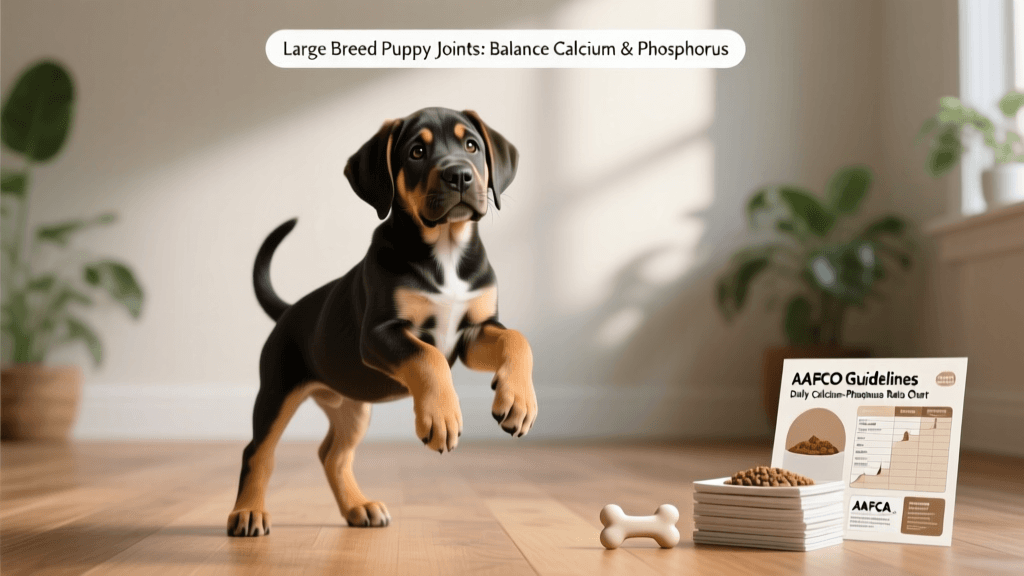
If you are raising a large or giant breed puppy (like a Great Dane, Mastiff, or Golden Retriever), you must feed a diet specifically labeled for 'Large Breed Puppies.' These formulas restrict calcium and caloric density to prevent rapid bone growth, which can lead to severe orthopedic conditions like hip dysplasia and osteochondritis dissecans (OCD).
Furthermore, as you begin incorporating human food or table scraps into your puppy's diet for training rewards, you must be acutely aware of toxicities. The ASPCA Animal Poison Control strictly warns against feeding dogs grapes, raisins, onions, garlic, macadamia nuts, and anything containing xylitol (an artificial sweetener commonly found in peanut butter and sugar-free gums). Xylitol is particularly lethal to puppies, causing a rapid, life-threatening drop in blood sugar and acute liver failure. Always read the ingredient label on any peanut butter you use to stuff Kong toys or hide medication.
Conclusion: Consistency is Key
Establishing a rigorous feeding schedule during your puppy's first year is one of the greatest gifts you can give them. It builds trust, accelerates potty training, and ensures they receive the precise nutrition required to grow into a vibrant, healthy adult dog. Stick to your timings, measure your portions with a standard measuring cup rather than guessing, and consult your veterinarian during routine wellness exams to adjust your puppy's diet as they hit their developmental milestones.
marcus-aldridge
All our authors care for dogs every day — read more of their work on the authors page.