Puppy Crate vs Playpen: A Side-by-Side Comparison Guide
Discover the pros and cons of puppy crates vs. playpens. Compare costs, sizes, and training benefits to choose the best setup for your new puppy.
Introduction to Puppy Safe Spaces
Bringing a new puppy home is one of the most exciting milestones in dog ownership, but it also comes with a unique set of challenges. During the first year of a puppy's life, establishing a safe, secure environment is critical for their physical safety and psychological development. New owners frequently face a common dilemma when setting up their home: should they invest in a traditional puppy crate or a freestanding puppy playpen? Both options serve as essential tools for containment, potty training, and managing destructive behavior, but they function in fundamentally different ways. Understanding the nuances between a crate and a playpen will help you make an informed decision that aligns with your living space, your schedule, and your puppy's specific developmental needs.
What is a Puppy Crate?
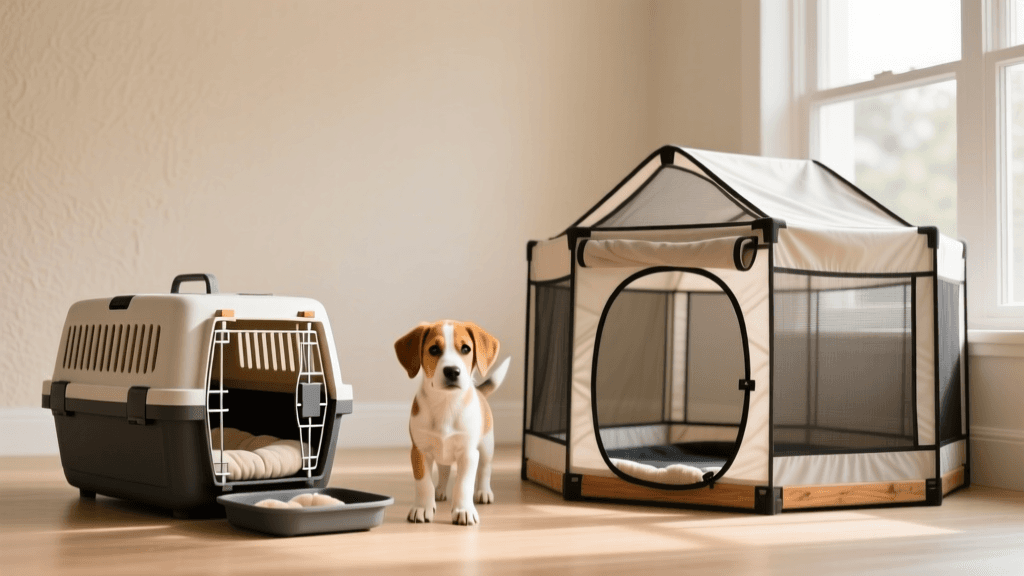
A puppy crate is an enclosed, den-like structure designed to provide a secure sleeping and resting area for your dog. Crates typically come in two main varieties: wire crates, such as the popular MidWest Homes for Pets iCrate, and hard plastic travel kennels, like the Petmate Sky Kennel. The primary purpose of a crate is to tap into a dog's natural den instinct. Dogs are instinctively reluctant to soil the areas where they sleep, making crates an invaluable tool for housebreaking.
When selecting a crate, sizing is paramount. A crate should be large enough for your puppy to stand up, turn around, and lie down comfortably, but not so large that they can designate one corner for sleeping and another for eliminating. For small breed puppies under 25 pounds, a 24-inch long by 18-inch wide crate is usually sufficient. Medium breeds weighing between 26 and 40 pounds typically require a 30-inch by 19-inch crate. Many wire crates come with adjustable divider panels, allowing you to expand the space as your puppy grows, which is a highly cost-effective solution ranging from $40 to $80.
What is a Puppy Playpen?
A puppy playpen, often referred to as an exercise pen or x-pen, is a freestanding, multi-panel enclosure that creates a larger, open-topped safe zone. Brands like IRIS USA and MidWest offer durable metal and heavy-duty plastic playpens that can be configured into various shapes, such as squares, rectangles, or octagons. A standard 8-panel metal playpen usually provides about 16 square feet of floor space and costs between $50 and $120, depending on the height and material.
Unlike a crate, a playpen offers ample room for a puppy to move around, play with toys, and access separate areas for sleeping, eating, and drinking. Playpens are particularly beneficial for owners who work long hours or need to confine their puppy for extended periods during the day, as the extra space allows for the inclusion of a designated potty pad zone away from the puppy's bedding.
Side-by-Side Comparison Chart
To help you visualize the differences, here is a structured comparison of the two containment methods across several critical categories:
| Feature | Puppy Crate | Puppy Playpen |
|---|---|---|
| Primary Purpose | Sleeping, travel, and strict potty training. | Daytime containment, play, and extended confinement. |
| Space & Mobility | Limited; encourages resting and sleeping. | Expansive; allows walking, playing, and stretching. |
| Potty Training | Leverages den instinct to hold bladder. | Allows for a designated indoor potty pad zone. |
| Nighttime Use | Highly recommended for uninterrupted sleep. | Not ideal; puppies may wander and whine. |
| Travel Portability | Excellent; folds flat or serves as a car carrier. | Poor; bulky and difficult to transport. |
| Average Cost | $40 - $80 | $50 - $120 |
Deep Dive: Potty Training Showdown
When it comes to housebreaking, the crate is generally the superior tool. According to the American Society for the Prevention of Cruelty to Animals (ASPCA), crate training is one of the most effective methods for potty training because it capitalizes on a dog's natural reluctance to soil their immediate sleeping quarters. By restricting the puppy's space, you encourage them to hold their bladder until you take them outside, reinforcing the desired outdoor elimination behavior.
Playpens, on the other hand, offer a different approach. If you live in an apartment without immediate yard access, or if you must leave your puppy alone for longer than their bladder can hold (generally one hour per month of age), a playpen allows you to set up a potty pad in one corner and a bed in the opposite corner. While this prevents accidents on your carpet, it can sometimes confuse puppies into thinking that any soft, absorbent surface, including your living room rug, is an acceptable place to eliminate. Therefore, playpens are best used for potty training only when outdoor access is genuinely limited.
Managing Teething and Destructive Behavior
Between the ages of three and six months, puppies go through an intense teething phase. As noted by the American Kennel Club (AKC), teething puppies will chew on almost anything to relieve the discomfort of their adult teeth pushing through their gums. This is where containment becomes a matter of household safety and property preservation.
A crate limits a puppy's access to dangerous household items like electrical cords, toxic plants, and expensive furniture. However, a bored puppy in a crate may resort to chewing the plastic tray or the metal bars, which can damage their teeth. To mitigate this, you must provide safe, durable chew toys, such as the Kong Classic Puppy Toy or a Nylabone Puppy Chew, whenever they are crated.
A playpen offers more space to rotate a variety of toys and engage in solo play, which can reduce boredom-induced chewing. However, highly active or determined puppies may attempt to climb the panels, tip the pen over, or chew through the plastic connectors. If you opt for a playpen during the teething phase, ensure it is made of heavy-duty coated wire and is placed in a puppy-proofed room where they cannot pull down curtains or reach baseboards.
Nighttime vs. Daytime Confinement
The time of day heavily dictates which tool is most appropriate. At night, a crate is the undisputed champion. Placing a crate in your bedroom helps your puppy feel secure and close to your scent, promoting deeper sleep and reducing nighttime whining. The enclosed space mimics a den, signaling to the puppy's brain that it is time to rest. Animal welfare organizations, including the Blue Cross, emphasize that a properly introduced crate becomes a lifelong sanctuary where a dog can retreat when they feel overwhelmed or tired.
During the day, especially when you are working from home or running errands, a playpen is much more humane and practical. Puppies need to stretch, drink water freely, and move around. Confining a puppy to a small crate for eight hours while you are at the office is detrimental to their joint development and mental health. A playpen provides the necessary square footage for daytime confinement while keeping them safely out of trouble.
The Verdict: The Hybrid Setup
Ultimately, the most effective strategy for puppy care during the first year is not choosing one over the other, but rather combining them. The hybrid setup involves purchasing a wire crate and a compatible metal exercise pen. You place the crate inside or adjacent to the playpen and leave the crate door propped open. This gives your puppy the autonomy to choose their environment: they can retreat into the dark, cozy crate for a nap, or step out into the larger playpen area to play with toys, drink from a water bowl, or use a potty pad if necessary.
This side-by-side approach costs roughly $100 to $150 total but provides the ultimate flexibility. It supports strict nighttime potty training via the closed crate, while offering safe daytime enrichment via the open playpen. By understanding the distinct advantages of both containment methods, you can tailor your puppy's environment to support their physical growth, accelerate their training, and ensure a harmonious transition into their new forever home.
robin-maitland
All our authors care for dogs every day — read more of their work on the authors page.