Step-by-Step Guide to Crate Training Your New Puppy
Learn how to crate train your puppy with our step-by-step guide. Discover timelines, crate sizes, and expert tips for a stress-free experience.
Why Crate Training is Essential for Your Puppy
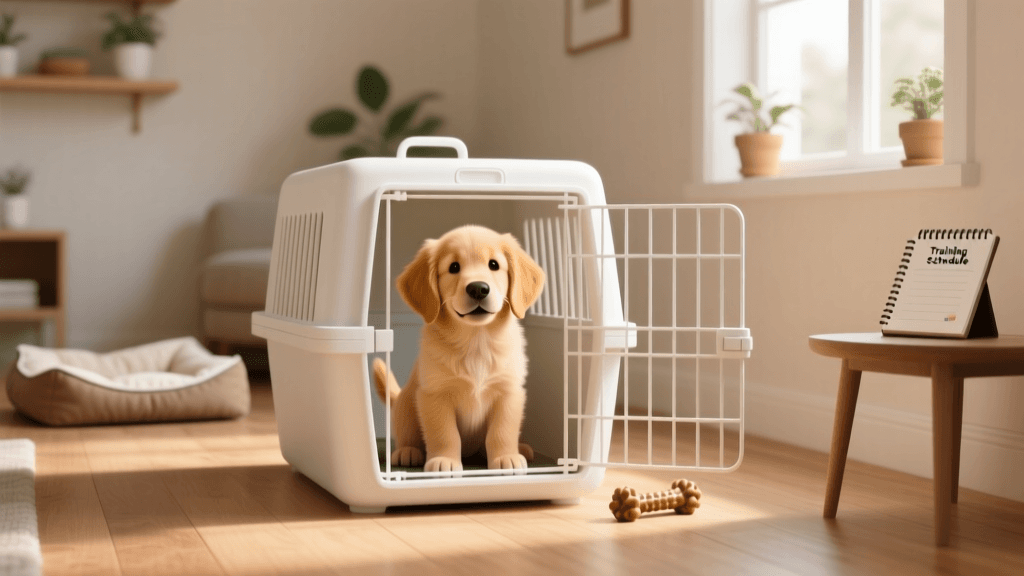
Crate training is one of the most valuable skills you can teach your new puppy. Far from being a canine jail, a properly introduced crate becomes your dog’s personal sanctuary—a safe den where they can relax, sleep, and feel secure. According to the American Kennel Club (AKC), crate training not only accelerates housebreaking by utilizing a dog's natural instinct to keep their sleeping area clean, but it also prevents destructive behaviors when you cannot directly supervise them.
However, simply placing a puppy in a crate and walking away is a recipe for stress, whining, and negative associations. Success requires a structured, step-by-step approach that builds positive reinforcement over several weeks. This comprehensive guide will walk you through the exact timeline, recommended gear, and actionable steps to crate train your puppy effectively.
Step 1: Selecting and Setting Up the Right Crate
Before beginning training, you need the correct equipment. A crate that is too large will allow your puppy to eliminate in one corner and sleep in the other, defeating the purpose of potty training. A crate that is too small will cause physical discomfort and joint stress.
Crate Sizing Guidelines
Your puppy should be able to stand up without their head touching the top, turn around comfortably, and lie down stretched out. For growing puppies, purchase a crate with a movable divider panel. For example, the MidWest Homes for Pets iCrate (approx. $50-$70) is a popular wire crate that includes a divider. If you have a Labrador Retriever, you would buy the 36x23x25-inch model but use the divider to restrict the space to 24 inches while they are young.
Comparison of Crate Types
| Crate Type | Best For | Pros | Cons | Average Cost |
|---|---|---|---|---|
| Wire Crate | Puppies, home use, potty training | Excellent visibility, foldable, includes divider | Heavy, not ideal for travel | $40 - $80 |
| Plastic/Airline Crate | Travel, dogs who prefer enclosed dens | Secure, den-like feel, airline approved | Poor ventilation, hard to clean | $30 - $60 |
| Soft-Sided Crate | Adult dogs, car trips, fully trained dogs | Lightweight, portable, comfortable | Easily destroyed by teething puppies | $30 - $50 |
Optimizing the Crate Environment
The physical location and setup of the crate play a massive role in your puppy's ability to settle down. During the day, keep the crate in a common area like the living room or kitchen so your puppy feels part of the family pack. However, avoid placing it in direct sunlight or near drafty windows, as puppies cannot regulate their body temperature as effectively as adult dogs.
For nighttime, moving the crate to your bedroom is highly recommended for the first few weeks. Hearing your breathing and smelling your scent significantly reduces nighttime whining and separation distress. To create a more den-like atmosphere, you can drape a breathable cotton sheet over the top and sides of a wire crate, leaving the front door uncovered for ventilation. Additionally, using a white noise machine or a ticking clock wrapped in a towel can mimic the heartbeat of littermates and drown out startling household noises.
Step 2: Building Positive Associations (Days 1-3)
The goal of the first few days is to convince your puppy that the crate is the source of all good things. Never use the crate as punishment.
- The Treat Toss: Toss high-value, low-calorie treats like Zuke’s Mini Naturals (approx. $6 per bag) into the back of the crate. Let the puppy run in, eat the treat, and immediately run back out. Repeat this 10-15 times per session.
- Mealtime Integration: Begin feeding your puppy their regular meals near the crate. On day two, place the food bowl just inside the doorway. On day three, push the bowl all the way to the back of the crate.
- Open Door Naps: Encourage your puppy to enter the crate to chew on a Kong toy stuffed with KONG Puppy Easy Treat (approx. $8). Leave the door wide open so they can leave whenever they want.
Step 3: Closing the Door and Building Duration (Days 4-7)
Once your puppy is happily entering the crate for meals and treats, it is time to close the door.
Incremental Door Closing
During their next meal inside the crate, gently swing the door shut. Do not latch it yet. As they eat, open the door before they finish. Gradually increase the time the door stays closed after the meal by 1-minute increments. Once they are comfortable with a closed door for 10 minutes post-meal, introduce the latch.
According to ASPCA guidelines, you should begin leaving the room for very short periods (30 seconds to 1 minute) while the puppy is relaxed in the crate with a safe chew toy. Return before they begin to whine. This teaches them that your departure is temporary and that you will always return.
Step 4: Extending Absences and Overnight Training (Weeks 2-4)
As your puppy’s confidence grows, you can extend the time they spend in the crate while you are out of sight. Start with 10-minute absences, gradually working up to 30 minutes, then an hour. Always exercise your puppy and provide a potty break immediately before crating them for extended periods.
Overnight Crate Training Protocol
Puppies have small bladders and cannot hold it through the night. For the first few weeks, place the crate in your bedroom, right next to your bed. This proximity reduces separation anxiety and allows you to hear when they wake up to eliminate.
'Puppies under 12 weeks old will typically need one or two potty breaks during the night. Set an alarm for 3 to 4 hours after bedtime to take them out, keeping the interaction boring and strictly business.' - VCA Animal Hospitals
When taking them out at night, use a leash, carry them outside to avoid accidents on the way, and use a consistent potty cue like 'Go potty.' Once they eliminate, offer quiet praise, carry them back inside, and place them directly back into the crate.
Age-Based Crate Time Limits
It is crucial not to exceed a puppy's physical ability to hold their bladder. Over-crating leads to distress, muscle stiffness, and forced soiling, which ruins potty training progress. Use the following chart as a strict guideline for maximum daytime crating durations:
| Puppy Age | Maximum Daytime Crate Limit | Recommended Potty Break Interval |
|---|---|---|
| 8 - 10 Weeks | 1 to 1.5 Hours | Every 1 Hour |
| 11 - 14 Weeks | 1.5 to 2 Hours | Every 1.5 Hours |
| 15 - 16 Weeks | 2 to 3 Hours | Every 2 Hours |
| 17+ Weeks (4+ Months) | 3 to 4 Hours | Every 3 to 4 Hours |
Note: Nighttime limits are generally 1-2 hours longer than daytime limits because a dog's metabolism slows down while sleeping.
Troubleshooting Common Crate Training Challenges
Whining and Crying
If your puppy whines in the crate, they may need to eliminate, or they may be testing boundaries. If you have followed the step-by-step desensitization process and know they do not need to potty, ignore the whining entirely. Releasing a puppy from the crate while they are crying teaches them that vocalizing is the key to freedom. Wait for a moment of silence—even just three seconds—before opening the door.
Potty Accidents in the Crate
If your puppy soils their crate, evaluate your schedule. Are you crating them longer than the age-based chart allows? Are you using a crate that is too large? Clean any accidents thoroughly with an enzymatic cleaner like Nature’s Miracle Advanced Stain and Odor Eliminator (approx. $12) to completely destroy the scent markers that would otherwise attract them back to the same spot.
Refusal to Enter
If a puppy suddenly refuses to enter, you may have progressed too quickly. Revert to Step 2. Feed all meals near the crate, throw treats inside, and remove any pressure to enter. Patience is the most critical tool in your training arsenal.
Conclusion
Crate training is a marathon, not a sprint. By investing time during your puppy's first month to build positive associations, respect their physical limitations, and follow a structured step-by-step protocol, you will provide them with a lifelong coping mechanism and a safe haven. Remember to always pair crate time with adequate physical exercise and mental enrichment to ensure your puppy is tired and ready to rest when the door closes.
marcus-aldridge
All our authors care for dogs every day — read more of their work on the authors page.