Puppy Care Myths Debunked: Socialization and Training
Discover the truth behind common puppy care myths. We debunk false socialization, potty training, and teething facts to help your puppy thrive.
Introduction: Navigating the Minefield of Puppy Advice
Welcome to the exhilarating, exhausting, and deeply rewarding world of puppy ownership. When you bring home a new puppy, you will inevitably be bombarded with advice from well-meaning friends, family members, and even outdated internet forums. From feeding schedules to potty training techniques, everyone seems to have a "secret trick" for raising the perfect dog. Unfortunately, much of this conventional wisdom is rooted in outdated dominance theories or simple misunderstandings of canine behavioral science.
Believing these myths can lead to behavioral issues, increased anxiety, and a fractured bond between you and your new companion. In this comprehensive guide, we are putting on our detective hats to separate fact from fiction. We will debunk three of the most pervasive puppy care myths regarding early socialization, potty training, and teething, providing you with actionable, science-backed strategies to help your puppy thrive during their crucial first year.
Myth #1: Wait Until All Vaccines Are Done to Socialize
The Myth
For decades, veterinarians advised new owners to keep their puppies isolated at home until they had completed their full series of core vaccinations, typically around 16 weeks of age. The logic was sound in theory: protect the vulnerable puppy from deadly diseases like canine parvovirus and distemper. However, this well-intentioned advice has inadvertently caused a behavioral epidemic.
The Fact
The American Veterinary Society of Animal Behavior (AVSAB) states that the risk of a dog developing behavioral problems and subsequently being surrendered to a shelter or euthanized is statistically much higher than the risk of contracting a viral infection if properly managed. The primary socialization window for puppies closes between 12 and 14 weeks of age. If a puppy is kept in isolation until 16 weeks, they miss this critical neurological window, making them far more prone to fear, aggression, and anxiety later in life.
According to the AVSAB's official position statement on puppy socialization, puppies can and should be safely socialized before their vaccine series is complete. The key is managed exposure, not isolation.
Actionable Advice & Safe Socialization Tactics
- Puppy Classes: Enroll in a reputable puppy kindergarten class that requires at least one set of vaccines and a deworming. These classes are typically held on sanitized indoor surfaces. Expect to pay between $150 and $250 for a 6-week course.
- The "Puppy Stroller" Method: For the first 10 weeks, carry your puppy in a specialized pet stroller or a front-facing dog carrier (cost: $40–$80) through busy outdoor areas like farmer's markets or hardware stores. This exposes them to novel sights, sounds, and smells without their paws touching potentially contaminated public soil.
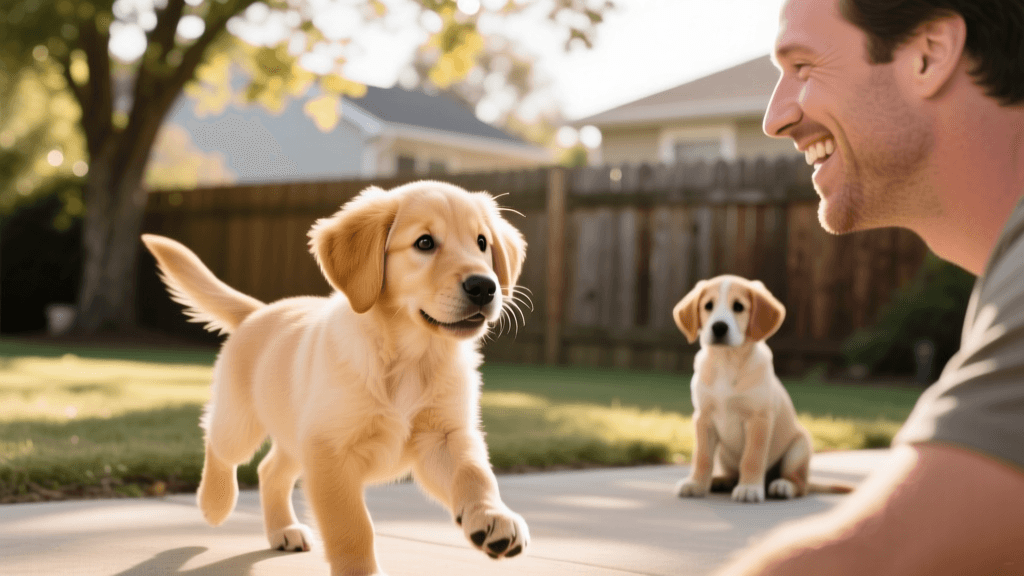
- Playdates: Arrange one-on-one playdates in your private, fenced backyard with adult dogs that you know are fully vaccinated and have friendly, gentle temperaments.
- Surface Exposure: Bring different textured items into your home (e.g., a piece of astroturf, a metal baking sheet, a wobble board) to build your puppy's confidence on strange surfaces.
Myth #2: Rubbing a Puppy’s Nose in Accidents Helps Potty Training
The Myth
Perhaps the most harmful and persistent myth in puppy care is the idea that if a puppy has an accident indoors, you should rub their nose in the urine or feces, or swat them with a rolled-up newspaper. The belief is that the puppy will associate the unpleasant sensation with the act of eliminating, thereby learning to hold it until they go outside.
The Fact
Canines do not possess the cognitive ability to connect a delayed punishment with an action that occurred minutes or even seconds ago. If you come home to a puddle and punish your puppy, they do not think, "I shouldn't have peed on the rug." Instead, they think, "When my human comes home and sees puddles, they become scary and aggressive." This damages their trust in you and often leads to puppies hiding behind furniture to eliminate, or eating their own feces to "hide the evidence."
As noted by the American Kennel Club (AKC), positive reinforcement and strict management are the only scientifically proven methods for reliable house training.
Actionable Advice & Potty Training Protocol
- The Age-to-Hours Rule: A general guideline for bladder control is one hour per month of age. A 2-month-old puppy needs to go out every 2 hours; a 3-month-old every 3 hours. Always take them out immediately after waking up, eating, drinking, or vigorous play.
- Enzymatic Cleaners: Standard household cleaners do not break down the uric acid crystals in dog urine. You must use a dedicated enzymatic cleaner like Nature's Miracle or Rocco & Roxie (cost: $15–$20 per bottle). Spray the area generously, let it soak for 10 to 15 minutes to penetrate the carpet pad, and blot dry.
- Crate Training Dimensions: Use a wire crate with a divider panel. The space should only be large enough for the puppy to stand up, turn around, and lie down. If the crate is too large (e.g., using a 42-inch crate for a 10-pound puppy), they will designate one corner as a bathroom. A 24-inch crate is ideal for small breeds under 25 lbs.
- High-Value Rewards: Keep a treat pouch by the door. The exact second your puppy finishes eliminating outside, say "Yes!" and deliver a high-value treat like freeze-dried chicken liver. Do not wait until you go back inside.
Myth #3: Puppies Will Naturally Grow Out of Biting and Chewing
The Myth
New owners often endure the "land shark" phase, assuming that once the puppy's adult teeth come in, the painful biting, nipping, and destructive chewing will simply vanish on its own.
The Fact
While the biological drive to chew due to teething pain will eventually subside, the behavioral habit of using human hands as chew toys will not. Puppies learn "bite inhibition" (the ability to control the force of their mouthing) from their littermates. When a puppy bites too hard, a sibling yelps and stops playing. If a puppy is separated from their litter at 8 weeks, it is up to the human owner to continue this education. If you do not teach them what is acceptable to chew, they will default to your baseboards, shoes, and fingers.
The Humane Society of the United States emphasizes that puppies must be actively taught what is appropriate to bite through redirection and consistent boundaries.
Actionable Advice & Teething Timelines
Understanding the teething timeline helps you prepare the right tools at the right time:
- 3 to 6 Weeks: 28 deciduous (baby) teeth emerge.
- 12 to 16 Weeks: Baby teeth begin falling out to make way for adult teeth. This is when chewing becomes most intense to relieve gum pressure.
- 6 Months: All 42 adult teeth should be fully erupted. If baby teeth remain, consult your vet for extraction to prevent crowding.
Solutions for Mouthing and Destructive Chewing:
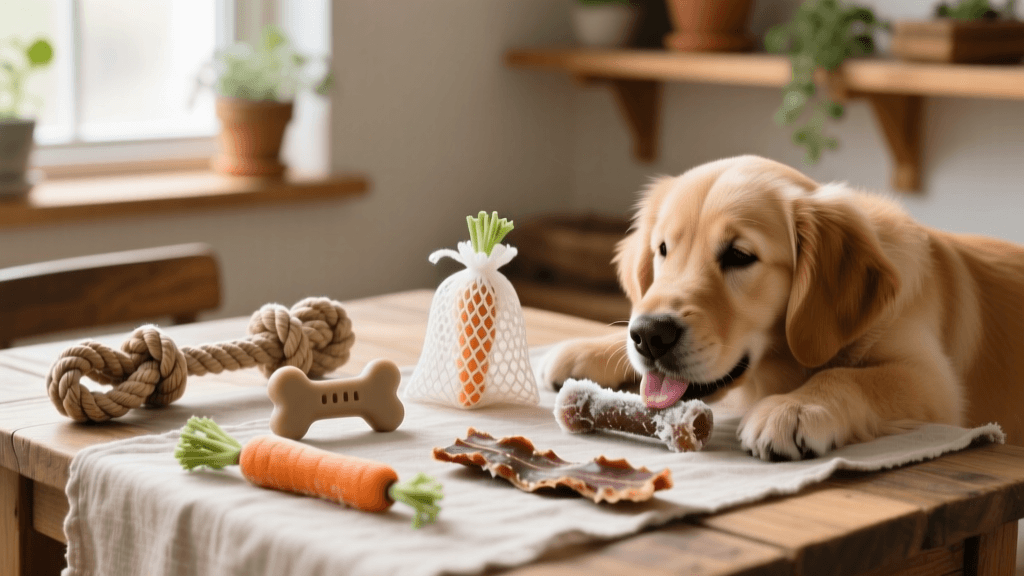
- The KONG Classic: Purchase a KONG Classic (Red for average chewers, Black for extreme). Size Small is for dogs 10-25 lbs; Medium is for 25-50 lbs. Fill it with a mixture of plain Greek yogurt, mashed bananas, and kibble, then freeze it solid for 4 hours. The cold numbs their sore gums, and the extraction of the food tires their brain. (Cost: $15 for the toy).
- The "Ouch" Protocol: If puppy teeth touch your skin, let out a high-pitched "Ouch!" and immediately stand up, crossing your arms and ignoring the puppy for 15 seconds. This mimics littermate behavior. If they persist, step over a baby gate for a 30-second timeout.
- Trade-Up Game: Never chase a puppy to take a forbidden item (like a shoe) from their mouth; this turns it into a game of keep-away. Instead, approach with a high-value treat or a favorite squeaky toy. When they drop the shoe to take the toy, praise them heavily.
Quick Reference: Puppy Myth vs. Fact Comparison Chart
| Common Puppy Myth | The Scientific Fact | Actionable Solution & Estimated Cost |
|---|---|---|
| Isolate until 16 weeks | Behavioral risks of isolation outweigh viral risks if managed properly. | Enroll in indoor puppy classes; use a pet stroller for outdoor exposure. ($150-$250) |
| Rub nose in accidents | Dogs cannot associate delayed punishment with past actions; it only creates fear. | Use enzymatic cleaners ($15); reward immediately after outdoor elimination. |
| They will outgrow biting | Bite inhibition must be actively taught; otherwise, mouthing becomes a lifelong habit. | Use frozen KONG toys ($15); implement 15-second timeouts for skin contact. |
Conclusion: Patience and Science Over Tradition
Raising a puppy is a marathon, not a sprint. By discarding outdated myths and embracing evidence-based training methods, you set the foundation for a confident, well-adjusted, and happy adult dog. Remember that your puppy is not giving you a hard time; they are simply having a hard time navigating a human world they do not yet understand. Arm yourself with high-value treats, enzymatic cleaners, and a solid understanding of canine developmental milestones. When in doubt, always consult a certified professional dog trainer (CPDT-KA) or a veterinary behaviorist to ensure your puppy's first year is built on trust, science, and positive reinforcement.
anouk-beaumont
All our authors care for dogs every day — read more of their work on the authors page.