Puppy Care for Longevity: Building a Healthy Senior Foundation
Discover how early puppy care habits impact your dog's senior years. Learn actionable tips on nutrition, joint protection, and preventative health for lifelong vitality.
The Senior Perspective on Puppy Care
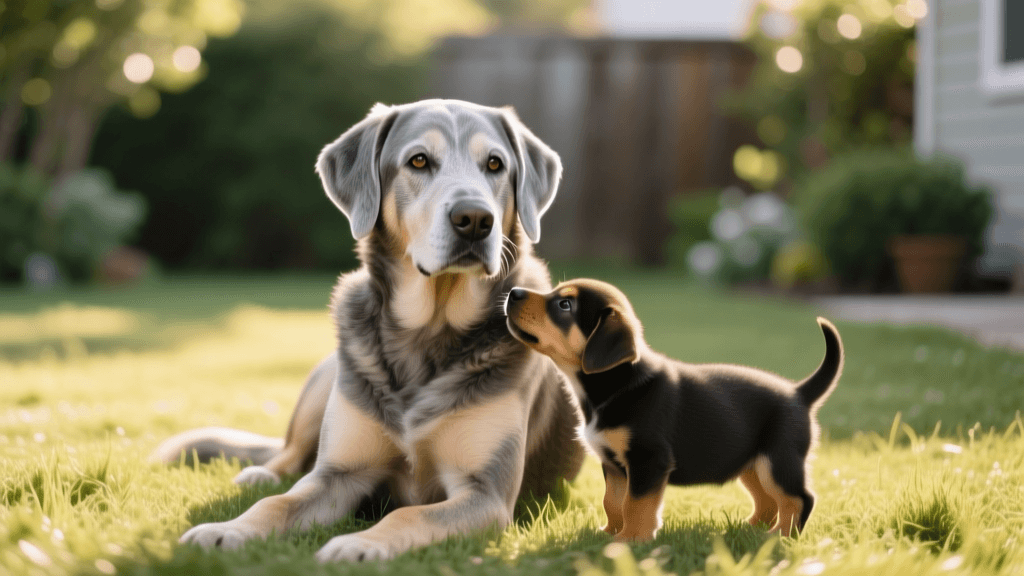
When you bring a new puppy home, your immediate concerns are usually potty training, teething, and surviving the chewed-up shoe phase. However, viewing puppy care through the lens of senior and aging dog health completely shifts the paradigm. As a specialist in aging canine care, I can tell you that the foundation for your dog's twilight years is poured entirely within their first twelve months of life. The choices you make regarding nutrition, joint protection, and cognitive development during this critical window will dictate whether your dog spends their senior years hiking with you or struggling with mobility and cognitive decline.
While the ASPCA's comprehensive puppy care guidelines focus heavily on immediate safety, vaccination schedules, and basic socialization, a longevity-focused approach requires us to look a decade ahead. By implementing specific, measurable strategies during your puppy's first year, you can actively delay the onset of age-related diseases such as osteoarthritis, canine cognitive dysfunction (CCD), and metabolic disorders. Here is how to raise a puppy with their senior years in mind.
Nutritional Foundations: Feeding for the Decade Ahead
One of the most profound impacts you can have on your dog's aging process occurs in their food bowl. The World Small Animal Veterinary Association (WSAVA) Global Nutrition Guidelines emphasize that overfeeding during the puppy stage is one of the leading preventable causes of early-onset osteoarthritis and metabolic strain. Puppies that grow too quickly, or carry excess body fat during their developmental months, place irreversible mechanical stress on their forming joints.
To protect your future senior dog, you must maintain a strict Body Condition Score (BCS). For a growing puppy, a BCS of 4/9 or 5/9 is ideal. You should be able to easily feel their ribs without pressing hard, and they should have a visible waist when viewed from above. If you are feeding a large breed puppy (expected adult weight over 50 lbs), it is non-negotiable to use a diet specifically formulated for large breed growth. These diets contain tightly controlled calcium and phosphorus ratios to prevent developmental orthopedic diseases like hip dysplasia and hypertrophic osteodystrophy.
| Life Stage | Nutritional Focus | Long-Term Senior Impact |
|---|---|---|
| 8-12 Weeks | Controlled caloric intake, high DHA for brain development | Establishes a lean metabolic baseline; supports early cognitive reserve |
| 3-6 Months | Strict Calcium/Phosphorus balance (especially large breeds) | Prevents developmental orthopedic diseases and early joint degradation |
| 6-12 Months | Gradual transition to adult maintenance calories to prevent fat gain | Prevents early-onset obesity, reducing lifelong mechanical joint strain |
Actionable Feeding Advice
- Ditch the Free-Feeding: Never leave food out all day. Measure your puppy's food using a standard 8oz measuring cup or a digital kitchen scale (grams are far more accurate).
- Factor in Treats: Treats used for potty training should not exceed 10% of their daily caloric intake. Use low-calorie options like Zuke's Mini Naturals (under 3 calories per treat) or single-ingredient freeze-dried liver.
- Joint Supplements Early: For breeds predisposed to arthritis (German Shepherds, Golden Retrievers, Labrador Retrievers), consult your vet about starting a high-quality omega-3 fish oil or a green-lipped mussel supplement as early as 6 months of age to support joint cartilage synthesis.
Protecting Growth Plates: Exercise Limits in Year One
Perhaps the most common mistake well-meaning owners make is over-exercising their puppies. Puppies have open growth plates—areas of developing cartilage at the ends of their long bones. These plates do not fully close and calcify into solid bone until a dog is between 12 and 18 months of age (sometimes up to 24 months for giant breeds). Repetitive, high-impact exercise before these plates close can cause micro-fractures, leading to angular limb deformities and severe, painful arthritis in their senior years.
According to the American Veterinary Medical Association (AVMA), structured exercise should be carefully monitored to protect developing musculoskeletal systems. The golden rule of thumb for puppy walks is the '5-Minute Rule': allow 5 minutes of structured, leash-guided walking per month of age, up to twice a day. Therefore, a 4-month-old puppy should only be going on 20-minute walks.
Safe vs. Unsafe Puppy Exercises
Not all movement is created equal. Mental fatigue is just as effective as physical fatigue for a puppy, and it carries zero risk to their growth plates.
- Safe Activities (Joint-Friendly): 'Sniffaris' (slow, unstructured walks on soft grass where the dog dictates the pace and sniffs extensively), swimming, basic obedience training, and puzzle toys.
- Unsafe Activities (High-Risk for Growth Plates): Jumping in and out of the trunk of an SUV, repetitive high-speed fetch on hard surfaces (like concrete or packed dirt), jogging alongside a bicycle, and participating in high-impact agility or frisbee sports before 18 months of age.
Pro-Tip for Senior Mobility: Invest in a set of pet stairs or a ramp for your car and your bed right now. Training your puppy to use a ramp to get into the car prevents the repetitive, high-impact leaping that slowly degrades the shoulders and spine over a lifetime. By the time they are 10, the ramp will be a necessity, but the habit will already be ingrained.
Cognitive Enrichment: Building a Reserve Against Aging
Canine Cognitive Dysfunction (CCD) is the dog equivalent of Alzheimer's disease, affecting a significant percentage of dogs over the age of 11. While genetics play a role, veterinary neurologists agree that 'cognitive reserve'—the brain's ability to improvise and find alternate ways of getting a job done—is built through early and lifelong environmental enrichment.
A puppy's brain is highly plastic. By exposing them to novel environments, varied textures, and problem-solving tasks during their first year, you are physically building denser neural pathways. This neural density acts as a buffer against the brain atrophy associated with aging.
Building Cognitive Reserve in Year One
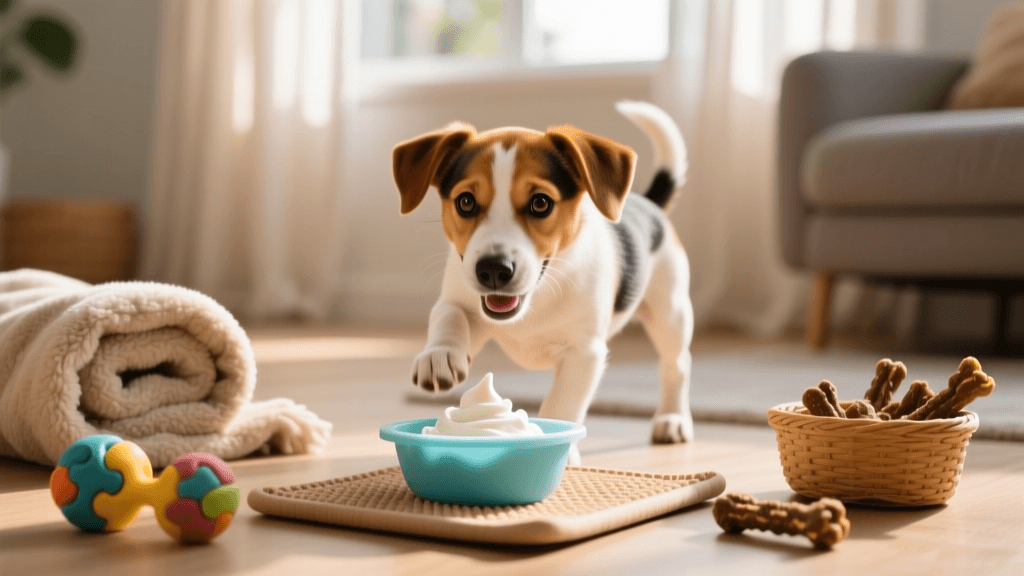
- Ditch the Bowl: Stop feeding your puppy from a standard stainless steel bowl. Use interactive feeders like the Outward Hound Nina Ottosson Dog Brick or a classic KONG stuffed with frozen plain yogurt and kibble. Forcing them to use their nose and paws to extract food stimulates the frontal cortex.
- Proprioception Training: Introduce your puppy to unstable surfaces. Let them walk over a wobble board, a thick folded blanket, or safely navigate over fallen logs in the woods. This builds the mind-muscle connection (proprioception) which is the first sense to degrade in senior dogs. Strong proprioception in youth delays the onset of senior stumbling and weakness.
- Sensory Socialization: Expose your puppy to different floor textures (grating, tile, gravel, wet grass) and varied auditory environments. This prevents the development of deep-seated anxieties that often manifest as severe stress and behavioral regression in aging dogs experiencing sensory decline (like hearing or vision loss).
The 12-Month Baseline: Veterinary Prep for Senior Diagnostics
Finally, a crucial step in puppy care for longevity is establishing a medical baseline. Most owners wait until their dog is 7 or 8 years old to request 'senior bloodwork.' The problem? When a veterinarian sees an elevated kidney enzyme (like SDMA or BUN) in an 8-year-old dog, they have no idea if that is a new, acute decline, or if that dog has simply run slightly high their entire life.
Request a comprehensive baseline blood panel and urinalysis at your puppy's 12-month wellness exam. File these results away. When your dog enters their senior years, your veterinarian can compare their current bloodwork against their 1-year-old baseline. This allows for the detection of microscopic, subclinical changes in liver, kidney, and thyroid function years before physical symptoms of aging appear, allowing for early dietary and medical interventions that can add years to your dog's life.
Conclusion
Raising a puppy is a joyous, chaotic experience, but it is also a profound responsibility that echoes through the rest of their life. By managing their growth rate through precise nutrition, protecting their vulnerable growth plates from high-impact trauma, stimulating their developing brain, and establishing early veterinary baselines, you are doing much more than raising a good puppy. You are actively engineering a resilient, comfortable, and vibrant senior dog. The gray muzzle they will eventually earn is a badge of honor; it is up to us to ensure they wear it comfortably.
anouk-beaumont
All our authors care for dogs every day — read more of their work on the authors page.