Best Teething Toys for Puppy Bite Training in 2026
Discover the best teething toys for puppy bite inhibition training in 2026. Learn redirection techniques and top durable picks for growing dogs.
The Intersection of Teething and Bite Inhibition Training
When a puppy enters the teething phase—typically between three and six months of age—owners often view the resulting chewing as a purely biological nuisance. However, from a professional dog training perspective, this developmental window is one of the most critical periods for behavioral conditioning. The intense urge to chew provides a unique, biologically driven opportunity to teach bite inhibition, impulse control, and the 'drop it' command. Selecting the right teething toy is not just about saving your furniture; it is about providing the correct tool for operant conditioning. In 2026, modern behavioral science emphasizes that the texture, shape, and interactive potential of a teething toy directly influence how quickly a puppy learns to redirect their natural jaw pressure away from human skin and toward appropriate outlets.
According to the American Kennel Club (AKC), bite inhibition is the foundational skill that prevents accidental injuries as a dog matures. Puppies learn the limits of their jaw pressure through feedback, and teething toys serve as the ultimate 'yes' marker when they make the right choice. This guide explores the best teething toys specifically evaluated for their utility in structured puppy training protocols, ensuring your growing dog develops a soft mouth and healthy chewing habits.
The Psychology of Chewing and Behavioral Redirection
Chewing releases endorphins in a dog's brain, providing a self-soothing effect that is especially necessary when gingival tissues are inflamed from erupting adult teeth. The ASPCA notes that providing appropriate chewing outlets is the primary defense against destructive habituation. If a puppy is not given a high-value, textured alternative, they will naturally seek out items that provide similar resistance, such as baseboards, shoes, or human hands.
From a training standpoint, we use teething toys to execute 'redirection.' When a puppy mouths a human hand, the trainer withdraws attention and immediately presents a teething toy. When the puppy bites the toy, they receive praise or a food reward. This conditions the puppy to associate human skin with the cessation of play, and the teething toy with positive reinforcement. The physical design of the toy—whether it can be stuffed, frozen, or easily gripped—dictates how effectively it can hold the puppy's attention during these crucial conditioning moments.
Top 3 Teething Toys for Behavioral Redirection in 2026
1. KONG Puppy Goodie Bone (Best for Frozen Redirection and Crate Training)
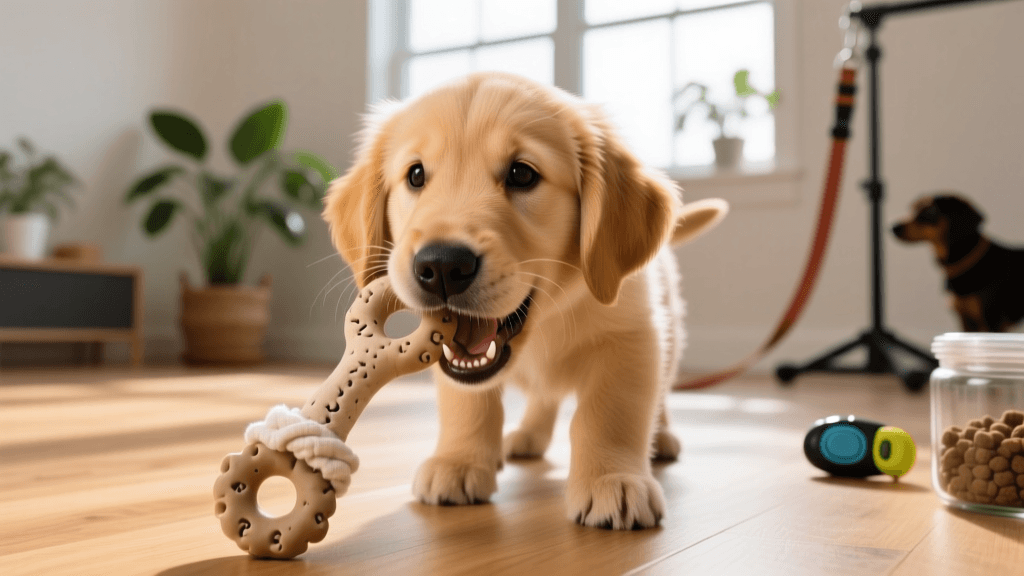
The KONG Puppy Goodie Bone remains a staple in professional training circles in 2026, specifically because of its patent-pending Goodie Grippers and durable, soft natural rubber formula designed for developing jaws. The training utility of this toy lies in its stuffability. By filling the bone with a mixture of plain Greek yogurt, pumpkin puree, and kibble, and then freezing it for four hours, trainers create a high-value, long-lasting pacifier.
Training Application: This toy is the gold standard for crate training conditioning. When introducing a puppy to a crate, the frozen Goodie Bone provides a prolonged, soothing activity that builds a positive emotional response to the confined space. It also keeps the puppy occupied for 30 to 45 minutes, allowing them to self-soothe and fall asleep without whining, which is essential for preventing separation anxiety protocols from failing.
2. Benebone Wishbone (Best for 'Drop It' and 'Leave It' Drills)
The Benebone Wishbone is engineered with a deep ergonomic curve that makes it exceptionally easy for a human to hold onto while the puppy chews the opposite end. This specific design feature makes it the ultimate tool for teaching the 'drop it' and 'leave it' commands. Made from nylon infused with real bacon or peanut oil, it provides the hard resistance that puppies crave as their adult molars begin to set.
Training Application: To teach 'drop it,' the trainer holds one end of the Wishbone while the puppy chews the other. The trainer then presents a high-value treat (like freeze-dried liver) near the puppy's nose. The moment the puppy releases the toy to take the treat, the trainer marks the behavior with a 'yes' and rewards them. The Wishbone's shape prevents the puppy from easily running away with the toy, keeping them in the training zone and focused on the handler's cues.
3. Nylabone Power Chew Dura Chew (Best for Heavy Jaw Conditioning)
For large breed puppies or those with exceptionally high bite force, soft rubber toys are often destroyed within days, leading to dangerous ingestion risks. The Nylabone Power Chew series offers a textured, multi-bristle surface that acts as a mechanical toothbrush while satisfying the intense urge to destroy. In 2026, veterinary behaviorists recommend the textured ring or bone shapes to help massage aching gums during the peak of the teething cycle.
Training Application: This toy is used for 'settle' training on a mat. Because it is highly durable and does not require human interaction, it is the perfect toy to hand to a puppy when commanding them to 'go to your place' or 'settle on your mat.' It teaches the dog that their designated resting area is a rewarding zone where they can engage in independent, appropriate chewing.
Step-by-Step Training Protocols Using Teething Toys
The 'Ouch and Redirect' Method
This protocol is designed to teach bite inhibition and soft mouth. Keep a selection of teething toys within arm's reach in every room where the puppy is allowed.
- Step 1: Engage in gentle play. If the puppy's teeth make contact with your skin, immediately emit a high-pitched 'Ouch!' and withdraw your hands by crossing your arms and looking away for three seconds.
- Step 2: After the brief time-out, present a frozen KONG or textured Nylabone.
- Step 3: The moment the puppy places their mouth on the toy, offer calm verbal praise ('Good chew') and gently pet their shoulder.
- Step 4: Repeat consistently. The puppy learns that human skin equals the end of fun, while the teething toy equals continued engagement and soothing relief.
The 'Trade-Up' Game
This game prevents resource guarding and builds a reliable 'drop it' command using the Benebone Wishbone or similar grip-friendly toys.
- Step 1: Offer the puppy the teething toy and let them engage with it for one minute.
- Step 2: Hold a piece of high-value roasted chicken near their nose while keeping your other hand lightly on the toy.
- Step 3: When the puppy drops the toy to eat the chicken, say 'Drop it' exactly as they release it.
- Step 4: Once they finish the treat, offer the toy back to them. This teaches the puppy that giving up an item does not mean losing it forever, which drastically reduces anxiety and resource guarding behaviors.
2026 Teething Toy Training Comparison Chart
| Toy Model | Primary Training Utility | Durability Level | Estimated 2026 Price |
|---|---|---|---|
| KONG Puppy Goodie Bone | Crate conditioning, frozen redirection | Medium (Soft Rubber) | $12.99 - $15.99 |
| Benebone Wishbone | 'Drop it' drills, handler grip control | High (Nylon) | $18.99 - $22.99 |
| Nylabone Power Chew | Mat settling, independent chewing | Very High (Hard Nylon) | $9.99 - $14.99 |
Common Training Mistakes to Avoid
Even with the best tools, handlers often make critical errors that undermine their training efforts. The first mistake is Toy Blindness. Leaving all teething toys on the floor 24/7 causes the puppy to lose interest in them, rendering them useless when you need to redirect a biting episode. Toys should be rotated and stored out of sight, only brought out during active training sessions or when the puppy is placed in a crate or pen.
The second mistake is Using Hands as Tug Toys. While it may seem cute when a puppy is small, wrestling with your hands teaches the puppy that human flesh is an acceptable chew toy. Always use a designated teething toy or a structured tug rope to mediate physical play. Finally, failing to supervise chewing can lead to the puppy breaking off pieces of nylon or rubber. Always inspect toys after every session and discard them once they show signs of significant wear or sharp edges.
Conclusion
Teething is a temporary developmental phase, but the behavioral patterns established during this time will last a lifetime. By viewing teething toys not merely as pacifiers, but as essential instruments for bite inhibition, crate training, and impulse control, you set your puppy up for long-term success. Utilizing the KONG Goodie Bone for soothing redirection, the Benebone for command drills, and the Nylabone for independent settling will provide a comprehensive training toolkit that addresses every aspect of your puppy's chewing needs in 2026 and beyond.
jonas-cole
All our authors care for dogs every day — read more of their work on the authors page.