Training Golden Retrievers vs German Shepherds Guide
Compare training Golden Retrievers and German Shepherds. Discover breed-specific obedience timelines, gear costs, and socialization tips for success.
Selecting the Right Breed for Your Training Lifestyle
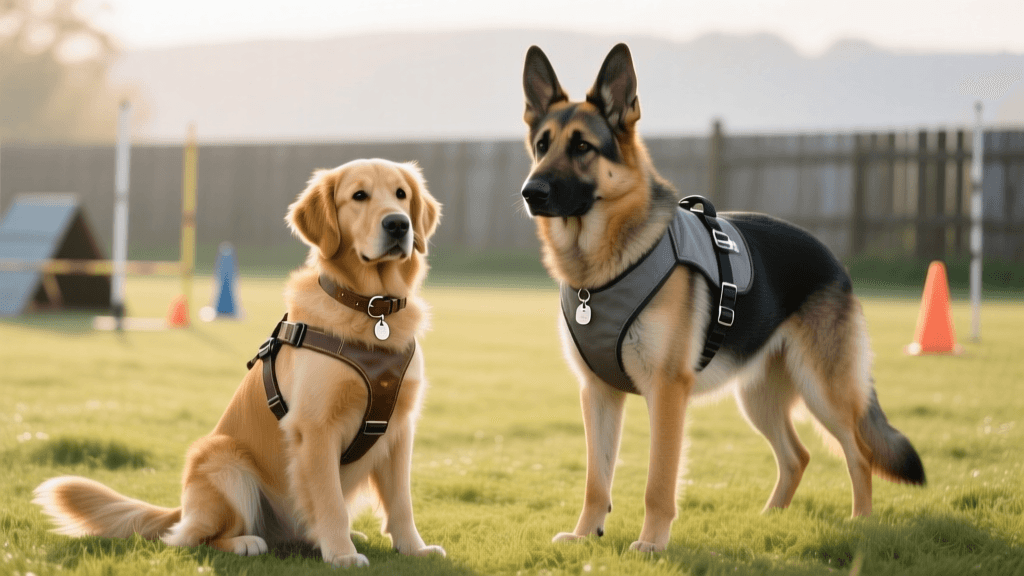
Choosing between a Golden Retriever and a German Shepherd Dog (GSD) is one of the most common dilemmas for prospective dog owners. Both breeds consistently rank among the most popular and intelligent dogs in the world, yet their underlying drives, temperaments, and learning styles are vastly different. According to the American Kennel Club (AKC), Golden Retrievers are eager-to-please companion and sporting dogs, while the AKC German Shepherd Breed Standard highlights a confident, courageous, and highly driven working dog. Understanding these nuances is critical before you invest time, money, and emotional energy into obedience training and behavioral conditioning.
This comprehensive guide compares the training requirements, gear necessities, behavioral milestones, and financial costs associated with raising and training a Golden Retriever versus a German Shepherd. Whether you are a first-time owner or an experienced handler, this breakdown will help you set realistic expectations and achieve a harmonious bond with your dog.
Understanding Breed-Specific Learning Styles
While both breeds are highly trainable, their motivations differ significantly. Golden Retrievers are notoriously food-motivated and thrive on positive reinforcement. They are generally 'soft' dogs, meaning they can become stressed or shut down if subjected to harsh corrections or loud verbal reprimands. Training a Golden requires patience, high-value treats, and an enthusiastic, encouraging tone. Their biggest training hurdle is often impulse control, as their friendly nature can lead to excessive jumping and pulling toward strangers.
German Shepherds, on the other hand, are handler-focused and possess a high prey and defense drive. They learn commands rapidly but require mental stimulation to prevent boredom-induced destructive behaviors. GSDs respond exceptionally well to structured, task-oriented training sessions. However, their protective instincts mean that early and continuous socialization is non-negotiable. Without proper behavioral conditioning, a GSD's natural wariness of strangers can develop into leash reactivity or territorial aggression.
Essential Training Gear: A Comparative Breakdown
Equipping yourself with the right tools is the first step toward successful obedience training. Because of the size, strength, and pulling tendencies of these breeds, specific gear is required. Below is a comparison of the recommended training equipment, including specific product names, measurements, and estimated costs.
| Gear Category | Golden Retriever Recommendation | German Shepherd Recommendation |
|---|---|---|
| Primary Harness | Ruffwear Front Range (Front-clip for mild pullers). Cost: $40. | PetSafe Easy Walk or Freedom No-Pull (Heavy-duty front-clip). Cost: $30-$45. |
| Everyday Collar | 1-inch Nylon or Leather Martingale. Cost: $15. | 1.5-inch Leather or Biothane Martingale. Cost: $25-$40. |
| Training Leash | 6-foot Biothane leash (1/2-inch width). Cost: $20. | 6-foot heavy-duty leather leash (3/4-inch width). Cost: $35. |
| Long Line (Recall) | 15-foot cotton webbing long line. Cost: $15. | 20-foot Biothane long line (waterproof, durable). Cost: $45. |
| Treat Pouch | Standard clip-on pouch (e.g., PetSafe). Cost: $12. | Multi-compartment waist belt (e.g., Doggone Good). Cost: $35. |
| Training Treats | Zuke's Mini Naturals (3 calories). Cost: $8/bag. | Freeze-dried beef liver or chicken (high value). Cost: $15/bag. |
Obedience Milestones and Training Timelines
Setting realistic timelines for obedience milestones is crucial for managing frustration. While individual dogs vary, breed tendencies play a massive role in how quickly certain commands are mastered. Training sessions should be kept short: 5 minutes for puppies under 16 weeks, and 10 to 15 minutes for adult dogs, conducted two to three times daily.
Core Commands Comparison
- Sit and Down: Both breeds can master these foundational commands within 1 to 2 weeks of consistent, daily lure-reward training starting at 8 weeks of age.
- Loose Leash Walking: Golden Retrievers typically achieve reliable loose leash walking by 6 months of age, provided pulling is not inadvertently reinforced. German Shepherds may take 8 to 12 months, as their natural working gait and environmental awareness often lead to forging ahead or lagging behind to scan their perimeter.
- Recall (Come When Called): Goldens generally develop a reliable recall by 9 months, though their desire to greet other dogs requires ongoing proofing. GSDs can learn the command quickly, but their high prey drive means recall must be heavily proofed around distractions like squirrels or deer, often taking up to 18 months to become truly reliable off-leash.
- Place Command (Mat Training): German Shepherds excel at the 'Place' command due to their desire for a defined job and territory, often mastering it in 3 to 4 weeks. Goldens may struggle with the impulse control required to stay on a mat when guests arrive, requiring 6 to 8 weeks of incremental duration building.
Behavioral Conditioning: Impulse Control vs. Prey Drive
Behavioral conditioning extends far beyond basic obedience; it dictates how your dog interacts with the world. For Golden Retrievers, the primary behavioral focus is impulse control and managing over-excitement. Techniques like the 'Leave It' command, capturing calmness (rewarding the dog for simply lying quietly on their bed), and structured greeting protocols are essential. If a Golden jumps on guests, the guest must turn away and ignore the dog until all four paws are on the floor, followed immediately by a treat reward.
For German Shepherds, behavioral conditioning must prioritize neutral socialization and reactivity management. The American Veterinary Society of Animal Behavior (AVSAB) emphasizes that the critical socialization window for puppies closes around 12 to 16 weeks of age. During this time, GSD puppies must be exposed to diverse environments, strange noises, and varied demographics of people to prevent fear-based aggression later in life. For adult GSDs displaying leash reactivity, the 'Engage-Disengage' game is highly effective. This involves marking the moment the dog notices a trigger (like another dog) before they react, and rewarding them for looking back at the handler, thereby rewiring their emotional response from anxiety or aggression to positive anticipation.
The Financial Commitment: Training Costs Compared
Prospective owners must budget for professional training, especially if they lack prior experience. While both breeds benefit from professional guidance, the type and duration of training required can impact your wallet differently.
Group Classes vs. Private Instruction
Group puppy kindergarten classes (typically 6 weeks long) cost between $150 and $300. These are excellent for Golden Retrievers, as the environment provides safe, controlled socialization and helps them learn to focus amid distractions. For German Shepherds, group classes are also recommended, but owners must be vigilant; if a GSD puppy shows signs of fear or reactivity in a group setting, continuing the class can actually worsen the behavioral issue.
Private in-home instruction is often necessary for German Shepherds dealing with territorial behaviors, resource guarding, or leash reactivity. Private trainers typically charge $75 to $150 per hour. Addressing complex behavioral issues in a GSD may require a package of 10 to 15 sessions, bringing the total investment to $1,000 to $2,000. Conversely, a Golden Retriever may only need 3 to 5 private sessions to refine specific nuisance behaviors like counter-surfing or door-dashing, costing roughly $300 to $750.
Board-and-Train Programs
Board-and-train facilities, where the dog lives with a trainer for 2 to 4 weeks, range from $2,500 to $5,000. This option is popular for busy professionals owning high-drive German Shepherds who need rigorous obedience foundations and e-collar conditioning. However, it is less commonly required for Golden Retrievers, whose softer temperament and eagerness to please make them highly amenable to owner-led training with the support of weekly group classes.
Expert Tip: Regardless of the breed, professional training is ultimately about educating the human. A reputable trainer will spend at least 30% of the session teaching you how to read your dog's body language, properly time your marker words (like 'Yes' or a clicker), and manage the environment to set your dog up for success.
Final Verdict: Which Breed Fits Your Training Capacity?
If you are a first-time dog owner, live in a bustling urban environment, or prefer a dog that is forgiving of training mistakes, the Golden Retriever is the superior choice. Their training journey is largely centered around managing their exuberant friendliness and teaching basic impulse control. The financial and time investment, while significant, is generally predictable and highly rewarding.
However, if you are an experienced handler, an active outdoors enthusiast, or someone interested in advanced dog sports like Schutzhund (IGP), agility, or protection work, the German Shepherd is an unparalleled partner. Training a GSD is a lifelong lifestyle commitment that requires consistent leadership, advanced behavioral conditioning, and a willingness to invest heavily in specialized gear and professional mentorship. By understanding these breed-specific training paradigms, you can select the perfect canine partner and build a foundation of trust, respect, and flawless obedience.
beth-carrasco
All our authors care for dogs every day — read more of their work on the authors page.