Force-Free Puppy Bell Training For Potty Success 2026
Master force-free puppy bell training in 2026 with our positive reinforcement potty schedule, expert troubleshooting tips, and humane accident prevention.
The Force-Free Philosophy in 2026
Welcome to 2026, where the veterinary and animal behavioral communities have universally cemented force-free, positive reinforcement methods as the absolute gold standard for puppy care. Gone are the days of outdated, aversive tactics like rubbing a puppy's nose in an accident or using startling noises to interrupt unwanted behavior. Today, we understand that these punitive measures only breed fear, destroy the human-animal bond, and often lead to a puppy who is simply afraid to eliminate in front of you—resulting in them hiding behind furniture to do their business.
Instead, modern puppy care focuses on clear communication, environmental management, and rewarding desired behaviors. One of the most effective, empowering, and highly recommended tools for housebreaking is bell training. Teaching your puppy to ring a bell to signal they need to go outside not only accelerates the potty training process but also gives your puppy a voice, reducing their frustration and your stress. According to the ASPCA, establishing a consistent, reward-based routine is the most reliable way to house-train a puppy, and bell training fits perfectly into this proactive framework.
Choosing the Right Bell Setup for Your Home
Before you begin, you need the right equipment. In 2026, the market offers both traditional mechanical bells and advanced smart bells. For most new puppy owners, a high-quality mechanical bell is the best starting point because it requires direct physical interaction, which builds a strong behavioral association.
- Mighty Paw Potty Bells: These remain a top-tier choice. They feature a heavy-duty nylon strap that fits over any standard door handle, with dual jingle bells that produce a clear, distinct sound without being overly jarring.
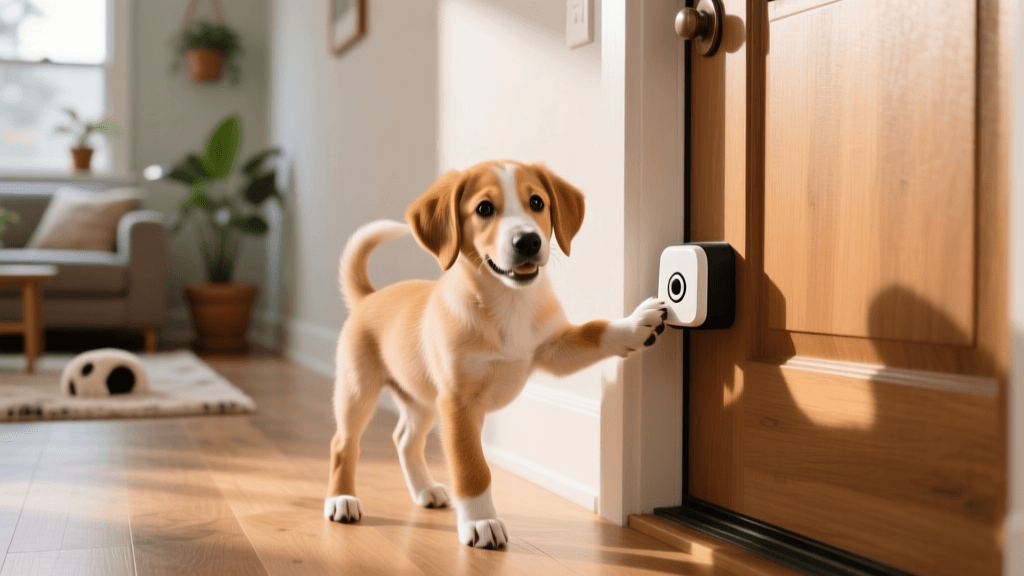
- Smart Bell 2.0 Wireless Systems: For homes with heavy doors or multiple exit points, wireless touch-activated bells that plug into a wall outlet in another room have become incredibly popular. They eliminate the need for the puppy to paw at a hanging strap, which is ideal for smaller toy breeds.
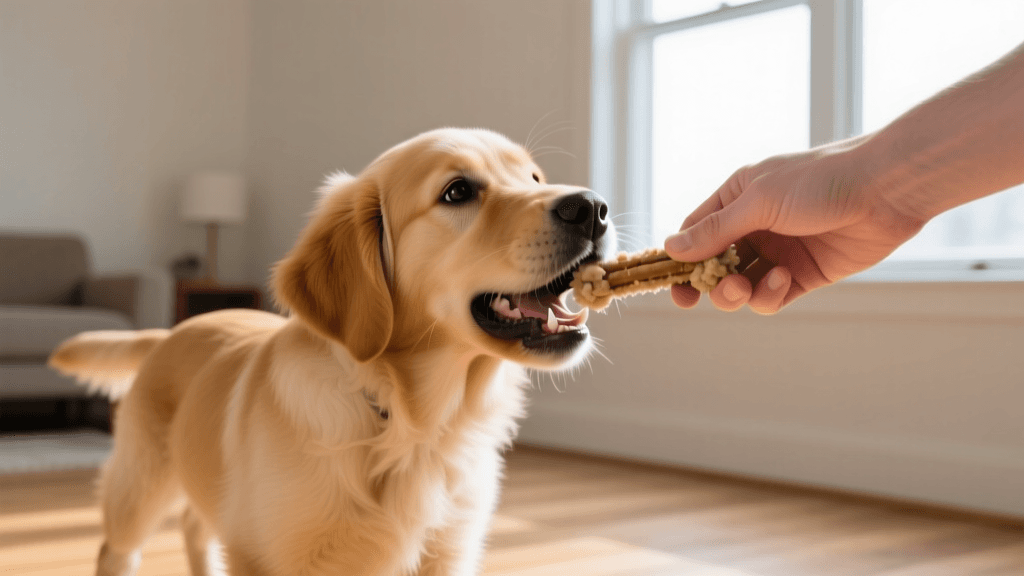
- Treat Pouch & Clicker: You will need a dedicated treat pouch filled with high-value, pea-sized training treats (like freeze-dried liver or boiled chicken) and a clicker or a consistent marker word like 'Yes!' to pinpoint the exact moment the bell is rung.
Step-by-Step Positive Reinforcement Protocol
Bell training is essentially a sequence of 'shaping' and 'classical conditioning'. We are breaking the final goal down into small, digestible steps to ensure your puppy succeeds without frustration.
Step 1: Target Training (Touch)
Before hanging the bell on the door, introduce it on the floor. Hold the bell in your hand or place it on a low mat. The moment your puppy shows any interest—sniffing, looking at, or accidentally nudging the bell—click your clicker (or say 'Yes!') and immediately deliver a high-value treat. Repeat this until your puppy is intentionally nudging the bell with their nose or paw to earn a reward. This is called 'capturing' and 'shaping' behavior.
Step 2: Adding the Cue and Location
Once your puppy is reliably touching the bell, hang it on the door handle at your puppy's nose level. Point to the bell and use a consistent verbal cue like 'Touch' or 'Ring'. When they nudge it, mark the behavior and reward. At this stage, the reward is still just the treat from your pouch; the door does not open yet. We want to build a strong history of reinforcement for the physical act of ringing.
Step 3: Pairing the Ring with the Door Opening
Now we change the contingency. When your puppy rings the bell, mark the behavior, but instead of handing them a treat immediately, enthusiastically say 'Let's go outside!' and open the door. Leash them up and step outside. The reward for ringing the bell is now access to the outdoors. If they are due for a potty break, they will likely eliminate outside.
Step 4: The Outdoor Jackpot Reward
This is the most critical step that many owners miss. When your puppy actually eliminates outside, you must throw a 'jackpot' party. The Humane Society of the United States emphasizes that immediate, high-value rewards outdoors are what solidify the habit of eliminating in the correct location. Deliver three to five treats in rapid succession, paired with lavish verbal praise, the second they finish their business. Do not wait until you are back inside to reward them, or you will accidentally train them that coming inside is the rewarding event, which can cause them to hold it outside and rush back in.
Troubleshooting: When the Bell Becomes a Toy
A common challenge in 2026 puppy forums is the 'false alarm'—when a puppy rings the bell constantly just to go outside and play, rather than to potty. Because we use force-free methods, we never scold the puppy for ringing the bell. Scolding creates confusion and can suppress the bell-ringing behavior entirely, leading to indoor accidents.
Instead, manage the environment. If your puppy rings the bell, leash them and take them directly to their designated potty spot. Stand completely still and be boring for exactly three minutes. If they eliminate, throw a jackpot party and engage in play. If they do not eliminate within three minutes, calmly say 'Too bad,' walk back inside, and put them in their crate or a small playpen for 10 to 15 minutes before trying again. This teaches the puppy that ringing the bell results in potty time, not playtime, without ever using fear or intimidation.
2026 Force-Free Potty & Bell Training Schedule
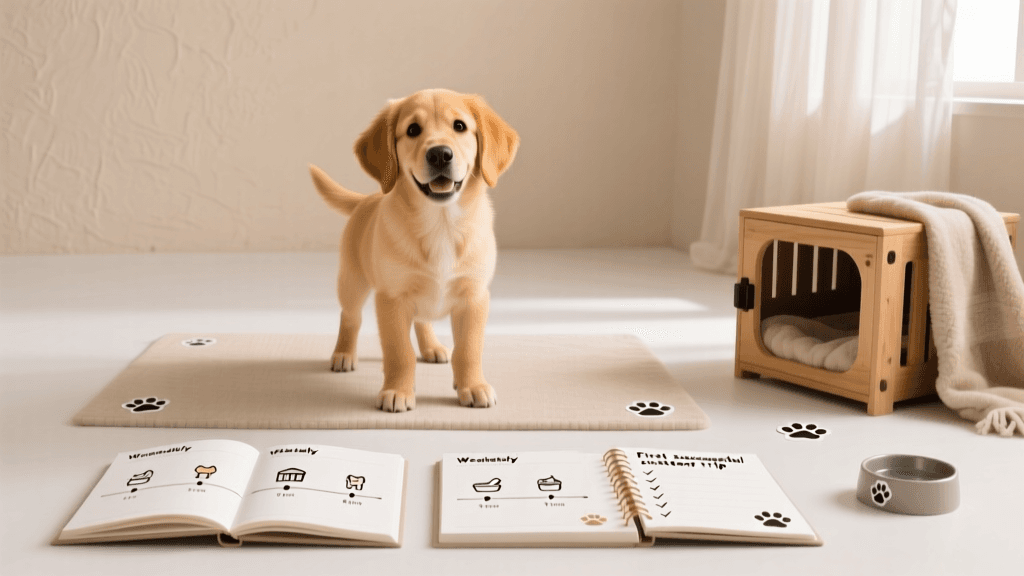
Consistency is the backbone of positive reinforcement. Puppies thrive on predictable routines. Below is a sample daily schedule for a 12-week-old puppy utilizing the bell training protocol.
| Time of Day | Trigger Event | Bell Protocol | Positive Reinforcer |
|---|---|---|---|
| 7:00 AM | Wake Up / Crate Release | Guide nose to bell, open door immediately | Outdoor Jackpot Treats + Morning Play |
| 7:30 AM | Post-Breakfast (15 mins after) | Cue 'Touch', reward door opening | Outdoor Jackpot Treats |
| 10:00 AM | Post-Play Session | Wait for voluntary ring or cue | Outdoor Jackpot Treats + Sniffari |
| 1:00 PM | Post-Nap / Post-Lunch | Cue 'Touch', open door | Outdoor Jackpot Treats |
| 4:00 PM | Afternoon Training / Play | Wait for voluntary ring | Outdoor Jackpot Treats |
| 9:30 PM | Pre-Bedtime Final Break | Cue 'Touch', keep outing boring | Outdoor Treat, straight to crate for sleep |
Managing Accidents Humanely
Even with the best positive reinforcement protocols, accidents will happen. A puppy's sphincter muscles are not fully developed, and their cognitive ability to 'hold it' is limited by age. When an accident occurs indoors, your reaction dictates your future success.
If you catch them in the act, do not yell or clap loudly to startle them, as this can cause them to associate elimination with fear. Instead, use a gentle interrupter like a soft 'Oops!' or a kissy noise, quickly scoop them up or leash them, and carry them outside to finish. If they finish outside, reward them heavily.
If you find an accident after the fact, simply clean it up. The puppy has already forgotten the event, and punishing them now will only teach them that you are unpredictable and scary. To clean the area, avoid ammonia-based cleaners, which smell like urine to a dog's sensitive nose. Instead, use a high-quality enzymatic cleaner like the Rocco & Roxie Professional Strength Stain & Odor Eliminator, which breaks down the uric acid crystals at a molecular level, completely removing the scent marker and preventing the puppy from returning to the same spot.
Conclusion
Force-free puppy bell training is more than just a potty training hack; it is an exercise in building trust, communication, and mutual respect with your new dog. By utilizing positive reinforcement, managing their environment, and adhering to a consistent 2026 schedule, you will not only achieve a reliably house-trained puppy but also lay the foundational groundwork for a confident, happy, and well-adjusted adult dog. Embrace the process, keep your treat pouch full, and celebrate every single ring of the bell.
hannah-wickes
All our authors care for dogs every day — read more of their work on the authors page.