2026 Puppy Agility Foundations: Safe Flatwork Guide
Discover safe 2026 puppy agility foundations. Learn flatwork drills, body awareness exercises, and joint protection tips for your growing competition pup.
The Future of Canine Sports Starts on the Ground
Welcome to the exciting world of dog sports. As we navigate the competitive landscape of 2026, canine agility, obedience, and rally are more popular and scientifically supported than ever before. However, the drive to create the next champion often leads well-meaning handlers to push their puppies too hard, too fast. The foundation of a long, injury-free competition career does not begin with jumps, weave poles, or high-speed A-frame contacts. It begins with flatwork, body awareness, and a deep understanding of canine biomechanics.
In this comprehensive 2026 guide to puppy agility foundations, we will explore the critical flatwork drills, conditioning protocols, and joint protection strategies necessary to prepare your puppy for the rigors of the ring without compromising their physical development.
The Science of Puppy Joints and Growth Plates
Before introducing any sport-specific movements, it is vital to understand the biology of a growing puppy. Puppies possess open epiphyseal plates (growth plates) at the ends of their long bones. These areas of developing cartilage are significantly softer and more vulnerable to injury than mature bone. According to the American College of Veterinary Surgeons (ACVS), repetitive concussive forces, such as those generated by jumping or weaving, can cause micro-fractures, premature closure of the growth plates, or permanent angular limb deformities.
Most breeds do not see full closure of their growth plates until they are 14 to 18 months of age, with giant breeds taking up to 24 months. Therefore, all 2026 puppy training must remain strictly on the ground. The goal is to build the mental framework, muscle memory, and handler engagement required for agility, while preserving the structural integrity of the puppy's skeletal system.
Essential Flatwork Drills for 2026 Puppies
Flatwork refers to all the handling, obstacle discrimination, and movement skills performed without the dog leaving the ground. Mastering these drills will give you a massive competitive advantage once your puppy is cleared for height.
1. The Engagement and Tugging Game
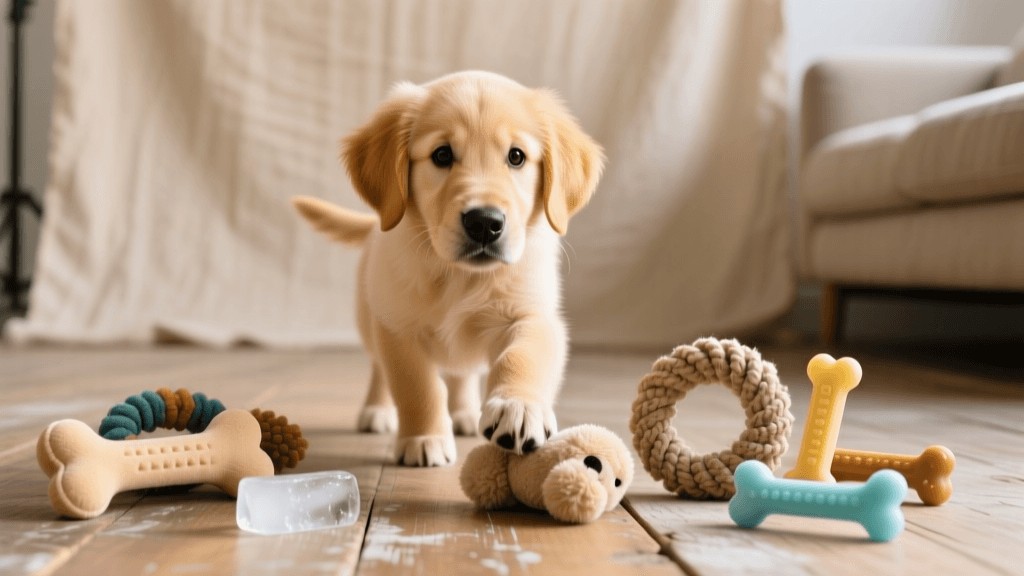
In modern agility, a dog that drives hard to the handler's toy is a dog that runs fast and turns tight. Engagement is the bedrock of your relationship. Start with high-value toys like fleece tug braids or real-fur tugs.
- Neutrality is Key: When tugging, keep the toy low and close to your body. Avoid whipping the toy or lifting the puppy off the ground, which can strain their developing cervical spine.
- The 'Out' Command: Teach a clean release. Use a secondary toy to motivate the drop, ensuring the game remains fluid and positive.
- Directional Cues: Incorporate basic left and right arm movements while tugging to introduce the concept of following your shoulder orientation, a critical skill for 2026 course handling.
2. Rear-End Awareness (The Pivot Box)
Agility requires dogs to manipulate their hindquarters with the same precision as their front legs. Rear-end awareness prevents knocked bars and missed contact zones.
- The Setup: Use a sturdy, low-profile pivot box or a thick book. Lure the puppy's front paws onto the object using a food reward.
- The Pivot: Once the front paws are planted, take a small step to the side. The puppy will naturally step their hind legs laterally to maintain balance.
- Progression: Reward heavily for lateral hind-leg movement. Over several weeks, build up to a full 360-degree pivot in both directions. This builds the stabilizing muscles in the hips and pelvis without any impact stress.
3. Sending to a Target
Distance handling is a hallmark of elite agility teams. Teach your puppy to drive away from you to a specific target mat. Start with the mat just a few inches away, rewarding the puppy for placing all four paws on it. Gradually increase the distance. By the time your puppy is a year old, you can transition this mat-targeting behavior directly to the bottom contact zone of the dog walk and A-frame.
4. Jump Stanchion Wraps (No Bar)
You can teach tight turning mechanics without a jump bar. Set up a single jump stanchion or a traffic cone. Using a toy or treat, lure the puppy tightly around the object, keeping their shoulder close to the base. Practice 'wrapping' left and right. This teaches the dog to collect their stride and bend their spine laterally, preparing them for the physical demands of jumping later in life.
Body Awareness and Conditioning Equipment
The canine fitness industry has evolved dramatically. In 2026, specialized conditioning equipment is more accessible and ergonomically designed than ever. Incorporating these tools into your puppy's weekly routine will build core strength and proprioception.
- FitPAWS Paw Pods ($45 - $60): These inflatable, peanut-shaped pods are excellent for teaching puppies to stand with their feet in specific positions, building core stability and pastern strength.
- Klimb Platform ($119): A highly durable, non-slip platform perfect for teaching 'place' commands, stacking for conformation, and practicing sit-to-stand transitions to build hindquarter drive.
- Cavaletti Poles: Place lightweight PVC pipes on the ground at varying, irregular distances. Walking over ground poles encourages the puppy to lift their feet, articulate their joints through a full range of motion, and think about foot placement.
Puppy Agility Training Schedule & Milestones
Structuring your training is vital to prevent physical and mental burnout. The American Kennel Club (AKC) emphasizes that puppy training sessions should be incredibly short, ending before the puppy shows signs of fatigue or frustration. Below is a recommended 2026 milestone chart for safe puppy development.
| Puppy Age | Primary Focus Area | Approved Equipment | Max Session Time |
|---|---|---|---|
| 8 - 12 Weeks | Engagement, Name Recall, Target Mats | Tugs, Treat Pouch, Flat Mat | 3 - 5 Minutes |
| 3 - 5 Months | Rear-End Awareness, Cavalettis, Tunnel Intro | Pivot Box, Ground Poles, Chute Tunnel | 5 - 10 Minutes |
| 6 - 9 Months | Stanchion Wraps, Sends, Handler Motion | Jump Stanchions (No Bar), Paw Pods | 10 - 15 Minutes |
| 10 - 14 Months | Low Bar Jumps (Growth Plate Dependent) | Jumps at 4-8 inches, Weave Channel | 15 - 20 Minutes |
| 15+ Months | Full Height Obstacles, Sequencing | Full Course Equipment | 20 - 30 Minutes |
Protecting Your Puppy's Future Career: Surfaces and Nutrition
Beyond the drills, the environment in which you train plays a massive role in your puppy's longevity. In 2026, the shift away from training on concrete, asphalt, or even hard-packed dirt is universal among top competitors. These surfaces transmit severe shockwaves up the puppy's carpal and tarsal joints. If you are building a backyard training space, invest in modern K9-specific synthetic turf equipped with a closed-cell foam underlay. This technology mimics the shock absorption of premium indoor rubber flooring, allowing you to practice flatwork and conditioning safely at home. If you must train outdoors, seek out lush, well-maintained grass, and always avoid training immediately after heavy rain when the ground is slick and unstable.
Nutrition and Joint Support
A sporting puppy requires a diet formulated for controlled growth. Overfeeding can lead to rapid bone elongation, which outpaces muscle and tendon development, increasing the risk of orthopedic injuries. Feed a high-quality, large-breed puppy formula if your dog is expected to exceed 50 pounds, as these diets maintain an optimal calcium-to-phosphorus ratio. Furthermore, consult your veterinarian about introducing an omega-3 fatty acid supplement (specifically high in EPA and DHA) to support joint lubrication and reduce systemic inflammation. Many 2026 canine sports medicine protocols also recommend starting a high-quality glucosamine and chondroitin supplement, such as Dasuquin Advanced, around 6 months of age for breeds predisposed to hip or elbow dysplasia.
Understanding Competition Age Requirements
As you plan your puppy's career, you must align your training timeline with official competition regulations. Organizations like the United States Dog Agility Association (USDAA) enforce strict minimum age requirements to ensure the welfare of the dogs. Typically, dogs cannot compete in standard agility classes until they are at least 15 to 18 months old, depending on the height they will be jumping. Use this mandatory waiting period to your advantage. A puppy that spends 18 months mastering flatwork, engagement, and body awareness will enter the ring with a level of confidence and precision that a dog rushed over jumps at 12 months could never achieve.
Conclusion: Patience is the Ultimate Strategy
Raising a competition puppy is a marathon, not a sprint. The flatwork and body awareness drills outlined in this 2026 guide are not merely placeholders until your dog is old enough to jump; they are the very skills that will win you championships. By respecting your puppy's biological timeline, utilizing safe conditioning equipment, and prioritizing engagement over obstacle performance, you are laying the groundwork for a resilient, enthusiastic, and highly skilled agility partner for years to come.
aaron-whyte
All our authors care for dogs every day — read more of their work on the authors page.