2026 Puppy Agility Foundation & Safe Conditioning Guide
Discover safe 2026 puppy agility foundation training, flatwork drills, and growth-plate-friendly conditioning for future canine sports competitors.
Building the Canine Athlete: The 2026 Approach to Puppy Sports Foundations
The landscape of competitive dog sports has evolved significantly, and as we navigate through 2026, the emphasis in puppy care has shifted heavily toward longevity, biomechanical safety, and cognitive development. Whether your goal is to compete in agility, obedience, rally, or fast CAT, the first twelve months of your puppy's life are not about teaching them to jump over bars or weave through poles. Instead, this critical developmental window is dedicated to building a robust physical and mental foundation. Rushing a puppy into high-impact sports before their body is fully mature can lead to devastating, career-ending injuries.
At Paws-Tales, we believe that raising a future sports champion starts with understanding canine physiology, implementing safe flatwork drills, and fostering an unbreakable bond through engagement games. This comprehensive guide will walk you through the essential steps to prepare your puppy for the rigors of dog sports while prioritizing their health and well-being during their first year.
Understanding Puppy Growth Plates and Sports Safety
One of the most critical concepts in puppy care for sports enthusiasts is the management of growth plates. Growth plates are soft, cartilaginous areas at the ends of long bones where new bone tissue is generated. According to the Orthopedic Foundation for Animals, these plates do not fully close and calcify into solid bone until a dog is anywhere from 12 to 18 months of age, depending on the breed and size.
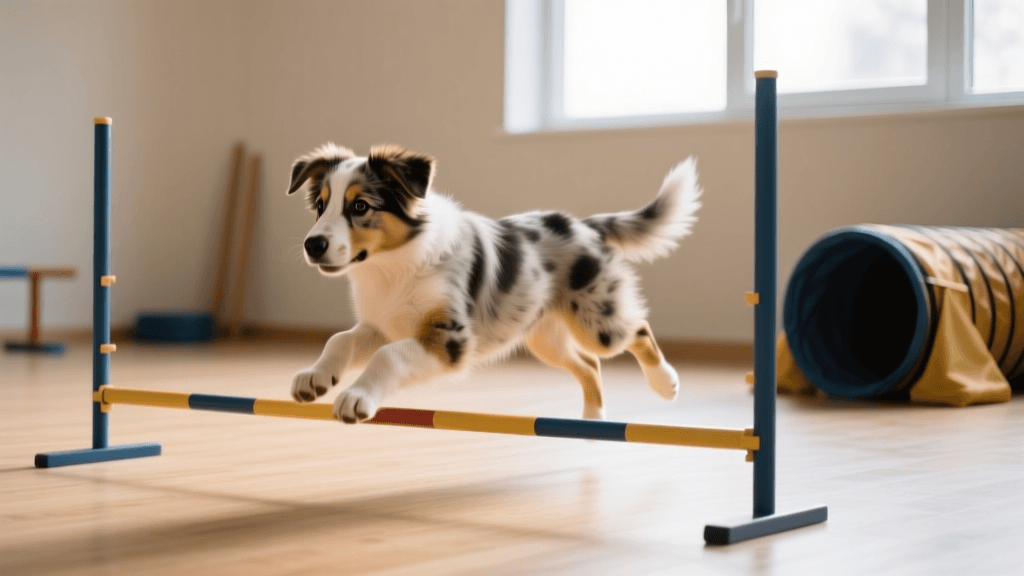
Subjecting a puppy to repetitive high-impact activities—such as jumping over agility hurdles, executing tight turns on the A-frame, or performing weave poles—before these plates have closed can cause microfractures, premature closure, and permanent orthopedic deformities. In 2026, leading veterinary sports medicine specialists universally agree that puppies under 14 months should remain strictly on the ground. All agility training during the first year must be limited to 'flatwork,' which involves ground-level maneuvers, body awareness, and handler engagement.
Nutrition for the Developing Athlete
Conditioning begins in the food bowl. Feeding a puppy destined for dog sports requires a careful balance. Overfeeding can lead to rapid growth and excess weight, placing undue stress on developing joints. Conversely, underfeeding can deprive the puppy of the essential building blocks required for muscle and bone density. For large and giant breeds, it is imperative to feed a diet specifically formulated for large-breed puppies, which regulates calcium and phosphorus levels to ensure a steady, controlled growth rate.
Look for diets rich in DHA (docosahexaenoic acid) to support the cognitive development required for complex sports training, and high-quality, bioavailable proteins to support lean muscle mass. Always consult with a veterinary nutritionist to tailor your puppy's caloric intake to their specific metabolic needs and activity level.
Essential Flatwork Drills for Puppies Under 12 Months
Flatwork is the bedrock of agility and obedience. It teaches the puppy how to move their body, how to offer behaviors, and how to focus on the handler amidst distractions.
1. Target Training (Nose and Paw)
Targeting teaches the puppy to interact with specific objects, which later translates to hitting the yellow contact zones on agility equipment. Start with a small, silicone target mat. Place it on the floor and reward any interaction. Gradually shape the behavior until the puppy is confidently placing their front paws or nose on the target and holding that position. This builds rear-end awareness and impulse control.
2. Rear End Awareness (Perch Work)
Most puppies are acutely aware of their front paws but have little idea where their back feet are. Rear-end awareness is crucial for preventing knocked bars and ensuring safe landings. Use a raised, stable platform like a paw perch or a sturdy wooden block. Lure the puppy to place their front paws on the block, then use a treat to gently guide their nose in a circle. As their front paws remain planted, their hind legs will step around the block. This drill builds core strength and hindquarter coordination.
3. Engagement and Focus Games
A sports dog must be able to focus on their handler in a chaotic trial environment. The American Kennel Club emphasizes that engagement is the most vital skill a sports puppy can learn. Play the 'It's Yer Choice' game to teach impulse control with treats and toys. Practice recalling your puppy away from high-value distractions, rewarding them with a vigorous game of tug or fetch. The goal is to teach the puppy that working with you is the most rewarding activity in the world.
2026 Recommended Gear for Puppy Sports Foundations
Having the right equipment makes foundation training smoother and more effective. Below is a curated list of essential gear for your puppy's sports journey, reflecting the top-rated models available in 2026.
| Equipment Type | Recommended Brand/Model | Purpose in Foundation Training | Est. 2026 Price |
|---|---|---|---|
| Treat Pouch | Clean Run Magnetic Competition Pouch | Allows for rapid, silent reward delivery without fumbling with zippers. | $34.95 |
| Training Platform | Doggie Design Klimb | Elevates the puppy for rear-end awareness and stationing drills. | $145.00 |
| Target Mat | Ray Allen Silicone Target Square | Non-slip surface for teaching paw targets and contact zone foundations. | $18.50 |
| Tug Toy | Chase-It Fleece Bungee Tug | Builds drive and serves as a high-value reward for engagement games. | $22.00 |
Socializing for the Competition Environment
Socialization for a sports puppy extends far beyond meeting other dogs. It involves preparing the puppy for the intense sensory overload of a dog show or agility trial. Trial environments are characterized by echoing indoor arenas, barking dogs, slamming crates, and unpredictable movements.
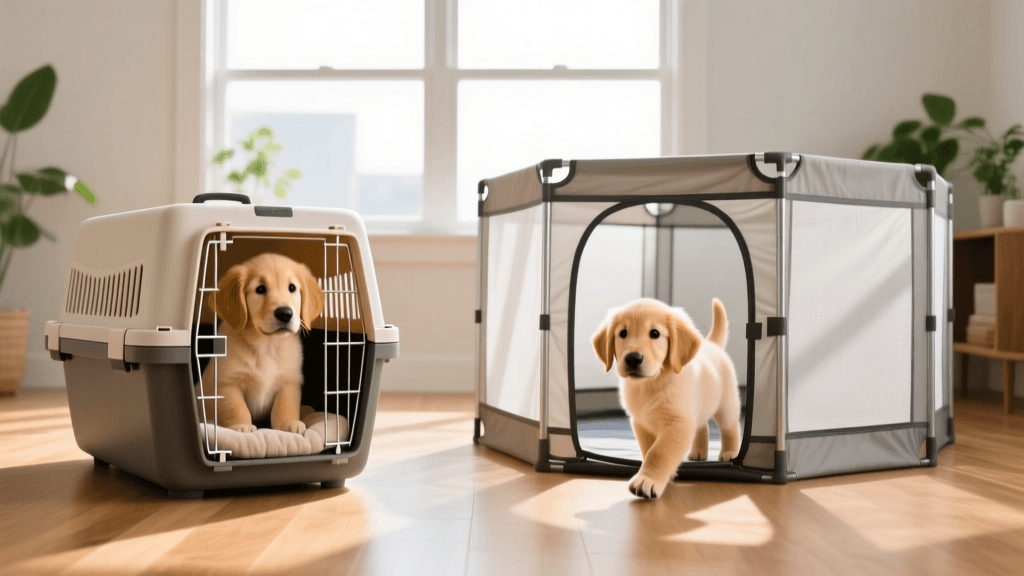
Begin by exposing your puppy to varied surfaces: grass, gravel, rubber matting, and metal grates. Introduce them to the concept of crating in busy environments. Start by taking them to a local park, setting up their crate, and feeding them their meals inside while the world goes by. Gradually increase the level of distraction. Play recorded sounds of cheering crowds and barking dogs at a low volume while they eat or play, slowly increasing the volume over several weeks to build their confidence and emotional resilience.
Structured Weekly Foundation Schedule
Consistency is key, but so is rest. Puppies need ample sleep to consolidate learning and allow their bodies to grow. Below is a sample weekly schedule designed for a 6-to-9-month-old sports prospect.
| Day | Focus Area | Activity Details |
|---|---|---|
| Monday | Engagement & Play | 10 minutes of tug, recall games, and handler focus drills in a low-distraction yard. |
| Tuesday | Body Awareness | 15 minutes of perch work, backing up, and spinning to build core and hindquarter strength. |
| Wednesday | Active Rest | Decompression sniffari in a new field. No formal training; let the puppy explore and relax. |
| Thursday | Target & Impulse | 10 minutes of nose-to-target holds and 'leave it' exercises with high-value toys. |
| Friday | Environmental Socialization | Visit a hardware store or outdoor cafe. Reward calm behavior and focus on the handler. |
| Saturday | Crate Games & Noise | Practice settling in the crate with a food puzzle while playing ambient trial noises. |
| Sunday | Total Rest | Complete rest day. Gentle cuddles and basic grooming practice to prepare for table exams. |
Looking Ahead: Transitioning to Equipment
As your puppy approaches their first birthday, you can begin consulting with a certified canine sports medicine specialist to assess their growth plates. Once cleared, typically between 14 and 18 months, you can slowly introduce low jumps and straight tunnels. For the latest protocols on transitioning from flatwork to full-height equipment, organizations like Clean Run Productions offer extensive libraries of courses and seminars led by world-class handlers and veterinarians.
Remember, the goal of puppy care in the context of dog sports is not to create a prodigy by month twelve, but to forge a confident, physically sound, and deeply connected partner who will enjoy a long, healthy, and successful career in the ring. Patience, positive reinforcement, and a commitment to safety will yield the greatest rewards.
aaron-whyte
All our authors care for dogs every day — read more of their work on the authors page.