Psychiatric Service Dog DPT Body Language Cues In 2026
Learn to decode psychiatric service dog body language during Deep Pressure Therapy in 2026. Understand stress signals, task cues, and canine psychology.
Understanding the Mind of a Psychiatric Service Dog
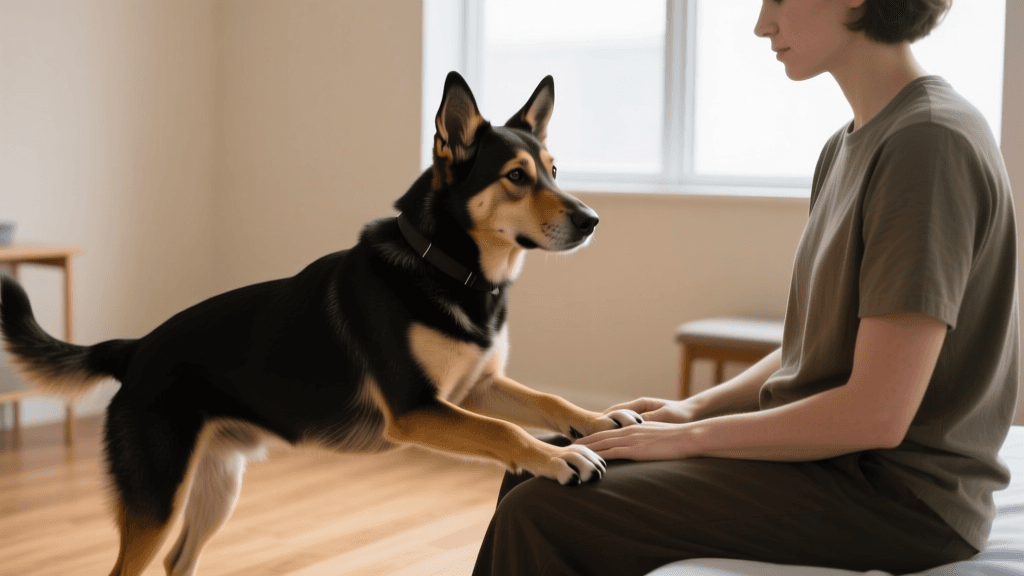
Psychiatric Service Dogs (PSDs) represent one of the most profound intersections of canine instinct and human medical need. Unlike mobility or guide dogs, whose tasks are primarily physical, PSDs are trained to mitigate invisible psychiatric disabilities such as PTSD, severe anxiety, and dissociative disorders. In 2026, our understanding of the canine psychological state during complex, emotionally charged tasks like Deep Pressure Therapy (DPT) has evolved significantly. DPT involves the dog using its body weight to apply firm, even pressure across the handler's chest, lap, or legs. This proprioceptive input stimulates the parasympathetic nervous system, helping to ground a handler experiencing a panic attack or severe dissociative episode. But what is happening inside the dog's mind during this intense exchange? Understanding your working dog requires looking past the task itself and decoding the subtle body language that reveals their emotional and cognitive state.
The Neurobiology of Deep Pressure Therapy from the Canine Perspective
When a PSD performs DPT, they are engaging in a behavior that mimics natural canine denning and pack-bonding instincts. In the wild, canids often press against one another for warmth, security, and social cohesion. By selectively breeding and training for this instinct, we have harnessed a natural comforting behavior and directed it toward human psychiatric intervention. According to the Assistance Dogs International (ADI), the welfare and psychological soundness of the working dog are paramount to a successful partnership. A well-trained PSD does not view DPT as a stressful chore; rather, they experience a mutual oxytocin release. Oxytocin, the 'bonding hormone,' surges in both the human and the dog during sustained, calm physical contact. However, because the handler is in a state of extreme distress, the dog must actively suppress their own natural startle responses to remain a steady, grounding anchor.
Scenting the Invisible: How Dogs Detect Impending Panic
Before a PSD ever initiates DPT, they must recognize that a medical event is imminent. In 2026, veterinary behaviorists have further mapped the incredible capabilities of the canine vomeronasal organ in working dogs. When a human experiences a panic attack, the endocrine system floods the body with cortisol and adrenaline, altering the chemical composition of sweat and breath. A PSD is trained to alert to these specific volatile organic compounds (VOCs) using synthetic cortisol swabs during their foundational training. You will often see the dog's body language shift moments before the handler even realizes an attack is coming. The dog may exhibit 'air scenting' (lifting the head and flicking the tongue to capture scent particles), intense staring, or persistent nudging. This alert behavior is the first phase of the task chain, requiring immense cognitive focus and emotional regulation from the dog.
Decoding 'On-Task' Body Language During DPT
Once the handler sits or lies down and gives the DPT cue—or the dog offers the behavior upon detecting the scent alert—the dog's body language shifts into 'working mode.' A confident, well-adjusted PSD performing DPT will display a relaxed but deliberate posture. Look for a soft, open mouth, relaxed ears (neither pinned back nor rigidly forward), and a slow, rhythmic breathing pattern that intentionally mirrors and eventually slows the handler's own respiration. The dog will typically lay their chin heavily on the handler's chest or drape their front paws over the handler's legs. This heavy leaning is a sign of trust and deep task engagement. The American Kennel Club (AKC) emphasizes that a service dog in active tasking should appear focused, unbothered by environmental distractions, and physically connected to their handler.
Recognizing Compassion Fatigue and Canine Stress Signals
While PSDs are incredibly resilient, they are not immune to the emotional weight of their work. 'Compassion fatigue' in working dogs is a critical area of study in modern canine psychology. Because dogs are highly empathetic and susceptible to emotional contagion, repeatedly absorbing a handler's panic and anxiety can lead to chronic stress if not properly managed. It is vital for handlers to understand the difference between a dog who is focused on a task and a dog who is becoming overwhelmed. According to the Humane Society of the United States, canine stress signals can be subtle and are often misinterpreted by the public as disobedience or sleepiness.
On-Task vs. Overloaded: A Behavioral Comparison
| Behavioral Indicator | 'On-Task' (Healthy Working State) | 'Overloaded' (Stress / Compassion Fatigue) |
|---|---|---|
| Eye Contact | Soft, focused gaze on handler's face or chest | 'Whale eye' (showing whites of eyes), darting gaze, avoidance |
| Muscle Tension | Relaxed, heavy leaning, fluid movements | Rigid posture, trembling, tense jaw, stiff tail base |
| Vocalization | Silent, or soft, contented sighs | Whining, high-pitched yawning, repetitive lip smacking |
| Response to Environment | Tuned out distractions, focused entirely on handler | Hyper-vigilance, startling at minor noises, pacing |
2026 Gear and Decompression Protocols for Working PSDs
To support the psychological and physical well-being of your PSD, modern handlers must utilize ergonomic gear and strict decompression routines. In 2026, the standard for service dog vests has shifted away from restrictive, heavy nylon to breathable, biomechanically supportive mesh. High-end ergonomic service vests, such as the updated Chai's Choice Tactical Harness Pro or the Ruffwear Web Master Secure, typically range from $85 to $130. These vests feature padded chest plates that prevent chafing during prolonged DPT sessions and include ergonomic handles that allow the handler to gently guide the dog without applying spinal pressure.
Furthermore, a standard DPT session should last between 5 to 15 minutes, followed by a mandatory 'shake-off' and decompression period. After a task, allow your dog to physically shake their body from nose to tail—this is a natural canine mechanism for releasing adrenaline and resetting the nervous system. Follow this with a 'sniffari' or decompression walk on a 15-foot to 30-foot biothane long line. Sniffing lowers a dog's heart rate and engages their primary sensory cortex, pulling them out of the high-stakes working mindset and back into a state of natural canine joy.
A working dog is only as effective as their mental health allows. In 2026, the most successful service dog teams prioritize the dog's psychological decompression just as heavily as the handler's medical stability.
Conclusion: A Partnership Built on Mutual Understanding
Understanding your psychiatric service dog goes far beyond teaching them to perform Deep Pressure Therapy on cue. It requires a daily commitment to reading their subtle body language, respecting their emotional limits, and providing the decompression they need to thrive in a complex world. By recognizing the signs of healthy task engagement versus compassion fatigue, and by utilizing modern, ergonomic gear, you ensure that your canine partner remains a happy, confident, and effective lifeline for years to come. The bond between a PSD and their handler is a living, breathing entity that must be nurtured through empathy, observation, and profound respect for the canine mind.
hannah-wickes
All our authors care for dogs every day — read more of their work on the authors page.