Puppy Separation Anxiety: 2026 Petcube Bites Training
Learn how to cure puppy separation anxiety in 2026 using the Petcube Bites camera. Step-by-step desensitization protocols and alone-time tips.
The Reality of Puppy Separation Anxiety in 2026
As we navigate the hybrid work landscapes and shifting office mandates of 2026, many new dog owners are finding that their puppies struggle immensely with the transition from constant companionship to extended periods of alone time. Separation anxiety is not merely a behavioral quirk or a sign of a 'bad' dog; it is a profound state of panic that affects thousands of puppies during their critical first year of development. According to the ASPCA, separation anxiety is triggered when a dog becomes overly attached to their guardian and experiences severe distress upon being left alone. Left unaddressed, this anxiety can lead to destructive behaviors, chronic stress, and even self-injury.
Fortunately, advancements in smart pet technology combined with modern, force-free behavioral protocols have made treating puppy separation anxiety more manageable than ever. In this comprehensive guide, we will explore how to utilize the Petcube Bites smart treat-dispensing camera as a core component of your 2026 desensitization training protocol, helping your puppy build confidence and learn to love their alone time.
Recognizing the Signs of Canine Distress
Before implementing a training protocol, it is crucial to differentiate between normal puppy boredom and true separation anxiety. Puppies naturally chew and explore, but anxiety-driven behaviors are rooted in panic. Common signs include:
- Excessive Vocalization: Continuous howling, whining, or barking that begins the moment you leave and does not subside.
- Destructive Behavior: Chewing on door frames, window sills, or the crate itself, specifically focused on exit points.
- Potty Accidents: House-trained puppies suddenly urinating or defecating indoors only when left alone.
- Pacing and Panting: Inability to settle, drooling excessively, or exhibiting frantic movement captured on camera.
If your puppy exhibits these signs, the American Kennel Club (AKC) recommends avoiding punishment entirely, as this only increases the dog's overall stress levels and exacerbates the underlying panic.
Why the Petcube Bites Camera is a Training Game-Changer
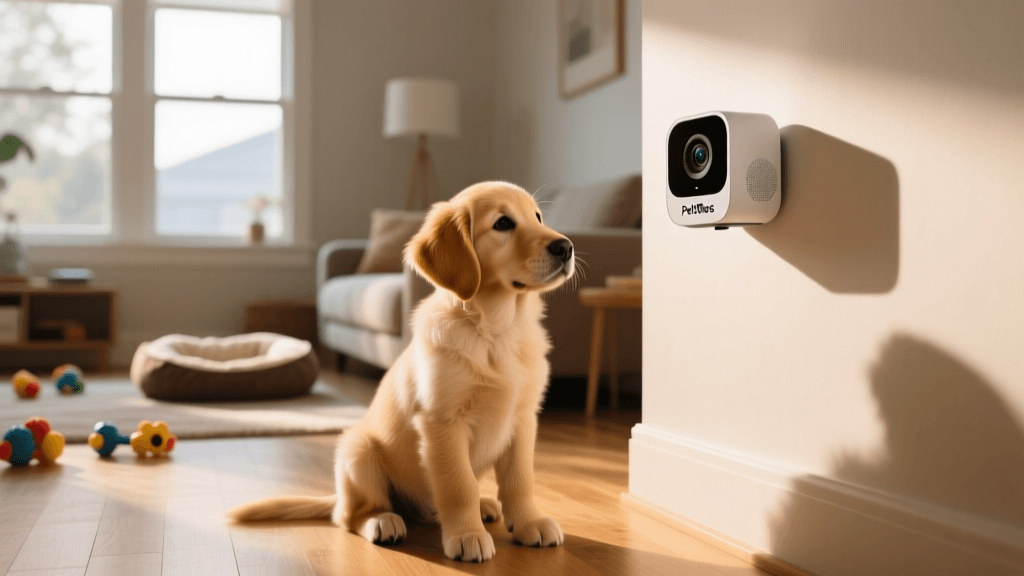
In 2026, smart home integration has reached new heights, and the Petcube Bites 2 remains a top-tier tool for separation anxiety desensitization. Unlike standard monitoring cameras, the Petcube Bites allows you to actively participate in your puppy's training while you are physically absent. The built-in treat tosser is the critical feature. By dispensing high-value rewards remotely, you can interrupt anxious thought loops, reward moments of calm, and change your puppy's emotional response to being alone from 'panic' to 'anticipation of good things'.
Setup Tips for Success: Mount the camera at your puppy's eye level when they are in their designated safe space or crate. Ensure you are using small, pea-sized training treats (like Zuke's Mini Naturals) to prevent jamming the dispensing mechanism and to keep calorie intake managed during repetitive training sessions.
The 2026 Step-by-Step Desensitization Protocol
Curing separation anxiety requires patience. You must build your puppy's tolerance to alone time in microscopic increments. Here is the proven protocol utilizing the Petcube Bites camera.
Phase 1: Desensitizing Pre-Departure Cues (Days 1-3)
Puppies are incredibly observant. They know you are leaving before you even touch the doorknob. Picking up your keys, putting on your shoes, or grabbing your coat are 'pre-departure cues' that trigger anxiety. For the first three days, perform these actions without leaving. Pick up your keys, then sit on the couch. Put on your shoes, then take them off and make a cup of coffee. Use the Petcube app to monitor your puppy's reaction from another room. Once they stop reacting to these cues with panting or whining, move to Phase 2.
Phase 2: Micro-Departures with Treat Tossing (Days 4-10)
Begin leaving the house for incredibly short durations. Step outside, close the door, and immediately open the Petcube app. Watch your puppy. The moment they sit quietly or lie down, use the app to toss a treat. Do not toss a treat if they are barking or scratching at the door, as this will reinforce the anxious behavior. Return inside before they become distressed. Start with 5-second departures, gradually increasing to 30 seconds, then 1 minute. The goal is to teach the puppy that your departure predicts a fun game of remote treat-catching, not abandonment.
Phase 3: Extending Alone Time (Weeks 2-4)
Once your puppy can comfortably handle 5-minute absences without showing signs of stress, begin extending the time. Increase the duration by 5-minute increments. During these longer sessions, toss treats at variable intervals (e.g., at minute 2, minute 7, and minute 12) to keep them engaged. This phase is where the Petcube Bites truly shines, allowing you to reward sustained calmness over longer periods while you run errands or work from a local cafe.
2026 Smart Pet Camera Comparison Chart
While the Petcube Bites is our top recommendation for active treat-tossing desensitization, it is helpful to understand how it compares to other leading models on the market in 2026.
| Feature | Petcube Bites 2 | Furbo 360 | Eufy Pet D120 |
|---|---|---|---|
| Treat Capacity | 1.5 lbs | 1.5 lbs | 1.2 lbs |
| Camera Resolution | 1080p HD | 1080p HD | 2K HD |
| Field of View | 138° Wide Angle | 360° Rotating | 170° Wide Angle |
| 2026 Avg Price | $199 | $249 | $169 |
| Barking Alerts (AI) | Yes | Yes | Yes |
| Best For | Active Training | Pacing Dogs | Budget Setup |
Environmental Enrichment for Alone Time
Technology is only one piece of the puzzle. To set your puppy up for success, their physical environment must be optimized for relaxation and mental stimulation. The Humane Society emphasizes the importance of creating a safe, den-like environment for puppies when they are left unattended.
- The Safe Zone: Use a sturdy wire or plastic crate, or a puppy-proofed pen. Cover the top and sides with a breathable blanket to create a cozy, den-like atmosphere that reduces visual overstimulation.
- Long-Lasting Chews: Before you leave, provide a frozen Kong stuffed with plain Greek yogurt, pumpkin puree, and kibble. Licking and chewing release endorphins in a dog's brain, naturally lowering their heart rate and promoting calmness.
- Calming Supplements: In 2026, veterinary-approved calming chews containing L-theanine, chamomile, and hemp-derived CBD (where legally permitted) are widely used to take the edge off mild anxiety. Brands like Zesty Paws and VetriScience offer excellent options to give 30 minutes before your departure.
- White Noise: Mask outdoor triggers like delivery trucks or neighborhood dogs by playing a white noise machine or a dedicated 'calming dog music' playlist on a smart speaker.
Common Mistakes to Avoid
Even with the best tools, owners often inadvertently sabotage their progress. Avoid these common pitfalls:
1. Making a Big Deal of Departures and Arrivals: When you leave, do so quietly. When you return, ignore your puppy until they are completely calm. Excited greetings reinforce the idea that your return is the only good part of the day, making your departure seem worse by comparison.
2. Pushing Too Fast: If your puppy panics at the 10-minute mark, you have moved too quickly. Drop back down to 5 minutes and rebuild their confidence. Separation anxiety training is not linear; expect setbacks and be prepared to take a step back.
3. Using the Camera to Scold: Never use the 2-way audio feature on your Petcube to yell at your puppy for barking or chewing. Your voice coming from a disembodied box will only confuse and terrify an already anxious puppy, worsening the behavioral issue.
When to Seek Professional Help
While the Petcube Bites protocol is highly effective for mild to moderate separation anxiety, severe cases may require professional intervention. If your puppy is injuring themselves trying to escape their crate, or if they refuse to eat high-value treats even when you are home, consult a certified veterinary behaviorist. In some cases, temporary anti-anxiety medication prescribed by your veterinarian is necessary to lower the puppy's baseline stress enough for behavioral training to take hold.
Conclusion
Overcoming puppy separation anxiety in 2026 requires a blend of empathy, environmental management, and smart technology. By utilizing the Petcube Bites camera to systematically desensitize your puppy to your absence, you are not just stopping destructive behavior; you are teaching them the vital life skill of self-soothing and independence. Stick to the protocol, celebrate the micro-victories, and watch your puppy transform into a confident, relaxed companion who is perfectly content enjoying their own company.
priya-sutaria
All our authors care for dogs every day — read more of their work on the authors page.