Preparing Your Home: 2026 Smart Tech for Dog Separation Anxiety
Discover how to set up a separation anxiety-safe room for your new dog using the best 2026 smart pet cameras and calming tech before they arrive home.
The Reality of Bringing a New Dog Home in 2026
Bringing a new dog into your life is one of the most rewarding experiences you can have, but it comes with significant adjustments for both you and your new companion. As remote and hybrid work schedules continue to evolve in 2026, many new dog owners are finding that their pets struggle when left alone. Separation anxiety is not just a minor behavioral quirk; it is a profound state of panic that can lead to destructive behavior, excessive vocalization, and even self-injury. Preparing your home before your dog ever crosses the threshold is the most effective way to mitigate these risks.
According to the ASPCA, separation anxiety is one of the most common behavioral issues reported by dog owners, particularly in rescue dogs and puppies transitioning to new environments. The key to success lies in proactive environmental design and the strategic use of modern smart home technology. By setting up a 'safe room' equipped with the right monitoring and calming devices, you can monitor your dog's stress levels, intervene remotely, and build their confidence over time.
Understanding Canine Separation Anxiety in New Adoptions
When you adopt a dog, you are often unaware of their complete history. A dog that was perfectly fine in a foster home may suddenly exhibit severe distress when placed in a new environment. This is largely due to the breakdown of their established routine and the sudden absence of familiar scents and people. The popular '3-3-3 rule' of dog adoption suggests that it takes three days for a dog to decompress, three weeks to learn your routine, and three months to truly feel at home. During those critical first three weeks, leaving them alone for a standard eight-hour workday can trigger intense panic.
Separation anxiety manifests in several ways: pacing, drooling, destructive scratching at door frames, inappropriate elimination, and relentless barking or howling. It is crucial to understand that this behavior is not born out of spite or a lack of training. It is a genuine phobia of isolation. Therefore, crating a dog with severe separation anxiety and leaving them unmonitored can be incredibly dangerous, as they may break teeth or claws attempting to escape. Instead, modern behavioral science recommends creating a secure, dog-proofed 'safe zone' equipped with interactive technology to help them cope with solitude.
Designing the 2026 Separation Anxiety-Safe Room
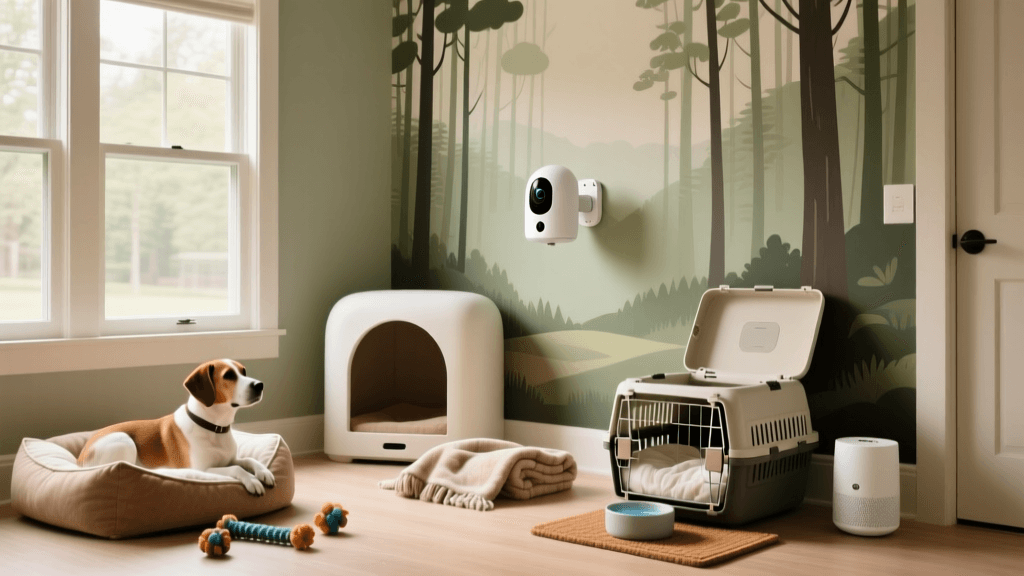
Before you bring your new dog home, designate a specific room or a securely gated area of your house as their 'safe zone.' This space should be free of hazards, electrical cords, and fragile items. The goal is to create an environment that feels secure and den-like, while giving them enough room to move around without feeling trapped.
- Pheromone Therapy: Plug in an Adaptil Optimum diffuser in the safe room at least 48 hours before your dog arrives. This synthetic pheromone mimics the comforting signals of a nursing mother dog and has been clinically proven to reduce stress indicators in newly adopted dogs.
- Bioacoustic Audio: Silence is deafening to a panicked dog. Set up a smart speaker to play bioacoustic music designed specifically for canine hearing ranges, such as 'Through a Dog's Ear' playlists, which help lower heart rates and mask triggering outdoor noises.
- Visual Barriers: If your safe room has windows, use frosted window film or blackout curtains. Visual triggers like delivery drivers, neighborhood cats, or passing cars can escalate a dog's anxiety into a frenzy of barking.
- Comfort Items: Provide a raised, supportive bed and an indestructible chew toy stuffed with frozen, high-value treats (like plain pumpkin or peanut butter) to encourage positive associations with the space.
Top Smart Pet Cameras for Alone Time Monitoring (2026 Edition)
The cornerstone of managing separation anxiety in 2026 is the smart pet camera. These devices allow you to monitor your dog's body language, receive AI-driven alerts when they are distressed, and in some cases, dispense treats to redirect their focus. Below is a comparison of the top models currently on the market, tailored for new dog owners managing alone time.
| Device Model | Treat Tossing | 2-Way Audio | AI Distress Alerts | Est. 2026 Price |
|---|---|---|---|---|
| Furbo 360 Dog Camera | Yes (Adjustable) | Yes | Yes (Barking/Crying) | $249 |
| Petcube Bites 2 Lite | Yes (Basic) | Yes | Basic Motion/Sound | $149 |
| Eufy Indoor Cam S350 | No | Yes | Yes (Pet/Crying AI) | $129 |
| Wyze Cam v4 | No | Yes | Yes (Pet Detection) | $35 |
A Crucial Warning on Two-Way Audio: While it is tempting to use the two-way audio feature to soothe your dog when you see them pacing, behavioral experts warn that this can sometimes make anxiety worse. Hearing your voice without being able to find you can cause frustration and increased pacing. Always test the two-way audio feature while you are in another room before relying on it when you leave the house. If your dog becomes more agitated, rely on treat-tossing or automated calming audio instead.
A Step-by-Step Desensitization Protocol Using Tech
Buying the technology is only the first step; using it to systematically desensitize your dog to your absence is where the real work happens. The American Kennel Club (AKC) emphasizes that dogs must be taught how to be alone gradually. Use your new smart camera to execute this protocol during your first few weeks of ownership.
Phase 1: The 'Invisible' Departures (Days 1-3)
Do not leave the house yet. Instead, place your dog in their safe room with a high-value frozen treat. Walk out of the room, close the door, and sit quietly in the hallway or your car. Watch them on your phone via the smart camera. The goal is for them to learn that being behind a closed door is safe and rewarding. Return before they finish the treat and show signs of distress.
Phase 2: Micro-Departures (Days 4-7)
Begin leaving the actual house, but only for 1 to 5 minutes. Perform your normal 'leaving' rituals (putting on shoes, jingling keys) so the dog learns these cues do not always predict a long absence. Monitor the camera. If your dog settles down and chews their toy, return calmly. If they panic, your time increment was too long. Return to Phase 1.
Phase 3: Building Duration with Remote Intervention (Weeks 2-4)
Extend your absences to 15, 30, and then 60 minutes. This is where treat-tossing cameras like the Furbo or Petcube shine. Set up automated treat schedules or manually toss a treat via the app when you see your dog lying down calmly. This reinforces relaxed behavior. If they begin to pace or vocalize, trigger an automated calming playlist on your smart speaker rather than using your voice.
When to Call a Professional
While smart cameras, pheromones, and desensitization protocols are highly effective for mild to moderate adjustment anxiety, severe separation anxiety is a medical condition that requires professional intervention. If your dog is injuring themselves, refusing to eat treats when alone, or exhibiting extreme panic (such as throwing themselves against windows or doors) despite your best efforts, it is time to consult a professional.
In 2026, veterinary behaviorists have access to advanced pharmacological options and customized behavioral modification plans that can drastically improve your dog's quality of life. Use the footage you have recorded on your smart pet camera to show the veterinarian exactly what your dog does when you are gone. This visual evidence is invaluable for an accurate diagnosis and will help your vet determine if anti-anxiety medication is necessary to lower your dog's baseline stress enough for training to take effect. Remember, getting a dog is a lifelong commitment, and seeking help is a sign of responsible, compassionate ownership.
aaron-whyte
All our authors care for dogs every day — read more of their work on the authors page.