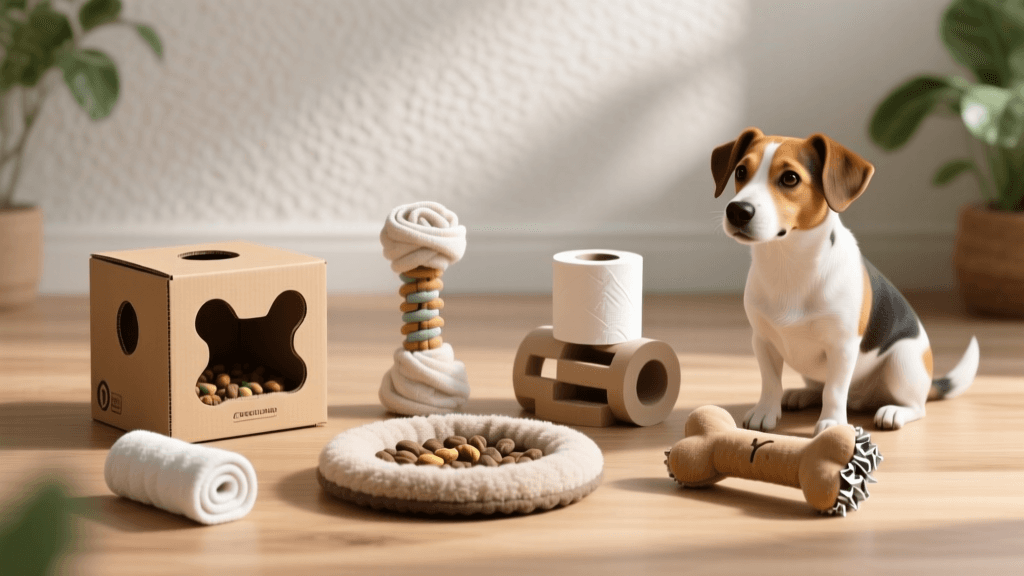
Case Study: Overcoming Dog Separation Anxiety Post-Pandemic
Discover how one owner cured their dog's severe separation anxiety using a structured desensitization plan, crate training, and interactive enrichment toys.

The Post-Pandemic Shift: A Modern Canine Crisis
Life with your dog is a profound joy, but major lifestyle transitions can severely disrupt your pet's emotional equilibrium. For millions of households, the shift from remote work to returning to the office has sparked a behavioral crisis. Dogs adopted or raised during the era of constant human presence suddenly found themselves facing hours of isolation, leading to a spike in canine separation anxiety. This condition is not merely a case of a dog missing its owner; it is a profound panic response that can result in destructive behavior, self-injury, and chronic stress.
In this comprehensive behavior case study, we follow the journey of Buster, a three-year-old Golden Retriever mix, and his owner, Sarah. Their story illustrates the practical, actionable steps required to rehabilitate a dog suffering from severe isolation distress. By utilizing systematic desensitization, environmental enrichment, and data-driven monitoring, Sarah successfully transformed Buster's daily routine and restored peace to their multi-pet household.
Case Study Profile: Meet Buster
Subject: Buster, 3-year-old Golden Retriever mix (65 lbs).
Household: Single owner (Sarah), one resident senior cat.
Background: Adopted in early 2021 when Sarah was working exclusively from home. Buster was never accustomed to being left alone for more than 15 minutes.
The Catalyst: Sarah's company mandated a return to the office three days a week, requiring her to leave Buster alone from 8:00 AM to 5:00 PM.
Baseline Assessment: Identifying the Triggers
During the first week of Sarah's return to the office, neighbors reported incessant howling, and Sarah returned home to find chewed doorframes, scratched hardwood floors, and a highly distressed pet. According to the ASPCA, separation anxiety is triggered when a dog becomes overly attached to their guardian and experiences a panic response upon departure. Common symptoms include urination/defecation indoors, vocalization, destructive chewing, and escape attempts.
Sarah installed a pet camera and noted that Buster's panic began not when she left, but during her pre-departure routine. The sound of keys jingling, the rustle of a jacket, and the picking up of a laptop bag sent Buster's heart rate soaring. He would pace, drool excessively, and attempt to block the front door. To address this, Sarah consulted a certified professional dog trainer (CPDT) to develop a structured, six-week behavior modification plan.
The 6-Week Behavior Modification Plan
Rehabilitating separation anxiety requires patience, consistency, and a refusal to rush the process. The goal is to change the dog's emotional response to being alone from one of panic to one of calm neutrality.
Phase 1: Desensitizing Pre-Departure Cues (Weeks 1-2)
Dogs are masters of pattern recognition. Buster had associated specific actions with the terrifying event of being left alone. Phase 1 focused on breaking these associations through systematic desensitization. Sarah performed her departure cues without actually leaving. She would pick up her keys, jingle them, and then sit back down on the couch to watch television. She put on her coat, walked to the kitchen, took the coat off, and made a cup of coffee.
Actionable Timing: Sarah repeated these randomized cue exercises 20 to 30 times a day during her weekends and evenings. By day ten, Buster stopped panting and pacing when he heard the keys; he merely opened one eye from his bed and went back to sleep.
Phase 2: Graduated Absences (Weeks 3-4)
Once Buster was desensitized to the cues, Sarah began practicing actual departures, starting with micro-absences. The golden rule of graduated absences is to always return before the dog shows signs of anxiety. If a dog panics at the five-minute mark, your maximum absence time must remain under four minutes until the dog is completely relaxed.
Sarah used a smart pet collar to monitor Buster's resting heart rate and active minutes while she stepped outside. Below is the data table tracking Buster's progress during this critical phase.
| Week | Target Duration | Departure Cue | Peak Heart Rate (BPM) | Behavioral Notes (via Camera) |
|---|---|---|---|---|
| 3 | 10 - 30 Seconds | Keys, out door, lock | 115 (Elevated) | Pacing to door, mild whining, quick settle. |
| 3 | 1 - 3 Minutes | Keys, out door, lock | 105 (Normal) | Sniffed door, laid down on mat, no vocalization. |
| 4 | 5 - 10 Minutes | Full morning routine | 95 (Resting) | Immediately engaged with food puzzle, calm. |
| 4 | 15 - 30 Minutes | Full morning routine | 90 (Resting) | Slept on bed, woke up to stretch, returned to sleep. |
Phase 3: Environmental Enrichment and Independence (Weeks 5-6)
A bored dog is an anxious dog. To build Buster's confidence and create a positive association with Sarah's absence, she introduced high-value environmental enrichment. The objective was to provide an activity that was exclusively available when Sarah was gone. Resources from The Humane Society of the United States emphasize that providing mental stimulation and safe confinement spaces can drastically reduce isolation distress by giving the dog a 'job' to do.
Sarah introduced a frozen enrichment toy exactly two minutes before walking out the door. This created a new, positive predictor of departure. She also utilized a white noise machine to mask hallway sounds that might trigger Buster's territorial barking while she was away.
Product Toolkit and Costs
Implementing this behavior modification plan required a modest financial investment in specialized tools. Here is the exact toolkit Sarah used, including specific product names and approximate costs:
- KONG Extreme (Large, Black): $18.99. Chosen over the classic red rubber for Buster's heavy chewing. Sarah stuffed it with a mixture of plain pumpkin puree, kibble, and low-sodium chicken broth, freezing it overnight to ensure it lasted 45 minutes.
- Furbo 360 Dog Camera: $210.00. Essential for monitoring Buster's body language in real-time and utilizing the two-way audio to reward calm behavior (though audio was used sparingly to avoid confusing him).
- Adaptil Calm Plug-in Diffuser: $24.99. Placed in Buster's primary resting area. This synthetic dog-appeasing pheromone (DAP) helps lower baseline anxiety levels in the environment.
- Lickimat Soother: $12.50. Used as an alternative to the KONG on days when Buster needed lower-calorie mental stimulation. Spread with plain Greek yogurt and frozen.
What NOT to Do: Common Pitfalls
During the rehabilitation process, it is vital to avoid actions that can exacerbate the panic response. Punishing a dog for destructive behavior caused by separation anxiety is entirely counterproductive. The dog is not acting out of spite; they are experiencing a genuine psychological crisis. Furthermore, 'sneaking out' while the dog is distracted is a common mistake. While it prevents a dramatic goodbye, it destroys the dog's trust and increases their baseline vigilance, as they learn their owner can vanish without warning at any moment.
"Dogs with separation anxiety are in a state of panic. Punishment will only increase their anxiety and damage the human-animal bond. Treatment must focus on building confidence and changing the underlying emotional state." - Consensus of Veterinary Behaviorists
Results and Long-Term Maintenance
By the end of week six, Sarah was able to leave Buster alone for up to four hours without triggering a panic response. His smart collar data showed that his heart rate remained at a resting baseline of 85-95 BPM shortly after she locked the door. The destructive chewing ceased entirely, and the neighbors reported complete silence from the apartment.
However, managing separation anxiety is a lifelong commitment. To maintain Buster's progress, Sarah implemented a permanent daily routine. She ensures Buster receives 45 minutes of vigorous aerobic exercise (running and fetch) before her morning departure to deplete his physical energy. She continues to provide frozen enrichment toys on her office days and utilizes a professional dog walker for a midday break to prevent Buster from exceeding his current four-hour threshold.
For dogs that do not respond to behavioral modification alone, or those who injure themselves attempting to escape crates or rooms, consulting a board-certified veterinary behaviorist is crucial. In severe cases, veterinarians may prescribe anti-anxiety medications, such as fluoxetine or clomipramine, to lower the dog's panic threshold enough for behavioral training to take hold. Through patience, structured desensitization, and a commitment to understanding her dog's emotional needs, Sarah successfully navigated the post-pandemic transition, ensuring a happy, balanced life with her dog.
robin-maitland
All our authors care for dogs every day — read more of their work on the authors page.