Dog Osteoarthritis Behavior Signs & Top 2026 Treatment Options
Learn how canine osteoarthritis alters your dog's behavior and psychology. Discover the latest 2026 treatments, including Librela, to restore comfort.
The Hidden Psychology of Canine Osteoarthritis
When we think of canine osteoarthritis (OA), we often picture the physical symptoms: a slight limp, stiffness after a nap, or a reluctance to jump into the car. However, as we deepen our understanding of dog psychology in 2026, veterinary behaviorists emphasize that chronic joint pain profoundly alters a dog's mental state, emotional well-being, and daily behavior. Dogs are remarkably stoic creatures. Evolutionarily, displaying weakness or pain in a wild pack setting made a canid vulnerable to predators or social demotion. Because of this ingrained survival instinct, your dog will actively mask their physical discomfort until it becomes absolutely unbearable.
Understanding your dog means looking beyond the obvious limp and recognizing the subtle behavioral shifts that indicate chronic pain. Osteoarthritis is not just a mechanical failure of the joints; it is a chronic stressor that can lead to anxiety, irritability, and even depression in our canine companions. By decoding these behavioral red flags and leveraging the breakthrough treatment protocols available in 2026, you can restore not only your dog's physical mobility but also their psychological joy and confidence.
Behavioral Red Flags: Decoding Your Dog's Silent Pain
Because dogs cannot verbally articulate that their hips ache or their elbows throb, they communicate their discomfort through changes in their daily routines and social interactions. According to the American Kennel Club, pet owners often mistake pain-induced behavioral changes for 'slowing down' or 'getting grumpy with age.' In reality, these are cries for help. Here are the critical behavioral signs of osteoarthritis you must watch for:
- Uncharacteristic Irritability or Aggression: A previously gentle dog may snap or growl when petted, groomed, or approached while resting. This is rarely true aggression; it is a fear-based defensive reaction to anticipated pain.
- Social Withdrawal and Hiding: Dogs suffering from chronic pain often seek out isolated, hard-to-reach spots in the home. They may stop greeting you at the door or avoid interacting with other household pets because play is too painful.
- Sleep Cycle Disruptions: While an arthritic dog may sleep more during the day due to exhaustion from moving, they often experience restless, fragmented sleep at night. You might notice them pacing, panting, or struggling to find a comfortable position on their bed.
- Hesitation and Spatial Avoidance: Your dog may suddenly refuse to walk on slippery hardwood floors, avoid stairs, or hesitate before jumping onto their favorite sofa. This spatial avoidance is a psychological coping mechanism to prevent the sharp pain of a slip or misstep.
- Changes in Grooming and Hygiene: A dog with spinal or hip OA may stop grooming themselves, leading to a scruffy coat or matting. Conversely, they might obsessively lick a specific joint (like the knee or carpus) in an attempt to soothe the localized aching.
- House Soiling: If a dog associates the physical act of walking to the door or navigating stairs with severe pain, they may begin having accidents indoors. This is a behavioral adaptation to pain, not a lapse in training.
Breakthrough 2026 Osteoarthritis Treatments
The landscape of veterinary pain management has evolved dramatically. The 2026 multimodal approach to canine osteoarthritis focuses on targeting pain pathways at their source while preserving the dog's cognitive clarity and gastrointestinal health. The days of relying solely on traditional NSAIDs, which can carry long-term renal and hepatic risks, have been supplemented by revolutionary biologic therapies.
Librela (Bedinvetmab): The Anti-NGF Revolution
The most significant advancement in recent years, which has become a cornerstone of 2026 OA management, is Librela. As noted by the U.S. Food and Drug Administration, Librela is a monoclonal antibody that specifically targets and neutralizes Nerve Growth Factor (NGF), a key protein involved in the transmission of osteoarthritis pain. Unlike NSAIDs that are metabolized by the liver and kidneys, Librela is broken down into amino acids and recycled by the body, making it incredibly safe for long-term use, even in senior dogs with compromised organ function. Administered as a monthly subcutaneous injection by your veterinarian, Librela has been shown to dramatically reduce pain-induced anxiety and restore playful behaviors in dogs who had previously given up on their favorite activities.
Galliprant (Grapiprant): The Targeted NSAID
For dogs that require daily oral medication, Galliprant remains a top-tier choice in 2026. It is a non-cyclooxygenase inhibiting non-steroidal anti-inflammatory drug (NSAID) that specifically blocks the EP4 receptor, the primary mediator of mild to moderate inflammation and pain in dogs. Because it spares the COX-1 and COX-2 enzymes, it offers a much wider safety margin for the gastrointestinal tract and kidneys compared to older generation NSAIDs.
Gabapentin and Amantadine: Neuropathic Support
Chronic osteoarthritis often leads to central sensitization, where the nervous system becomes hyper-reactive to pain signals. Veterinary neurologists increasingly utilize Gabapentin to calm neuropathic pain, particularly in dogs with severe spinal arthritis. Amantadine is often added to 'reset' pain receptors when traditional medications seem to lose their efficacy over time.
2026 Treatment Comparison Chart
To help you understand the options your veterinarian may discuss, here is a structured comparison of the leading osteoarthritis treatments utilized in modern 2026 veterinary practice.
| Treatment | Class / Mechanism | Administration | Best Suited For |
|---|---|---|---|
| Librela | Anti-NGF Monoclonal Antibody | Monthly Vet Injection | Senior dogs, dogs with liver/kidney issues, severe chronic pain. |
| Galliprant | EP4 Receptor Antagonist (NSAID) | Daily Oral Tablet | Mild to moderate OA, active dogs needing daily inflammation control. |
| Adequan Canine | Polysulfated Glycosaminoglycan | IM Injections (Loading Dose) | Early-stage OA, joint cartilage preservation, slowing disease progression. |
| Gabapentin | Neuromodulator | Oral Capsule/Liquid (2-3x Daily) | Spinal arthritis, neuropathic pain, dogs with central sensitization. |
| Class IV Laser | Photobiomodulation Therapy | In-Clinic Sessions (Weekly) | Localized joint flare-ups, post-exercise soreness, non-pharmaceutical adjunct. |
Environmental and Cognitive Modifications
Medical intervention is only half the battle. To truly support your dog's psychological well-being, you must adapt their environment to reduce the anxiety associated with movement. The Veterinary Information Network highlights that environmental modification is critical for preventing the learned helplessness that often accompanies chronic pain.
Creating a Pain-Free Zone
Slippery floors are the enemy of the arthritic dog. The fear of slipping can cause immense psychological stress. Invest in high-traction, interlocking foam mats or secure, non-slip area rugs to cover primary walkways. Provide an orthopedic bed featuring high-density, therapeutic memory foam (such as those offered by Big Barker or K9 Ballistics) that prevents the dog's joints from bottoming out against the hard floor. Place these beds in draft-free, easily accessible areas where the dog can still feel part of the family's social hub without having to navigate obstacles.
Mental Enrichment for Low-Mobility Dogs
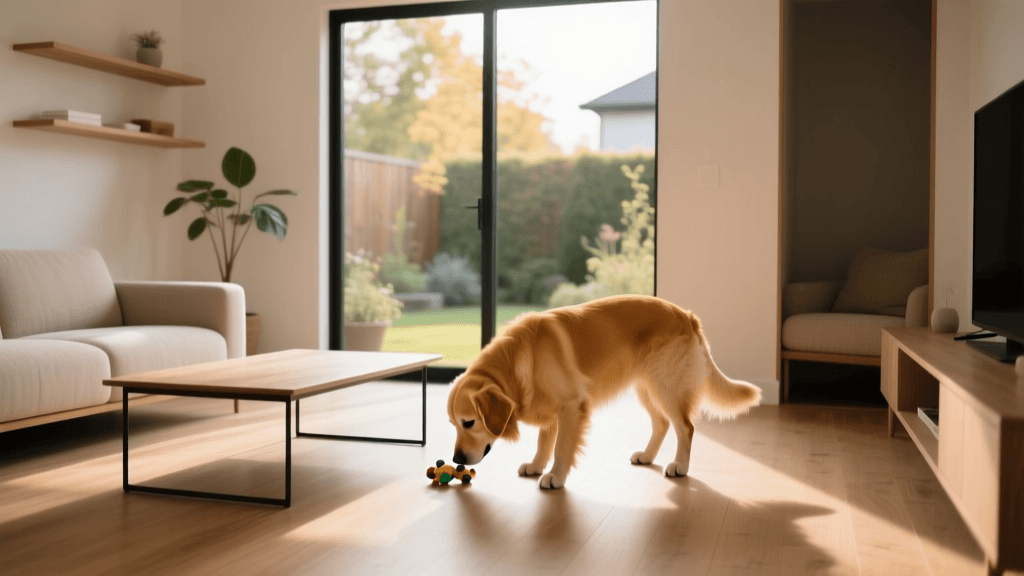
When physical exercise is restricted, a dog's mind can become bored and frustrated, leading to destructive behaviors or depression. In 2026, canine enrichment is a vital component of OA management. Replace high-impact fetch sessions with low-impact cognitive games:
- Scent Work and Snuffle Mats: Hiding treats in a snuffle mat or around the living room engages a dog's powerful olfactory system. Ten minutes of intense sniffing provides the same mental fatigue and satisfaction as a long walk.
- Lick Mats and Puzzle Toys: Spreading dog-safe peanut butter or plain yogurt on a textured lick mat promotes licking, which releases endorphins and naturally soothes anxiety and pain perception.
- Target Training: Teach your dog to touch a target stick with their nose or paws. This allows for gentle, controlled movement and mental stimulation without putting undue stress on weight-bearing joints.
Conclusion
Understanding your dog requires empathy, observation, and a willingness to look beyond the surface. Canine osteoarthritis is a complex condition that intertwines physical degradation with profound psychological shifts. By recognizing the subtle behavioral signs of pain and embracing the advanced, targeted treatments available in 2026—like Librela and multimodal environmental therapies—you can lift the heavy burden of chronic pain from your dog's shoulders. Consult with your veterinarian to build a customized 2026 pain management protocol, and watch as your dog's true, joyful personality returns.
marcus-aldridge
All our authors care for dogs every day — read more of their work on the authors page.