Omega-3 for Puppies in 2026: DHA Dosage & Best Oils
Discover the ideal Omega-3 DHA and EPA dosage for your puppy's brain and joint health in 2026. Includes a weight-based feeding chart and top oil picks.
The Critical Role of Omega-3 in a Puppy's First Year
The first twelve months of a puppy's life are characterized by explosive growth, rapid neurological development, and the foundational formation of their immune and skeletal systems. Among the myriad of nutrients required to support this miraculous transformation, Omega-3 fatty acids stand out as one of the most vital. In 2026, veterinary nutritionists and canine developmental experts continue to emphasize that Omega-3s are not merely a 'coat supplement' but a critical building block for cognitive function, retinal health, and long-term joint integrity.
While many premium commercial puppy foods claim to be fortified with Omega-3s, the reality of kibble processing often tells a different story. The high-heat extrusion process used to manufacture dry dog food can easily oxidize and destroy delicate fatty acids. Consequently, supplementing your puppy's diet with a high-quality, bioavailable Omega-3 oil is one of the most proactive steps you can take during their crucial developmental window.
DHA vs. EPA: What Your Puppy Actually Needs
When discussing Omega-3s, it is essential to understand the distinction between the two primary marine-derived fatty acids: Docosahexaenoic acid (DHA) and Eicosapentaenoic acid (EPA).
- DHA (Docosahexaenoic Acid): This is the superstar for puppies. DHA is a major structural component of the brain and the retina. During the first 16 weeks of life, a puppy's brain grows exponentially, and DHA is the literal building block for neural pathways. Adequate DHA levels have been clinically linked to improved trainability, better problem-solving skills, and sharper vision in young dogs.
- EPA (Eicosapentaenoic Acid): While DHA builds the brain, EPA manages inflammation. EPA is crucial for supporting your puppy's developing joints, especially in large and giant breeds prone to rapid growth spurts and developmental orthopedic diseases like hip dysplasia. It also supports a healthy immune response and cardiovascular health.
According to the American Kennel Club, while both are important, growing puppies require a higher ratio of DHA compared to adult dogs, whose needs may skew more heavily toward EPA for joint and heart maintenance.
Why Commercial Puppy Food Often Falls Short
It is a common misconception in 2026 that feeding a 'complete and balanced' AAFCO-approved puppy diet eliminates the need for supplementation. However, the World Small Animal Veterinary Association (WSAVA) global nutrition guidelines highlight that the minimum requirements for survival are vastly different from the optimal levels for thriving. Many mass-market puppy foods use plant-based Omega-3 sources like flaxseed. While flaxseed contains ALA (Alpha-linolenic acid), dogs possess very low levels of the enzymes required to convert ALA into the usable DHA and EPA forms. Therefore, direct marine-based supplementation is highly recommended for optimal brain development.
2026 Veterinary Dosage Guidelines for Puppies
Dosing Omega-3s for puppies requires precision. Too little will fail to provide cognitive benefits, while excessive amounts can lead to gastrointestinal upset, vitamin E depletion, or altered blood clotting. The general veterinary consensus for growing puppies is to aim for approximately 20 to 30 mg of combined DHA and EPA per pound of body weight daily, with a heavy emphasis on DHA.
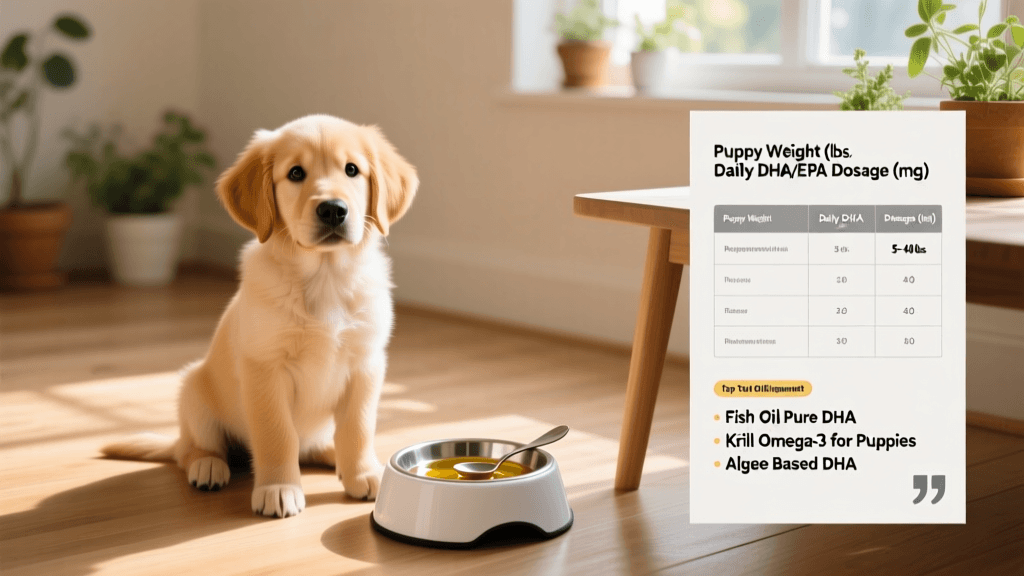
Puppy Omega-3 Weight-Based Dosage Chart
| Puppy Weight (lbs) | Target DHA (mg) | Target EPA (mg) | Total Omega-3 (mg) | Notes & Milestones |
|---|---|---|---|---|
| 5 - 10 lbs | 100 - 150 | 50 - 75 | 150 - 225 | Crucial for early weaning and initial neural mapping. |
| 11 - 20 lbs | 180 - 250 | 90 - 125 | 270 - 375 | Peak brain development window; supports socialization training. |
| 21 - 40 lbs | 300 - 450 | 150 - 225 | 450 - 675 | Supports joint cartilage during rapid skeletal growth phases. |
| 41 - 60 lbs | 450 - 600 | 225 - 300 | 675 - 900 | Vital for large breeds; monitor caloric intake to prevent obesity. |
| 60+ lbs | 600 - 800 | 300 - 400 | 900 - 1200 | Consult your vet for giant breeds to balance calcium/phosphorus ratios. |
Note: Always check the specific concentration of your chosen supplement. A pump that dispenses 5ml of oil might contain vastly different amounts of DHA/EPA depending on the brand and the source of the fish.
Best Omega-3 Sources for Puppies in 2026
The supplement market has evolved significantly, with a strong shift toward sustainability, purity, and bioavailability. When shopping for a puppy Omega-3 supplement this year, look for oils in the triglyceride form rather than the ethyl ester form, as the natural triglyceride form is absorbed much more efficiently by a puppy's developing digestive tract.
1. Wild-Caught Salmon and Pollock Oils
Products sourced from wild-caught Alaskan salmon and pollock remain the gold standard. Brands like Grizzly Salmon Plus and Nordic Naturals Omega-3 Pet continue to lead the market in 2026 due to their rigorous third-party testing for heavy metals and PCBs. These oils are typically packaged in UV-blocking, nitrogen-flushed pump bottles to prevent oxidation before the oil even reaches your home.
2. Krill Oil
Krill oil is gaining immense popularity for puppies because its Omega-3s are bound to phospholipids, making them exceptionally bioavailable. Additionally, krill oil naturally contains astaxanthin, a potent antioxidant that gives the oil its red color and helps protect the fatty acids from going rancid. Because krill are at the bottom of the food chain, they accumulate far fewer toxins than larger fish.
3. Algae-Based DHA (Vegan Alternative)
For owners who prefer plant-based or sustainable alternatives, marine algae oil is the original source of DHA in the marine food web. Algae-based supplements provide pure DHA without the risk of fish-derived heavy metals. While excellent for brain development, algae oils often lack EPA, meaning you may need to combine them with other joint-support supplements if you have a large-breed puppy.
How to Safely Introduce Fish Oil to Your Puppy
Puppies have notoriously sensitive stomachs. Introducing a concentrated fat source too quickly is a recipe for diarrhea and vomiting. Follow this step-by-step protocol to ensure a smooth transition:
- Week 1 (The Micro-Dose): Start with just 1/4 of the recommended daily dose. Mix it thoroughly into their wet food or use it to coat their kibble. Allow their pancreatic enzymes to adapt to the new lipid profile.
- Week 2 (Half-Dose): If their stool remains firm and they show no signs of nausea, increase the dosage to 50% of the target amount.
- Week 3 (Full Dose): Gradually bring the supplement up to the full recommended dosage based on the weight chart above.
Proper Storage is Non-Negotiable
Omega-3 fatty acids are highly unstable and prone to oxidation. Rancid fish oil is not only ineffective but actively harmful, as it introduces free radicals into your puppy's body. In 2026, the standard for fish oil storage dictates that all liquid marine supplements must be kept in the refrigerator immediately after opening. Always use pumps that minimize air exposure, and discard any oil that develops a sharp, acrid, or overly 'fishy' odor—high-quality, fresh fish oil should have a very mild, almost neutral scent.
Monitoring Your Puppy's Progress
Within 4 to 8 weeks of consistent Omega-3 supplementation, you should notice tangible changes in your puppy. Their coat will become noticeably softer and more lustrous, and you may observe a reduction in 'puppy itch' or mild skin irritations. More importantly, many trainers and behaviorists report that puppies with optimized DHA levels exhibit longer attention spans and faster recall acquisition during early obedience training. By prioritizing high-quality Omega-3s during this fleeting developmental window, you are investing directly in your dog's long-term cognitive sharpness and physical vitality.
jonas-cole
All our authors care for dogs every day — read more of their work on the authors page.