Step-by-Step Noise Phobia Training: Understand Your Dog
Learn to understand your dog's fear body language and follow our step-by-step training guide to desensitize them to loud noises like fireworks.
The Psychology Behind Canine Noise Phobia
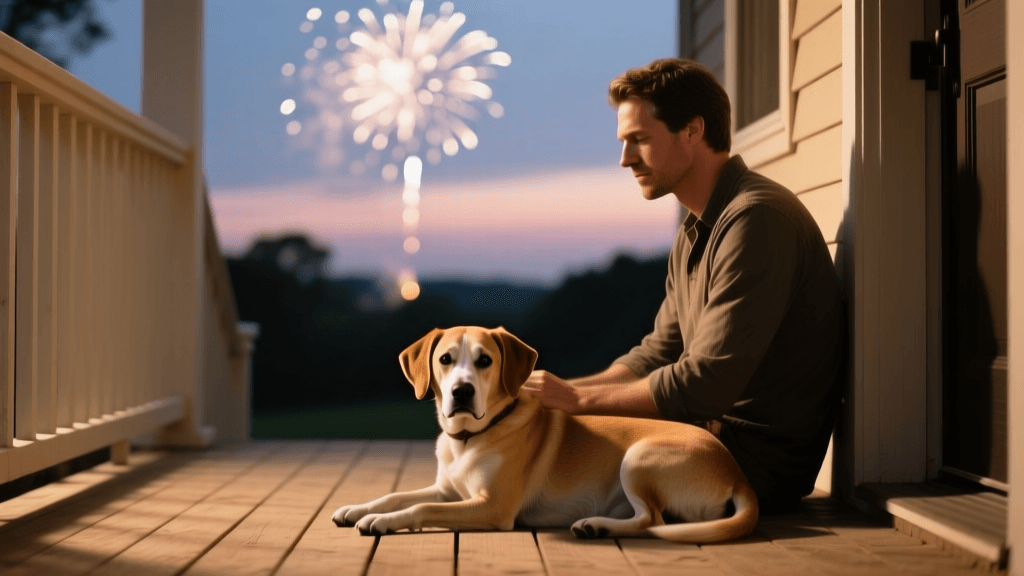
Understanding your dog begins with recognizing that their auditory processing is vastly different from ours. Dogs can hear frequencies up to 47,000 Hz (compared to the human limit of about 20,000 Hz) and can detect sounds at much lower decibel levels. When a sudden, loud noise like a thunderclap or firework occurs, it does not just startle them; it can physically overwhelm their sensory system. From a psychological standpoint, noise phobias are rooted in a lack of control and unpredictable associative learning. The sudden boom triggers the sympathetic nervous system, flooding the brain with cortisol and adrenaline, which initiates a profound fight-or-flight response. According to the ASPCA, fears of thunder and other loud noises can become more severe over time if the underlying anxiety is not addressed through structured behavioral modification.
Decoding Fear: Canine Body Language Chart
Before initiating any training, you must understand your dog's communication signals. Pushing a dog past their fear threshold floods their amygdala, making learning impossible. Use this chart to monitor their stress levels during training:
| Stress Level | Body Language Signals | Training Action Required |
|---|---|---|
| Green (Calm) | Relaxed ears, soft eyes, loose wagging tail, willing to eat treats gently. | Proceed with desensitization audio. |
| Yellow (Mild Stress) | Lip licking, yawning, panting, 'whale eye', taking treats roughly or snatching. | Lower the volume immediately. Offer higher-value rewards. |
| Orange (Moderate) | Pacing, whining, trembling, hiding, refusing food entirely. | Stop the audio. Move to a 'safe zone'. Do not force interaction. |
| Red (Severe) | Frantic escape attempts, destructive behavior, loss of bowel control. | Training has failed. Consult a veterinary behaviorist for medication. |
Essential Gear for Noise Desensitization
To execute this protocol effectively, you need specific tools to control the environment and your dog's emotional state:
- Smartphone Decibel Meter App: Use an app like Decibel X (Free) to measure the exact volume of your audio playback. You need precise data to stay under your dog's threshold.
- High-Value Treats: Standard kibble will not override fear. Use boiled chicken breast, low-sodium deli turkey, or Zuke's Mini Naturals (approx. $8 per 6oz bag). Cut into 1/4-inch pea-sized pieces to prevent rapid satiation.
- Compression Wrap: The ThunderShirt Classic (approx. $45-$50) applies gentle, constant pressure to the torso, which can stimulate the release of calming endorphins in many dogs.
- White Noise Machine: A LectroFan High Fidelity (approx. $35) helps mask sudden environmental sounds during the generalization phase and on the actual event day.
The Step-by-Step Desensitization and Counter-Conditioning (DS/CC) Protocol
Desensitization involves exposing the dog to the trigger at a level so low it does not elicit a fear response. Counter-conditioning changes the dog's emotional response by pairing the trigger with something highly positive. The American Kennel Club emphasizes that this process requires immense patience and must be done gradually over weeks or months, not days.
Step 1: Establish the Sub-Threshold Baseline (Week 1)
Download a high-quality audio track of fireworks or thunderstorms. Play it on a Bluetooth speaker in another room. Start at the lowest possible volume (around 20-30 dB, equivalent to a whisper). Observe your dog's body language using the chart above. If they remain in the 'Green' zone, you have found your starting baseline. If they show 'Yellow' signals, lower the volume or move the speaker further away. The goal is for the dog to notice the sound but remain completely unbothered.
Step 2: Pair the Sound with High-Value Rewards (Weeks 2-3)
Begin your 5-to-10-minute training sessions. Turn on the audio at the established sub-threshold volume. Within 0.5 seconds of the sound playing, begin feeding your dog a continuous stream of pea-sized chicken pieces. When the audio stops, the food stops. This builds a classical conditioning loop: Loud Noise = Chicken Appears. Do this 3 times a week. According to Fear Free Pets, keeping sessions short prevents cognitive fatigue and keeps the dog's emotional state positive.
Step 3: The Push-Drop-Stick Volume Rule (Weeks 4-6)
Once your dog visibly anticipates treats when the sound starts (e.g., they look at you happily and wag their tail when they hear the faint boom), it is time to increase the volume using the Push-Drop-Stick method:
- Push: Increase the volume by 2-3 decibels. If the dog remains calm and eats, stay at this new level for the next session.
- Drop: If the dog shows mild stress (Yellow zone) or refuses the treat, immediately drop the volume back down 5 decibels for the next session.
- Stick: If the dog is borderline but manages to eat, keep the volume exactly the same for the next session to build confidence.
Step 4: Generalization and Environmental Shifts (Weeks 7+)
Dogs are highly contextual learners. A dog that is calm with firework audio in the living room may still panic if they hear it in the kitchen or at night. Move your Bluetooth speaker to different rooms. Change the time of day you train. Introduce the ThunderShirt during these sessions to associate the compression wrap with calmness and treats, rather than only bringing it out on the 4th of July when the dog is already panicked.
Managing the Real Event: What to Do on the 4th of July
Even with rigorous training, real-life events introduce variables you cannot control, such as the physical vibration of a firework boom or sudden flashes of light. On the actual day of the event, shift from training mode to management mode.
Never force a fearful dog to 'face their fears' by taking them to a fireworks display or forcing them to sit by a window. This practice, known as flooding, can cause severe psychological trauma and worsen the phobia permanently.
Create a 'bunker' room in the interior of your home, away from windows. Turn on your LectroFan white noise machine to its highest setting to mask outdoor decibels. Close all blinds and curtains to block visual stimuli. Provide a long-lasting enrichment item, such as a KONG Classic stuffed with frozen peanut butter and chicken broth, to encourage natural foraging behaviors and stimulate dopamine release. If your dog chooses to hide in a closet or under a bed, allow them to do so; denying them a hiding spot removes their primary coping mechanism and increases their feeling of helplessness.
Final Thoughts on Canine Psychology and Patience
Understanding your dog's noise phobia is not about 'fixing' a broken behavior; it is about supporting a sentient being through a genuine neurological panic response. By reading their subtle body language, utilizing precise decibel measurements, and adhering to a strict counter-conditioning protocol, you can fundamentally alter your dog's emotional association with loud noises. Remember that behavioral modification is a marathon, not a sprint. Celebrate the micro-victories, respect your dog's thresholds, and never hesitate to consult a certified veterinary behaviorist if the phobia severely impacts your dog's quality of life.
jonas-cole
All our authors care for dogs every day — read more of their work on the authors page.