Canine Foraging Psychology: Puzzle Toys vs Snuffle Mats 2026
Discover the psychology behind canine foraging in 2026. Compare Nina Ottosson puzzle toys and snuffle mats to reduce anxiety and boost mental enrichment.
The Evolutionary Drive: Why Dogs Need to Forage
To truly understand your dog, you must look past the modern living room and into their evolutionary history. In the wild, canines spend up to 80% of their waking hours hunting, scavenging, and foraging for food. Fast forward to 2026, and the average domestic dog receives their daily caloric intake in a stainless steel bowl within a span of three minutes. This stark contrast between evolutionary expectation and modern reality is a primary driver of canine boredom, anxiety, and destructive behaviors.
The act of foraging taps into what neuroscientists call the 'seeking circuit' in the mammalian brain. When a dog uses their nose and paws to uncover hidden food, their brain releases a cascade of dopamine. This neurochemical reward system makes the act of searching just as satisfying as the act of eating. According to Best Friends Animal Society, mental enrichment that mimics natural foraging behaviors is no longer considered a luxury in modern dog care; it is a fundamental requirement for psychological stability and emotional regulation.
The Psychology of Mental Enrichment in 2026
As our understanding of canine cognition has deepened, the dog training and veterinary behavior communities have shifted their focus from purely physical exercise to cognitive fatigue. A widely accepted rule of thumb among veterinary behaviorists in 2026 is that 15 minutes of intense, focused scent work or puzzle-solving can tire a dog out as much as an hour of brisk walking. Physical exercise builds stamina, but mental enrichment builds resilience and emotional balance.
However, not all enrichment is created equal. The psychological impact of a puzzle toy differs vastly from that of a snuffle mat. Understanding these nuances is critical for matching the right enrichment tool to your dog's specific behavioral needs, anxiety levels, and problem-solving capabilities.
Nina Ottosson Dog Brick vs. DIY Snuffle Mats: A Behavioral Comparison
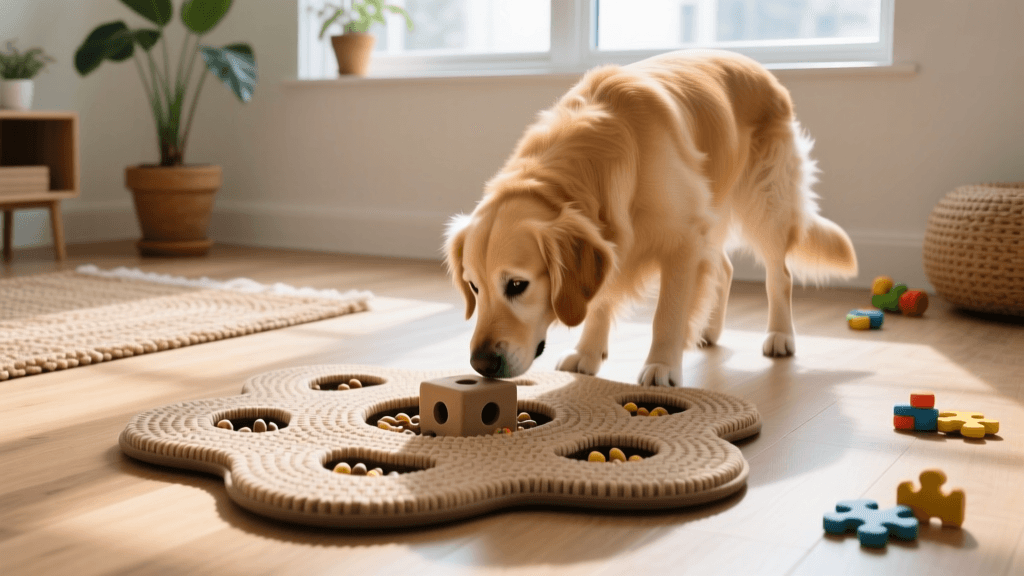
When pet parents look to introduce foraging games, two of the most popular and effective tools are the Nina Ottosson Dog Brick (Level 2) and the **Fleece Snuffle Mat**. While both serve the purpose of slowing down eating and engaging the brain, they demand entirely different cognitive and physical skill sets from your dog.
The Nina Ottosson Dog Brick: Spatial Reasoning and Motor Skills
The Dog Brick is an interactive puzzle that requires a dog to manipulate physical obstacles to access treats. It features sliding blocks, flipping bone-shaped covers, and removable pegs. From a psychological standpoint, this toy engages the dog's spatial reasoning and fine motor skills. The dog must experiment with different physical actions—pawing, nosing, and lifting—to solve the mechanical puzzle. It is an exercise in trial-and-error learning, which builds frustration tolerance and persistence.
The Snuffle Mat: Olfactory Stimulation and Calming
A snuffle mat consists of dense strips of fleece tied to a rubber base, creating a thick 'lawn' where kibble or high-value treats can be hidden. This tool bypasses the mechanical problem-solving of the Dog Brick and goes straight to the dog's olfactory system. A dog's olfactory bulb is proportionally 40 times larger than a human's, and the act of deep, rhythmic sniffing naturally lowers a dog's heart rate and promotes a parasympathetic (rest and digest) nervous system state. The ASPCA's dog behavior resources frequently recommend scent-based enrichment for highly reactive or anxious dogs because sniffing is an inherently self-soothing behavior.
Feature Comparison: Puzzle Toys vs. Scent Mats
| Feature | Nina Ottosson Dog Brick | DIY / Premium Snuffle Mat | Scatter Feeding (Yard/Rug) |
|---|---|---|---|
| Primary Sense Engaged | Visual & Tactile (Problem Solving) | Olfactory (Scent Tracking) | Olfactory & Visual |
| Cognitive Load | High (Requires mechanical logic) | Medium (Requires sustained focus) | Low to Medium |
| Frustration Risk | Moderate to High (If too difficult) | Very Low | Low |
| Best Behavioral Application | Boredom busting, confidence building | Anxiety reduction, hyperactivity | General enrichment, puppies |
| Average 2026 Cost | $18.00 - $24.00 | $15.00 - $35.00 | Free |
How to Introduce Puzzle Games Without Causing Frustration
A common mistake owners make is introducing a complex puzzle toy and walking away, expecting the dog to figure it out. If a dog cannot access the food within a few minutes, the 'eustress' (positive stress that motivates learning) quickly devolves into 'distress' (negative stress that leads to giving up or destructive chewing). As noted by the Humane Society, enrichment should always be tailored to the dog's current skill level to ensure a positive emotional experience.
The 'Shaping' Technique for Puzzle Toys
When introducing the Nina Ottosson Dog Brick, start with all the sliding compartments open and the bone covers completely removed. Let your dog eat the exposed treats. Over several sessions, gradually slide the covers halfway, then fully closed. This process, known as 'shaping,' builds the dog's confidence and ensures they understand the mechanics of the game before the difficulty is increased.
Scent Imprinting for Snuffle Mats
For dogs who are used to eating out of a bowl, a snuffle mat might initially be confusing. To teach scent imprinting, start by placing strong-smelling, high-value treats (like freeze-dried liver or small pieces of cheese) on the very top of the fleece strips. As the dog learns that the mat predicts food, begin burying the treats deeper into the base. Encourage them with a calm, enthusiastic cue word like 'Find it!'
Recognizing Canine Body Language During Play
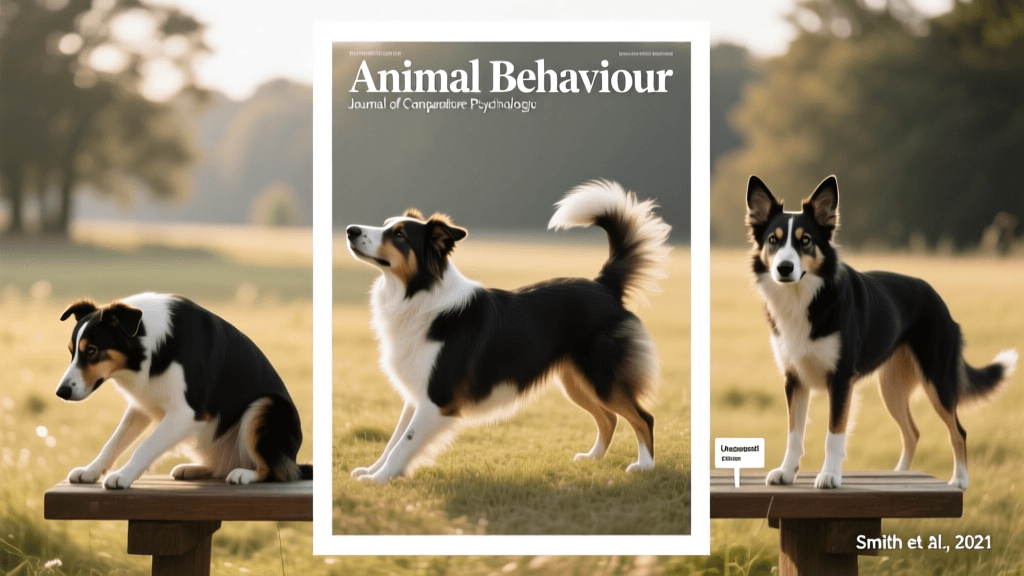
Understanding your dog requires keen observation of their body language during mental enrichment. Not all engagement is healthy engagement. You must be able to differentiate between a dog who is happily working and a dog who is becoming stressed.
'A dog frantically pawing at a puzzle toy, whining, or exhibiting 'whale eye' (showing the whites of their eyes) is not playing; they are experiencing frustration. Conversely, a dog with soft facial features, relaxed shoulders, and a closed mouth who is methodically sniffing and manipulating the toy is in a state of optimal cognitive flow.'
Signs of Healthy Engagement (Eustress)
- Rhythmic, deep sniffing with long exhales.
- Relaxed ear carriage and soft, blinking eyes.
- Methodical use of paws and nose without frantic scratching.
- Willingness to take breaks and look up at the owner.
Signs of Frustration (Distress)
- Frantic, rapid pawing or biting at the toy.
- Excessive drooling, lip licking, or yawning.
- High-pitched whining or barking at the toy.
- Attempting to flip or destroy the puzzle entirely rather than solve it.
Building a 2026 Weekly Foraging Routine
To maximize the psychological benefits of mental enrichment, consistency is key. Rather than offering puzzle toys sporadically, integrate them into your dog's daily caloric intake. In 2026, many canine nutritionists and behaviorists recommend ditching the food bowl entirely for at least one meal a day.
Consider a rotating schedule to prevent habituation. Dogs are intelligent creatures and will quickly memorize the solution to a single puzzle toy, rendering it useless for cognitive stimulation. On Mondays and Wednesdays, use the Nina Ottosson Dog Brick to challenge their spatial reasoning. On Tuesdays and Thursdays, utilize a snuffle mat to promote olfactory calming. On weekends, take the enrichment outdoors by scattering kibble across a safe, fenced yard to encourage natural scavenging behaviors in a dynamic environment.
By aligning your dog's daily routine with their evolutionary need to forage, you are not just feeding them; you are fulfilling a deep-seated psychological requirement. The result is a calmer, more confident, and profoundly happier companion.
beth-carrasco
All our authors care for dogs every day — read more of their work on the authors page.