Top Puzzle Toys For Senior Dog Cognitive Health 2026
Discover the best puzzle toys and mental enrichment games for senior dogs in 2026 to combat cognitive decline and boost brain health.
The Rising Prevalence of Canine Cognitive Dysfunction in 2026
As veterinary medicine continues to advance in 2026, our canine companions are living longer, healthier lives than ever before. However, this increased lifespan has brought a sharper focus on age-related neurological conditions, most notably Canine Cognitive Dysfunction (CCD). Often compared to Alzheimer's disease in humans, CCD affects a significant percentage of dogs over the age of eight. Symptoms include disorientation, altered sleep-wake cycles, house soiling, and a noticeable decrease in interactive behaviors.
According to the ASPCA, Cognitive Dysfunction Syndrome is a progressive disease that requires proactive management. While pharmaceutical interventions and specialized diets play a role, veterinary neurologists increasingly emphasize mental enrichment and puzzle games as a cornerstone of cognitive therapy. Keeping an aging dog's brain active is not just about entertainment; it is a critical component of their overall health and wellbeing.
The Neurological Benefits of Mental Enrichment
Why are puzzle games so vital for the senior canine brain? The answer lies in neuroplasticity—the brain's ability to form new neural connections throughout life. When a senior dog engages in scent work or manipulates a puzzle toy to retrieve a treat, their brain releases dopamine. This neurotransmitter not only creates a feeling of reward and happiness but also actively supports memory retention and learning.
The American Kennel Club notes that mental stimulation can tire a dog out just as effectively as a long physical walk, making it an ideal exercise for seniors suffering from osteoarthritis or mobility issues. By shifting the focus from high-impact physical exercise to low-impact cognitive challenges, owners can preserve their dog's joint health while simultaneously staving off cognitive decline.
Top 4 Puzzle Toys for Senior Dogs in 2026
Not all puzzle toys are created equal, especially when designing an enrichment routine for an aging dog. Senior dogs may have diminished eyesight, reduced jaw strength, or sensitive teeth. Therefore, the best toys for this demographic prioritize scent, gentle manipulation, and adjustable difficulty levels. Here are the top recommendations for 2026.
1. Nina Ottosson Dog Brick Interactive Puzzle (Level 2)
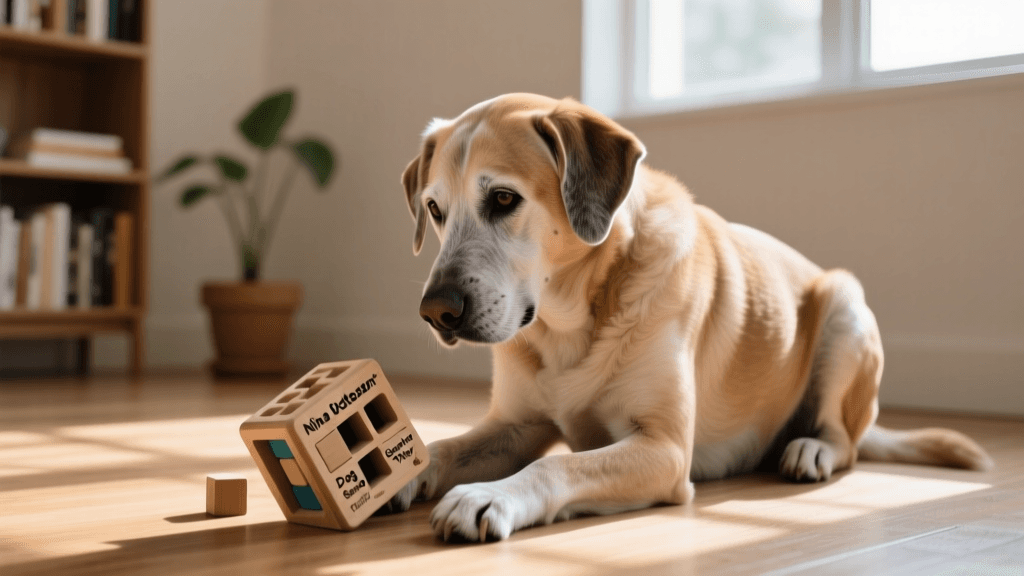
The Nina Ottosson Dog Brick remains a gold standard in canine cognitive therapy. This Level 2 puzzle features a combination of flipping lids, sliding blocks, and removable bone pegs. For senior dogs, the sliding blocks are particularly beneficial as they require gentle paw or nose nudges rather than forceful biting. The plastic is durable yet smooth, preventing damage to aging gums. In 2026, the updated model features enhanced non-slip rubber feet, ensuring the toy stays in place on hardwood floors, which is crucial for dogs with poor traction.
2. Wooly Snuffle Mat by Paw5
Scent work is one of the most powerful tools for canine mental enrichment. A dog's olfactory bulb is proportionally much larger than a human's, and sniffing naturally lowers their heart rate and reduces anxiety. The Paw5 Wooly Snuffle Mat mimics the experience of foraging in tall grass. Owners can hide dry kibble or small, soft treats deep within the thick, fleece strands. This mat is entirely machine washable and requires zero physical strain, making it perfect for bedridden or severely arthritic dogs.
3. LickiMat Soother Pro
While not a traditional 'puzzle,' the LickiMat Soother Pro provides immense cognitive and emotional value. The repetitive action of licking releases endorphins, which naturally calm the nervous system. For senior dogs experiencing sundowning (increased anxiety and pacing in the evening), a LickiMat smeared with dog-safe peanut butter or plain pumpkin puree and frozen can provide up to 45 minutes of soothing, focused activity. The 2026 Pro version is made from a softer, more flexible natural rubber that is gentle on senior teeth.
4. Outward Hound Hide-A-Squirrel Plush Puzzle
For seniors who still retain a playful, gentle prey drive but lack the jaw strength for heavy chewing, plush puzzles are an excellent option. The Hide-A-Squirrel toy allows dogs to use their noses to locate the squeaky squirrels inside the soft tree trunk and gently pull them out. It engages problem-solving skills without requiring complex paw-eye coordination.
Comparative Analysis: 2026 Senior Dog Puzzle Toys
| Toy Name | Cognitive Demand | Physical Demand | Best For | Avg. Price (2026) |
|---|---|---|---|---|
| Nina Ottosson Dog Brick | High | Low-Medium | Dogs needing structured problem-solving | $16.99 |
| Paw5 Wooly Snuffle Mat | Medium | Very Low | Scent-driven dogs with severe arthritis | $45.00 |
| LickiMat Soother Pro | Low | Very Low | Anxious seniors and evening sundowning | $12.50 |
| Hide-A-Squirrel Plush | Medium | Low | Gentle retrievers and soft-mouthed breeds | $18.99 |
Step-by-Step Guide: Introducing Puzzles to an Aging Dog
Introducing a new cognitive challenge to a senior dog requires patience. Older dogs can become easily frustrated if they do not immediately understand the mechanics of a new toy, which can lead to stress rather than enrichment.
- Step 1: Start Fully Loaded and Unlocked. When introducing the Nina Ottosson Dog Brick, leave the sliding blocks completely open and the lids off. Let your dog see and smell the treats. This builds immediate confidence and associates the toy with a positive reward.
- Step 2: Use High-Value, Aromatic Treats. Senior dogs often experience a decline in their sense of smell and taste. Use highly aromatic rewards like freeze-dried liver, small pieces of low-sodium cheese, or a dab of wet food to ensure they are motivated to engage with the puzzle.
- Step 3: Gradually Increase Difficulty. Once your dog reliably eats from the open puzzle, begin closing one lid or sliding one block over a treat. Guide their nose or paw to the mechanism if they hesitate. Praise heavily when they succeed.
- Step 4: Keep Sessions Short. Mental fatigue sets in faster than physical fatigue. Limit puzzle sessions to 5–10 minutes, twice a day. This prevents frustration and keeps the activity highly anticipated and enjoyable.
DIY Low-Impact Scent Work Games
You do not always need to purchase commercial toys to provide top-tier mental enrichment. Household items can be repurposed into highly effective cognitive games for senior dogs.
The Towel Roll-Up
Lay a clean bath towel flat on the floor. Sprinkle a handful of your dog's daily kibble allocation and a few high-value treats across the towel. Slowly roll the towel up into a tight cylinder. Place it on the floor and encourage your dog to use their nose and paws to unroll it and find the food. For dogs with mobility issues, you can place the rolled towel on a low, stable cushion so they do not have to bend all the way to the floor.
The Muffin Tin Shell Game
Take a standard muffin tin and place a few treats in the cups. Cover each cup with a tennis ball or a crumpled piece of paper. Your dog must figure out how to remove the obstacles to access the rewards. This is an excellent, low-cost alternative to commercial puzzle boards and allows you to control the exact level of difficulty by choosing heavier or lighter covers.
Nutritional Pairings for Senior Puzzle Play
When using food-dispensing puzzles, it is vital to account for the calories your dog is consuming to prevent unwanted weight gain, which can exacerbate joint pain. In 2026, many veterinary nutritionists recommend using a portion of your dog's regular, senior-formulated kibble for puzzle games rather than adding extra treats. If your dog requires a softer texture due to dental disease, you can soak their kibble in warm, dog-safe bone broth for ten minutes before loading it into a LickiMat or a rubber stuffable toy. This provides the mental challenge of foraging while supporting hydration and joint health through the natural collagen found in the broth.
Monitoring Frustration and Adjusting Difficulty
The ultimate goal of mental enrichment is to improve your dog's quality of life, not to test their limits. Always monitor your senior dog for signs of cognitive overload or frustration. Pacing, excessive panting, whining, or walking away from the toy are clear indicators that the puzzle is currently too difficult. If this happens, calmly intervene, make the puzzle easier by revealing the treats, and end the session on a positive note. By tailoring the complexity of the game to your dog's daily cognitive capacity, you ensure that puzzle play remains a joyful, brain-boosting ritual that supports their wellbeing well into their golden years.
robin-maitland
All our authors care for dogs every day — read more of their work on the authors page.