Nina Ottosson Dog Brick Puzzle Review & Enrichment Tips 2026
Discover how the Nina Ottosson Dog Brick puzzle boosts canine mental enrichment in 2026. Read our full review, training steps, and DIY alternatives.
The Rising Importance of Canine Mental Enrichment in 2026
As we navigate through 2026, the veterinary and behavioral communities have reached a firm consensus: physical exercise alone is no longer sufficient for raising a well-adjusted, happy dog. While daily walks and fetch sessions are crucial for cardiovascular health and joint mobility, they do little to satisfy a dog's innate cognitive needs. Modern canine science emphasizes that mental fatigue is often more effective at curbing destructive behaviors than physical exhaustion. In fact, behavioral experts note that fifteen minutes of intensive sniffing and problem-solving can tire a dog out just as much as an hour of brisk walking.
Mental enrichment taps into a dog's natural foraging instincts. In the wild, canines spend up to eighty percent of their waking hours searching for and securing food. When we simply drop a bowl of kibble in front of our domestic dogs, we rob them of this natural, dopamine-releasing activity. This is where interactive puzzle toys come into play. By transforming mealtime into a cognitive challenge, we can reduce anxiety, prevent boredom-induced chewing, and strengthen the bond between owner and pet. For a deeper dive into behavioral health, the American Kennel Club's training resources offer extensive documentation on the benefits of cognitive stimulation for all breed groups.
Nina Ottosson Dog Brick: A Comprehensive 2026 Review
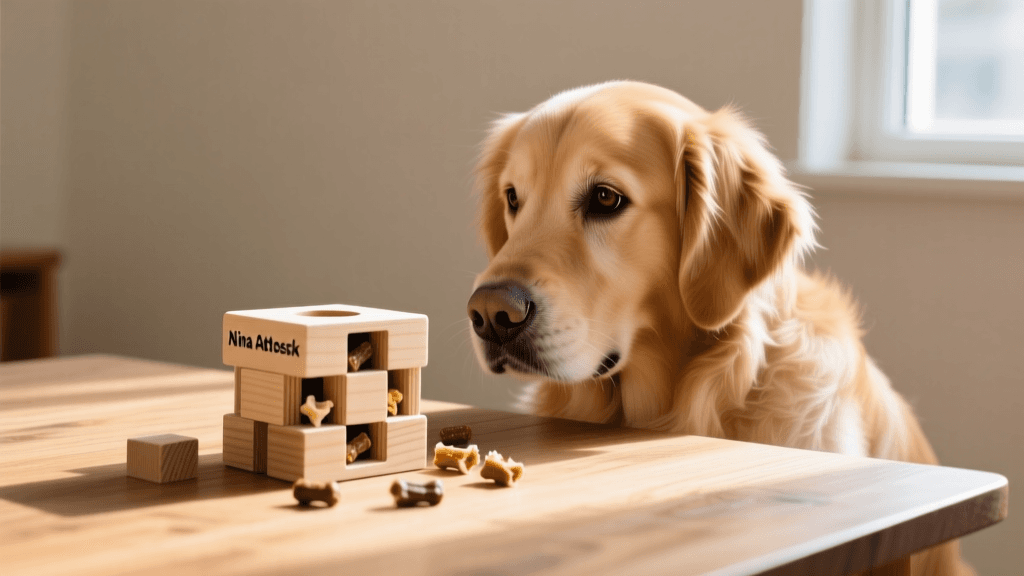
The Nina Ottosson Dog Brick Interactive Treat Puzzle remains one of the most highly recommended enrichment tools on the market. Distributed by Outward Hound, this specific model is classified as a 'Level 2' puzzle, making it the perfect bridge for dogs who have mastered basic treat-dispensing balls but are not yet ready for complex, multi-step locking mechanisms.
In 2026, the Dog Brick has seen notable manufacturing updates. Outward Hound has fully transitioned this line to their eco-friendly, plant-based bioplastic blend. This means the puzzle is entirely BPA-free, phthalate-free, and PVC-free, addressing growing consumer concerns regarding microplastics and canine endocrine disruptors. The board features three distinct types of treat-hiding mechanisms: eight flip-cap bone covers, three sliding compartments, and four removable bone-shaped pegs that act as obstacles.
Priced competitively at around $19.99 to $22.99 depending on the retailer, the Dog Brick offers exceptional value. Its low-profile design makes it accessible for senior dogs, flat-faced breeds, and puppies alike. The bright blue and white color contrast is not just for human aesthetics; it aligns with the dichromatic color vision of canines, making the moving pieces visually distinct and easier for your dog to track during play.
Step-by-Step Guide to Introducing the Dog Brick
Handing a complex puzzle to an inexperienced dog is a recipe for frustration. To ensure your dog builds confidence and actually enjoys the game, follow this progressive training protocol.
Step 1: The Scent Introduction (Days 1-3)
Before introducing the physical puzzle, let your dog understand that high-value rewards are involved. Place the Dog Brick on the floor without any obstacles in place. Fill all the open compartments with smelly, irresistible treats like freeze-dried liver or boiled chicken. Allow your dog to eat directly from the open wells. This builds a positive association with the scent and the physical board itself.
Step 2: Assisted Solving (Days 4-7)
Next, introduce the easiest moving parts. Place treats under the sliding compartments, but leave them partially open so the dog can see and smell the food. Demonstrate how to slide the lid by pushing it with your finger while your dog watches. When your dog uses their nose or paw to nudge the lid the rest of the way, offer enthusiastic verbal praise. Repeat this with the flip-cap bones, leaving them slightly ajar.
Step 3: Adding Obstacles (Week 2)
Once your dog is confidently sliding and flipping the components, introduce the white bone-shaped pegs. Place these pegs over the treat compartments. Your dog must now learn to remove the peg (by picking it up or knocking it aside) before they can access the sliding lid underneath. Always supervise closely during this phase, as some dogs may attempt to chew on the removable pegs.
Step 4: Independent Play and Fading Prompts (Week 3 and Beyond)
Set up the puzzle with all obstacles in place. Step back and allow your dog to figure it out independently. Resist the urge to point, tap the puzzle, or offer verbal hints. The goal is to build canine problem-solving skills and resilience. If your dog gives up, quietly reset the puzzle to an easier configuration and try again later.
Comparison Chart: Top Mental Enrichment Tools
While the Dog Brick is excellent, a well-rounded enrichment routine should include a variety of textures and challenges. Below is a comparison of the most popular enrichment tools available in 2026.
| Enrichment Tool | Difficulty Level | Best Used For | Average 2026 Cost | Cleaning Method |
|---|---|---|---|---|
| Nina Ottosson Dog Brick | Level 2 (Intermediate) | Daily meal replacement, cognitive fatigue | $21.00 | Hand wash with warm soapy water |
| Fleece Snuffle Mat | Level 1 (Beginner) | Fast eaters, scent-hounds, wind-down time | $25.00 - $40.00 | Machine wash cold, tumble dry low |
| Kong Classic (Red/Black) | Level 1-2 (Adjustable) | Crate training, separation anxiety, chewing | $16.00 - $22.00 | Dishwasher safe (top rack) |
| Silicone Lick Mat | Level 1 (Beginner) | Grooming sessions, bath time, soothing | $12.00 - $18.00 | Dishwasher safe |
Troubleshooting Common Puzzle Toy Frustrations
Even the smartest dogs can develop bad habits when interacting with puzzle toys. Here is how to address the most common issues owners face.
- The 'Smasher' Technique: If your dog flips the entire board over to dump the treats out, the puzzle is too difficult or the treats are too high-value. Lower the difficulty by removing the pegs, and switch to lower-value kibble. You can also place the puzzle inside a cardboard box or against a wall to limit flipping angles.
- Pawing vs. Nosing: While pawing is effective, it can scratch the bioplastic over time. Encourage 'nosing' by placing a small dab of dog-safe peanut butter on the flip-caps to draw their snout directly to the moving parts.
- Loss of Interest: If your dog walks away after two minutes, the session lasted too long. Always end the game while the dog is still eager to play. Put the puzzle away before they solve the very last treat, leaving them wanting more for next time.
Safety and Hygiene Best Practices
Because puzzle toys interact directly with your dog's mouth and food, hygiene is paramount. The porous nature of some older plastics could harbor salmonella or mold, but the 2026 bioplastic Dog Brick is non-porous and highly resistant to bacterial buildup. Nevertheless, you should wash the puzzle with pet-safe dish soap after every single use. Avoid harsh chemical bleaches that can leave toxic residue.
Safety also dictates strict supervision. No plastic puzzle toy is designed to be a chew toy. If your dog begins to gnaw on the sliding lids or the removable pegs, immediately confiscate the puzzle. Ingesting broken plastic can lead to severe gastrointestinal blockages requiring emergency surgery. Always adhere to the ASPCA's general dog care guidelines regarding toy safety, which emphasize that all interactive feeders must be used under direct human supervision and stored out of reach when not in use.
DIY Alternatives for Budget-Conscious Owners
If you want to test your dog's aptitude for foraging games before investing in commercial puzzles, several highly effective DIY alternatives can be created from household items.
The Muffin Tin Shuffle
Take a standard metal or silicone muffin tin. Place a few pieces of kibble in six of the cups. Cover all twelve cups with tennis balls or crumpled pieces of parchment paper. Your dog must sniff out the correct cups and remove the obstacles to get the food. This mimics the peg-and-lid mechanic of the Dog Brick at a fraction of the cost.
The Towel Burrito
Lay a clean, old bath towel flat on the floor. Sprinkle kibble and training treats evenly across the surface. Roll the towel up tightly into a 'burrito'. For an added challenge, tie the rolled towel into a loose knot. This provides excellent olfactory stimulation and encourages gentle, persistent foraging behavior without the risk of ingesting hard plastics.
Final Thoughts on Enrichment
Mental enrichment is not a luxury; it is a fundamental requirement for modern canine welfare. The Nina Ottosson Dog Brick remains a gold standard in 2026 for dogs transitioning into intermediate cognitive challenges. Its updated eco-friendly materials, combined with its versatile difficulty settings, make it a staple in the homes of working breeds, energetic terriers, and senior dogs alike. Remember that the goal of enrichment is to build your dog's confidence, not to test their patience. Rotate the Dog Brick with other sensory games like snuffle mats and scent trails to provide a holistic, fulfilling life for your companion. For further reading on creating a safe and stimulating home environment, consult the Humane Society's dog care recommendations to ensure your pet thrives both physically and mentally.
priya-sutaria
All our authors care for dogs every day — read more of their work on the authors page.