New Dog Safety: Puppy-Proofing and Emergency Prep Guide
Prepare your home for a new dog with our ultimate puppy-proofing checklist and emergency kit guide. Ensure safety from day one.
The Hidden Hazards: Why Pre-Arrival Safety Audits Matter
Bringing a new dog or puppy into your home is one of the most exciting milestones in life, but it also introduces a unique set of responsibilities. Dogs, especially puppies and newly adopted rescues, explore their new environments primarily through scent and taste. This natural curiosity can quickly turn dangerous if your home is not properly secured. According to the ASPCA Animal Poison Control Center, tens of thousands of pet poisoning cases are reported annually, with a significant percentage occurring within the dog's own home. Preparing an emergency safety plan and conducting a thorough puppy-proofing audit before your dog's paws ever touch your floorboards is the most critical step in the 'Getting a Dog' journey.
Room-by-Room Puppy-Proofing Checklist
A systematic approach to home safety ensures no hidden dangers are overlooked. Get down on your hands and knees to view your home from a dog's eye level and address the following areas:
- The Kitchen and Laundry Room: These are high-risk zones for toxic ingestion. Install childproof magnetic locks on lower cabinets containing cleaning supplies, dishwasher pods, and trash cans. Ensure all human foods toxic to dogs—such as xylitol (found in sugar-free gum and peanut butter), grapes, raisins, onions, and macadamia nuts—are stored in upper cabinets or secured pantries. Keep laundry room doors closed, as dryer sheets and liquid detergent packets are highly toxic and often smell appealing to dogs.
- Living Areas and Bedrooms: Electrical cords pose a severe electrocution and burn risk. Use split loom tubing, cord concealers, or bitter-tasting deterrent sprays like Grannick's Bitter Apple to protect wires. Pick up small choking hazards from the floor, including hair ties, coins, children's toys, and remote controls. Secure heavy furniture and televisions to the wall using anti-tip brackets to prevent crushing injuries if your dog jumps or bumps into them.
- Bathrooms: Always keep toilet lids closed, especially if you use automatic toilet bowl cleaners that release chemicals into the water. Store all human medications, including seemingly harmless over-the-counter pain relievers like ibuprofen and acetaminophen, in high, locked cabinets. Even a dropped pill can be fatal to a small dog.
- The Yard and Outdoor Spaces: Conduct a perimeter fence check. For small breeds, ensure there are no gaps wider than 2 inches; for large breeds, gaps should not exceed 4 inches. Bury chicken wire at the base of the fence if your dog is a digger. Audit your landscaping for toxic plants such as Sago Palms, Oleander, Azaleas, and Lilies. The American Kennel Club recommends removing cocoa bean mulch, which contains theobromine (the same toxic compound found in chocolate), and replacing it with dog-safe pine or cedar mulch.
Building Your New Dog Emergency Kit
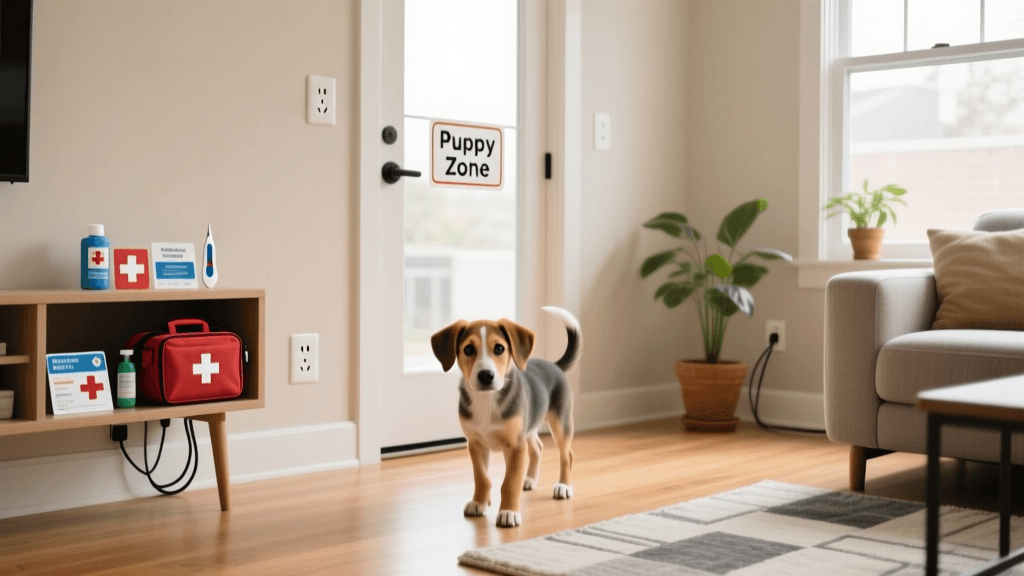
When an emergency strikes, you will not have time to run to the pharmacy. A dedicated pet first-aid kit should be assembled before your dog arrives and kept in an easily accessible, clearly labeled container. While the American Red Cross offers excellent comprehensive courses on pet first aid, having the right physical tools on hand is your first line of defense.
- Kwik Stop Styptic Powder: Essential for stopping bleeding from torn nails or minor cuts. Apply directly to the bleeding nail with a cotton swab and apply pressure for 30 seconds.
- 3% Hydrogen Peroxide: Used to induce vomiting only under the direct guidance of a veterinarian or poison control. The standard dosage is 1 teaspoon (5 ml) per 5 pounds of body weight, up to a maximum of 3 tablespoons. Never use concentrations higher than 3%, as it can cause severe gastrointestinal ulceration.
- Digital Pet Thermometer: A normal dog's temperature ranges from 101.0°F to 102.5°F. Use a flexible-tipped digital thermometer with a water-based lubricant for safe rectal temperature checks.
- Saline Eye Wash: Crucial for flushing out debris, dirt, or mild chemical irritants from your dog's eyes after outdoor adventures.
- Tick Twister or Fine-Tipped Tweezers: For safe, complete removal of ticks without leaving the mouthparts embedded in the skin, which can cause secondary infections.
Essential Emergency Kit Items & Estimated Costs
| Item | Primary Purpose | Estimated Cost | Replacement Frequency |
|---|---|---|---|
| Kwik Stop Styptic Powder | Clotting minor nail/skin bleeds | $8 - $12 | Check expiration annually |
| 3% Hydrogen Peroxide | Inducing vomiting (vet directed) | $3 - $5 | Every 6 months (loses potency) |
| Digital Pet Thermometer | Monitoring for fever/hypothermia | $10 - $15 | Replace if dropped/damaged |
| Sterile Saline Eye Wash | Flushing eye irritants/debris | $5 - $8 | Every 12 months |
| Self-Adhering Vet Wrap | Securing bandages/splints | $6 - $10 (multi-pack) | As needed |
| Muzzle (Basket Style) | Preventing bites during pain/stress | $15 - $25 | Replace if chewed/ill-fitting |
Safe Transport and Restraint
Safety extends beyond the home; it includes how your new dog travels. An unrestrained 30-pound dog becomes a 900-pound projectile in a crash at just 30 mph. Invest in a crash-tested harness, such as the Sleepypod Clickit Sport, or a certified crash-tested crate like the Gunner Kennels G1 or Ruff Land Performance Kennels. Avoid cheap, unreinforced wire crates for car travel, as they can collapse upon impact. For dogs prone to escaping, consider an escape-proof harness with dual-clip attachment points (front and back) to maintain maximum control during high-stress walks near busy roads.
Creating an Emergency Action Plan
Before your dog's first day home, program the following numbers into your phone and post them physically on your refrigerator:
- ASPCA Animal Poison Control: (888) 426-4435 (Note: A consultation fee may apply, but it is invaluable in life-or-death scenarios).
- Local 24/7 Emergency Veterinary Clinic: Map out the route from your home to the nearest after-hours emergency hospital. Drive the route once so you know exactly how long it takes in normal traffic.
- Non-Emergency Vet Contact: Your primary care veterinarian's direct line for daytime urgent questions.
Additionally, download the American Red Cross Pet First Aid App, which provides step-by-step video instructions for handling common emergencies like choking, CPR, and heatstroke while you are en route to the vet.
The First 48 Hours: Monitoring and Decompression
The transition to a new home is incredibly stressful for a dog, a period often referred to as the 'decompression phase.' Stress can suppress a dog's immune system and lead to gastrointestinal upset, such as stress colitis or diarrhea. Set up a designated 'safe zone' using a sturdy wire crate or a heavy-duty exercise pen equipped with a chew-proof bed (like a Kuranda elevated cot) and fresh water. During the first 48 hours, limit your dog's access to the entire house. Allow them to decompress in their safe zone and only introduce them to new rooms and family members gradually. Monitor their eating, drinking, and elimination habits closely. If your dog refuses to eat for more than 24 hours, experiences severe lethargy, or has persistent vomiting, contact your veterinarian immediately. By prioritizing safety, preparation, and patience, you lay the groundwork for a long, healthy, and secure life with your new best friend.
priya-sutaria
All our authors care for dogs every day — read more of their work on the authors page.