Puppy-Proofing & Emergency Prep Guide For New Dog Owners
Prepare your home before bringing a new dog. Learn essential puppy-proofing tips, toxic hazards to avoid, and how to build a pet emergency kit.
Why Pre-Arrival Safety and Emergency Prep Matters
The thrill of adopting or purchasing a new dog is an unforgettable experience. However, the excitement of bringing a new canine companion home often overshadows the critical need for comprehensive safety preparation. Dogs, especially puppies and newly adopted adult rescues, explore their new environments primarily through scent and taste. This natural curiosity can quickly lead to disastrous consequences if your home is not properly secured.
According to the American Kennel Club (AKC), puppy-proofing your home is just as essential as baby-proofing. A dog's perspective of your living space is vastly different from yours; what looks like a harmless rug fringe or a dropped pill can be a life-threatening choking hazard or toxic ingestion. Furthermore, preparing for unexpected emergencies—ranging from household fires to natural disasters or sudden medical crises—is a fundamental responsibility of dog ownership. By taking proactive steps before your dog crosses the threshold, you ensure a safe, stress-free transition for both you and your new pet.
Room-by-Room Puppy-Proofing Checklist
Before bringing your new dog home, conduct a thorough walkthrough of your living space. Get down on your hands and knees to view the environment from your dog's eye level. Here is a targeted approach to securing the most hazardous areas of your home.
The Kitchen and Laundry Room
The kitchen poses severe risks due to the presence of toxic foods, sharp objects, and hazardous cleaning supplies. Invest in heavy-duty, dog-proof trash cans, such as the Simplehuman step cans with locking lids, to prevent dumpster diving, which can lead to intestinal blockages or pancreatitis from fatty scraps. Secure all lower cabinets containing cleaning chemicals with child-proof magnetic locks. In the laundry room, ensure that detergent pods, bleach, and antifreeze are stored on high shelves or behind locked doors. Antifreeze is particularly deadly; its sweet taste attracts dogs, but even a few licks can cause fatal kidney failure.
Living Areas and Bedrooms
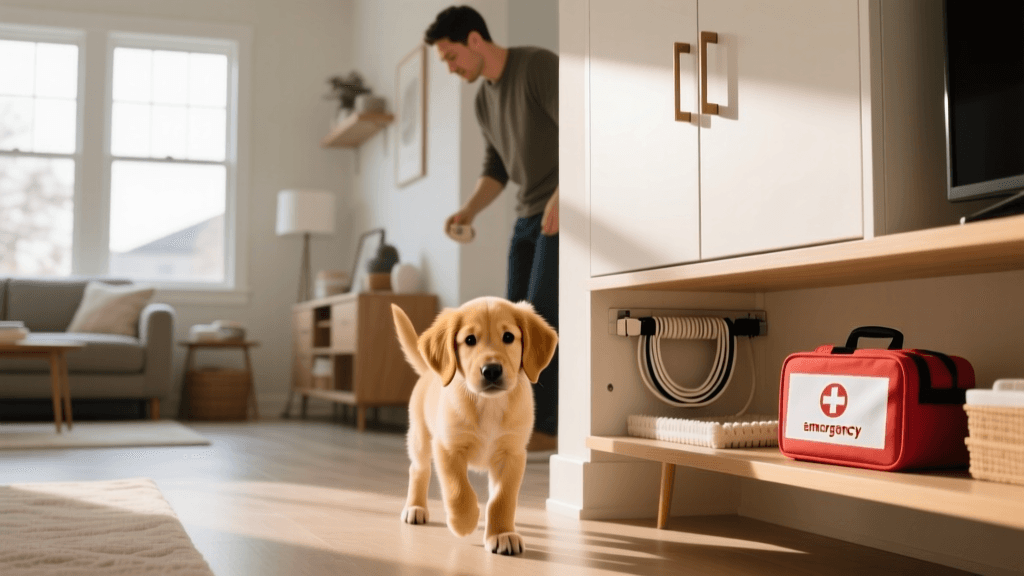
Living rooms and bedrooms are filled with electrical cords, small choking hazards, and toxic houseplants. Use split loom tubing or J-Cord cable covers to conceal and protect electrical wires; a puppy chewing on a live wire can suffer severe oral burns or electrocution. Secure heavy furniture, bookshelves, and televisions to the wall using anti-tip brackets to prevent crushing injuries if your dog jumps or climbs. Remove all small items like coins, children's toys, socks, and hair ties from the floor, as these are common culprits for expensive and dangerous gastrointestinal blockages.
Bathrooms
Bathrooms are deceptively dangerous. Always keep toilet lids closed to prevent dogs from drinking chemically treated bowl water or falling in. Human medications are a leading cause of pet poisoning; never store ibuprofen, acetaminophen, or antidepressants in low cabinets or on the edge of the sink. Keep all prescription and over-the-counter drugs locked away in a high medicine cabinet.
Common Household Toxins to Remove Immediately
The ASPCA Animal Poison Control Center handles hundreds of thousands of emergency calls annually regarding toxic ingestions. Familiarize yourself with the most common household threats and take immediate action to remove or secure them before your dog arrives.
| Toxin Category | Common Household Items | Risk Level | Prevention Strategy |
|---|---|---|---|
| Human Medications | Ibuprofen, Acetaminophen, ADD/ADHD meds | Critical / Fatal | Store in locked, high cabinets; never leave in purses. |
| Toxic Foods | Xylitol (sugar-free gum), Grapes, Raisins, Chocolate | High / Severe | Keep in sealed pantry containers; avoid baking with xylitol. |
| Household Plants | Sago Palm, Lilies, Oleander, Pothos | High / Fatal | Remove toxic plants entirely; opt for pet-safe spider plants. |
| Chemicals | Rodenticides, Snail Bait, Antifreeze | Critical / Fatal | Use pet-safe alternatives; store chemicals in locked sheds. |
Building Your New Dog's Emergency Evacuation Kit
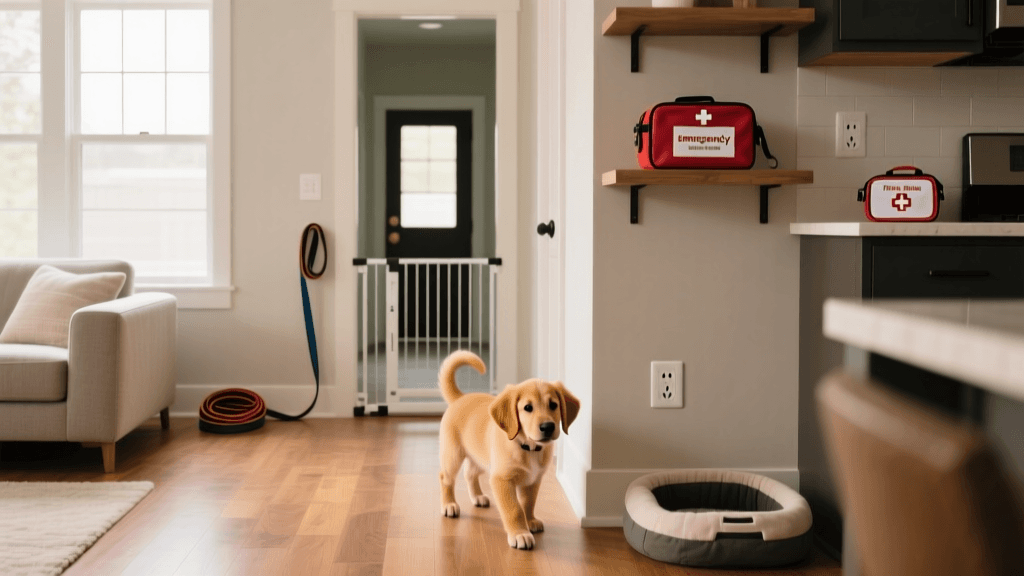
Natural disasters, house fires, or sudden evacuations require immediate action. When panic sets in, gathering pet supplies is often forgotten. According to Ready.gov, every household with pets should maintain a dedicated, grab-and-go emergency kit. Assemble this kit before your dog's first day home and store it in a waterproof duffel bag near your primary exit.
- Food and Water: Pack a 3-to-7-day supply of canned or dry dog food in airtight, waterproof containers. Include 3 days' worth of bottled water (calculate 1 ounce of water per pound of body weight per day) and collapsible silicone travel bowls.
- Medical Records and ID: Keep physical copies of vaccination records, adoption papers, and a recent, clear photo of your dog in a sealed Ziploc bag. This is vital for proving ownership or boarding your dog at an emergency shelter.
- Restraints: Include a backup slip lead, a sturdy harness, and a muzzle. Even the sweetest dogs may bite when terrified or injured; a soft mesh muzzle ensures safety for first responders and veterinary staff.
- Comfort Items: Pack a familiar-smelling blanket and a durable chew toy to help reduce anxiety in a chaotic shelter or hotel environment.
- Sanitation: Include a roll of biodegradable poop bags, paper towels, and a small bottle of pet-safe enzymatic cleaner for accidents.
Assembling a Canine First-Aid Kit
Beyond evacuation preparedness, medical emergencies can happen at any time. Building a dedicated canine first-aid kit is a crucial step in your pre-arrival checklist. While you can purchase pre-made kits for around $30 to $45, assembling your own allows for customization and typically costs between $40 and $60, yielding higher-quality supplies.
- Kwik Stop Styptic Powder ($8-$12): Essential for quickly stopping bleeding if you accidentally clip your dog's nail too short and hit the quick.
- Digital Rectal Thermometer ($10-$15): A dog's normal temperature ranges from 101.0°F to 102.5°F. Always use a dedicated pet thermometer and keep it separate from human supplies.
- 3% Hydrogen Peroxide ($3-$5): Used to induce vomiting, but only under the strict, direct guidance of a veterinarian or poison control expert. Never administer this without professional instruction.
- Self-Adhering Bandage Wrap ($10): Often sold as Vetrap, this material sticks to itself and not to your dog's fur, making it ideal for temporary wound compression.
- Blunt-Tipped Scissors and Tweezers ($8): For safely cutting away bandages or removing ticks, foxtails, and debris from the coat.
- Saline Eye Wash ($5): To flush out dust, dirt, or irritating substances from your dog's eyes safely.
Store this kit in a waterproof, easily accessible container, and ensure all family members know its location. Check expiration dates on all liquid supplies and medications every six months.
Establishing an Emergency Action Plan
Preparation extends beyond physical supplies; it requires a solid action plan. Before your dog arrives, research and program the following contacts into your phone and post them on your refrigerator:
- Your primary veterinarian's address and emergency after-hours number.
- The nearest 24-hour emergency veterinary hospital (calculate the driving time during rush hour).
- The ASPCA Animal Poison Control Center hotline (888-426-4435). Note that a consultation fee may apply, but it can be life-saving.
Additionally, plan for your dog's care if you are incapacitated. Designate a trusted friend, neighbor, or family member as your dog's emergency guardian. Provide them with a spare house key, a detailed care sheet outlining your dog's feeding schedule, allergies, and behavioral quirks, and ensure they know where the emergency evacuation kit and first-aid supplies are located. Finally, order a pet rescue window decal to place on your front door or window, alerting firefighters and first responders that there is a dog inside the home needing rescue.
Conclusion
Getting a dog is a joyous milestone, but it comes with the heavy responsibility of ensuring their safety in an unpredictable world. By meticulously puppy-proofing your home, removing hidden toxins, and assembling comprehensive emergency and first-aid kits, you are laying the foundation for a long, healthy, and secure life together. Do not wait until an emergency strikes to test your preparedness; take action today so you can welcome your new best friend home with total peace of mind.
jonas-cole
All our authors care for dogs every day — read more of their work on the authors page.