Mastering The Flyball Swimmer's Turn: 2026 Training Guide
Learn how to train the flyball swimmer's turn for speed and safety. Our 2026 guide covers box mechanics, target training, and NAFA competition rules.
Introduction to the Swimmer's Turn in 2026
Flyball remains one of the most exhilarating and fast-paced canine sports in the world. As we navigate the 2026 competitive season, regional and national tournaments demand unprecedented speed, with top-tier teams regularly breaking the sub-15-second barrier for team relay times. At this elite level, the margin for error is virtually zero. The cornerstone of a championship-caliber flyball dog is not just raw sprinting speed, but the efficiency, safety, and biomechanical precision of their box turn. The 'swimmer's turn' has entirely replaced the outdated and dangerous 'bounce turn' in modern competition.
Historically, dogs were taught to hit the box with both front paws simultaneously, bounce off, and catch the ball on the rebound. However, veterinary sports medicine has conclusively shown that this vertical bounce places immense compressive forces on the canine spine and shoulders. Today, the swimmer's turn—a horizontal, twisting motion that utilizes the dog's natural rotational momentum—is the gold standard. According to the North American Flyball Association (NAFA), promoting safe, ergonomic box turns is a top priority for the longevity of the sport and the health of the athletes.
The Biomechanics of a Perfect Swimmer's Turn
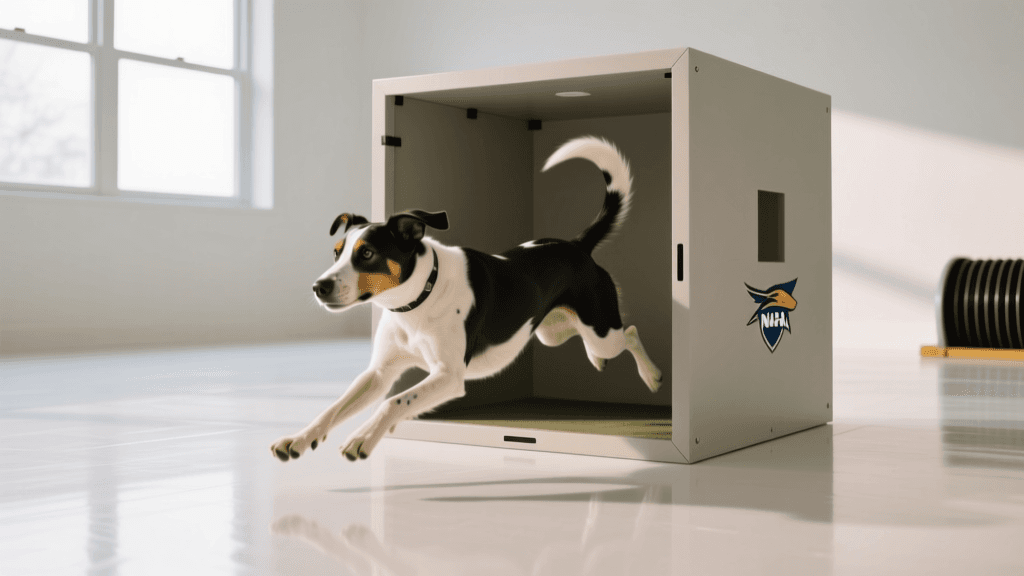
The swimmer's turn mimics the flip turn of a competitive human swimmer. As the dog approaches the flyball box at full sprint (often exceeding 20 miles per hour), they do not brake. Instead, they stride up the face of the box. The dog places one or two paws on the pedal, triggers the release mechanism, and grabs the tennis ball. Using the forward momentum and the grip on the box pedal, the dog twists their body horizontally in mid-air, pushing off the box with their hind legs to propel themselves back down the lane.
This technique converts forward kinetic energy into rotational energy, sparing the dog's joints from abrupt deceleration and vertical impact. When executed correctly, the dog's spine remains relatively neutral, and the turn adds virtually zero seconds to their overall lane time. In 2026, judges in both NAFA and the United Flyball League International (U-FLI) closely monitor box turns for safety, and dogs exhibiting dangerous bounce turns may be flagged or disqualified to prevent injury.
Pre-Requisite: Canine Core Conditioning
Before introducing your dog to the flyball box, they must possess the core strength required to stabilize their spine during high-speed rotational movements. In 2026, canine fitness is a mandatory component of any serious flyball training program.
- Balance Disc Work: Have your dog stand on inflated balance discs while offering treats in various positions to engage deep core stabilizers.
- Perch Work: Teach your dog to pivot their hindquarters around a raised perch or bucket. This builds the specific hind-end awareness needed for the box push-off.
- Underwater Treadmill: Many elite flyball teams now incorporate weekly underwater treadmill sessions to build cardiovascular endurance and low-impact muscle mass.
Step-by-Step Swimmer's Turn Training Protocol
Training the swimmer's turn requires patience, high-value rewards, and a methodical breakdown of the behavior. Never rush the dog to the box at full speed until the foot targeting is flawless at a standstill.
Phase 1: Dead Ball and Target Sticker Placement
Begin with a 'dead' box (the pedal is locked or the spring is removed so the ball does not shoot out). Place a high-contrast target sticker on the top right or top left corner of the box pedal. Dogs see the color spectrum differently than humans; neon orange, bright yellow, or deep blue stickers provide the best visual contrast against the black or gray pedal. The corner placement naturally encourages the dog to reach across their body, initiating the horizontal twist.
Phase 2: Shaping the Paw Hit
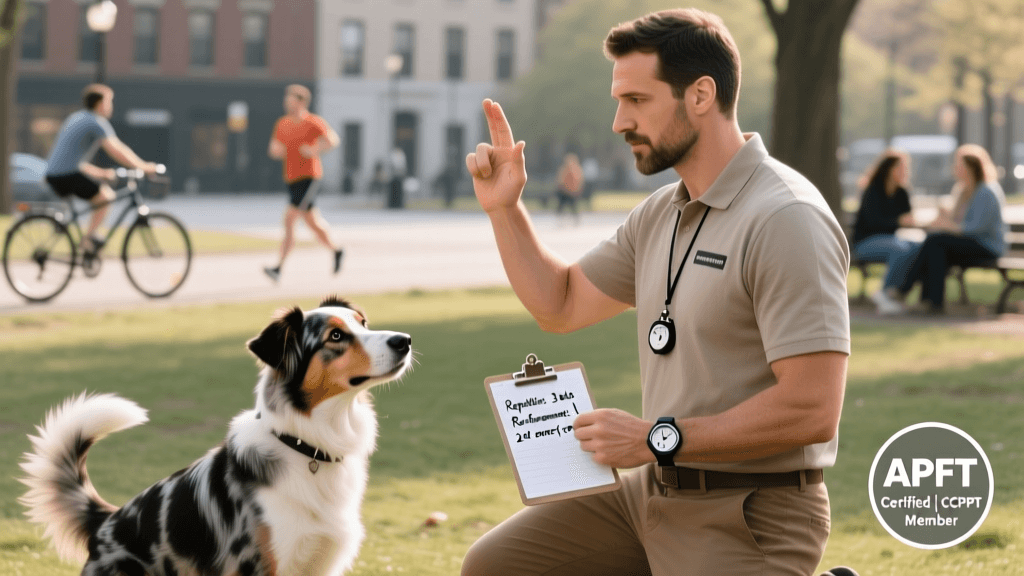
Using a clicker or a distinct verbal marker, shape the dog to interact with the sticker. Start by rewarding any sniff or look at the sticker. Progress to a paw touch, and finally, a hard, deliberate strike. You want the dog to hit the pedal with force. If they only tap it gently, withhold the click until they offer a harder strike. Practice this from various angles and distances up to 10 feet away from the box.
Phase 3: Adding the Ball and the Catch
Once the dog is reliably striking the target sticker with power, unlock the box. Hold the ball in the hole manually at first, or use a box with an adjustable spring tension to ensure a gentle, predictable release. The goal is for the dog to hit the pedal, grab the ball immediately, and turn. Reward heavily with a high-value tug toy the moment they turn away from the box with the ball in their mouth. Do not reward if they drop the ball during the turn.
Phase 4: Adding Distance, Speed, and Jumps
Gradually move your starting position back in 5-foot increments. Introduce a single jump between the dog and the box, eventually building up to the full 51-foot lane with four jumps. Use a digital timing system to monitor their speed. If the dog's turn falls apart or they revert to a bounce turn when speed is added, immediately reduce the distance and rebuild the criteria.
2026 NAFA Jump Height and Box Angle Regulations
Understanding the official regulations is critical for setting up your training equipment correctly. In flyball, the jump height is determined by the shoulder height of the smallest dog on the team (the 'height dog'). The jumps are set 5 inches below the shoulder height of that dog, with a minimum height of 7 inches and a maximum of 14 inches.
| Dog Shoulder Height | Required Jump Height | Box Pedal Angle Recommendation | Ideal Target Sticker Placement |
|---|---|---|---|
| 12 - 14 inches | 7 inches | Standard (approx. 45 degrees) | Top Right Corner |
| 15 - 17 inches | 10 inches | Standard (approx. 45 degrees) | Top Right or Left Corner |
| 18 - 20 inches | 13 inches | Slightly Steeper (if adjustable) | Top Left Corner (for right-handed turn) |
| 21+ inches | 14 inches (Maximum) | Standard (approx. 45 degrees) | Top Left Corner |
Essential Flyball Training Gear for 2026
To train effectively, you need equipment that mirrors tournament conditions. Investing in quality gear prevents bad habits and ensures safety.
- Competition-Grade Flyball Box: The Shedd Design Pro-Training Box remains the industry standard in 2026. Priced between $375 and $450, it features an adjustable spring, a durable aluminum frame, and a pedal that closely mimics tournament boxes. Avoid cheap, plastic DIY boxes, as the pedal tension is inconsistent and can cause paw injuries.
- Digital Timing Systems: While full FarmTek tournament timing systems cost upwards of $3,000, portable laser-timer setups like the Brower Timing Systems agility lasers (around $600 in 2026) are excellent for tracking individual dog run times during practice.
- Competition Balls: Do not train exclusively with standard tennis balls, as the fuzz can cause dental wear and the balls degrade quickly. Use competition-approved rubber balls, such as the official NAFA-approved Happy Jack or Chuckit! Ultra balls, which provide a better grip and consistent bounce off the pedal.
- Bungee Tug Toys: Handlers need to reward dogs instantly at the finish line. Bungee-handled tug toys (like those from Dogwise or Chameleon Tugs, typically $25-$35) absorb the shock of a 50-pound dog hitting the toy at full speed, protecting the handler's shoulders and lower back.
Common Mistakes and How to Fix Them
Even with meticulous training, dogs can develop bad habits. Here is how to troubleshoot the most common swimmer's turn issues seen in the 2026 season:
1. The 'Missed Pedal' or Slip: If the dog's paws slip off the pedal, the box surface may be worn down. Apply specialized grip tape (similar to skateboard tape but with a slightly softer grit to protect paw pads) to the top half of the pedal. Ensure the dog's nails are trimmed short and filed smooth every week.
2. Anticipating the Catch (Leaving Early): Some dogs turn before the ball is fully released, resulting in a missed catch and a dropped ball over the jumps. Fix this by using a 'dead' box and manually holding the ball in the hole. Only release the ball when the dog's nose is fully pressed against the hole, forcing them to wait the extra millisecond.
3. Wide Turns on the Return: If the dog swings wide after leaving the box, they are likely dropping the ball or looking for the handler too early. Keep the handler's reward position strictly behind the start/finish line, and use a physical barrier (like a gating panel) on the outside of the lane to physically prevent the dog from swinging wide during the learning phase.
Conclusion
Mastering the swimmer's turn is a journey that requires a deep understanding of canine biomechanics, precise target training, and high-quality equipment. By prioritizing your dog's physical conditioning and adhering to the structured, step-by-step protocol outlined above, you will build a flyball athlete capable of competing at the highest levels of the 2026 season. Remember that speed is a byproduct of confidence and technique; focus on the mechanics of the turn, and the sub-4-second individual run times will naturally follow.
jonas-cole
All our authors care for dogs every day — read more of their work on the authors page.