Golden Retriever vs Frenchie vs Collie: First Year Puppy Care
Compare Golden Retriever, French Bulldog, and Border Collie puppy care. Discover first-year costs, training needs, and exercise requirements.

The Critical Impact of Breed Selection on First-Year Puppy Care
Welcome to the transformative journey of puppy parenthood. When selecting a new canine companion, many first-time owners focus primarily on adult appearance or childhood nostalgia. However, from a veterinary and behavioral perspective, breed selection is fundamentally about matching a puppy's first-year care requirements with your lifestyle, budget, and living situation. The first twelve months of a dog's life are marked by rapid physical growth, intense teething phases, and critical neurological development. A mismatch between a breed's inherent needs and an owner's capabilities often leads to surrendered pets and behavioral issues.
In this comprehensive guide, we will compare the first-year puppy care requirements of three wildly popular but vastly different breeds: the Golden Retriever, the French Bulldog, and the Border Collie. By examining their unique developmental milestones, exercise limitations, grooming needs, and estimated financial costs, you can make an informed, responsible decision before bringing your new puppy home.
Golden Retriever: The Eager-to-Please Family Companion
Golden Retrievers are universally beloved for their gentle temperament and high trainability. However, their first year requires meticulous management of their rapid physical growth and notorious chewing phases. According to the American Kennel Club (AKC), Goldens are active, large-breed dogs that require structured early socialization to prevent boisterous, jumping behaviors in adulthood.
Nutrition and Joint Care
Because Golden Retrievers are prone to hip and elbow dysplasia, their first-year diet must be carefully calibrated. You must feed a specifically formulated large-breed puppy food, such as Purina Pro Plan Large Breed Puppy or Hill's Science Diet Large Breed Puppy. These diets contain optimized calcium-to-phosphorus ratios that prevent bones from growing faster than the supporting joint cartilage. Avoid free-feeding; instead, measure out meals based on the package's weight-projection guidelines to keep your puppy lean, reducing stress on developing joints.
Teething and Destructive Chewing
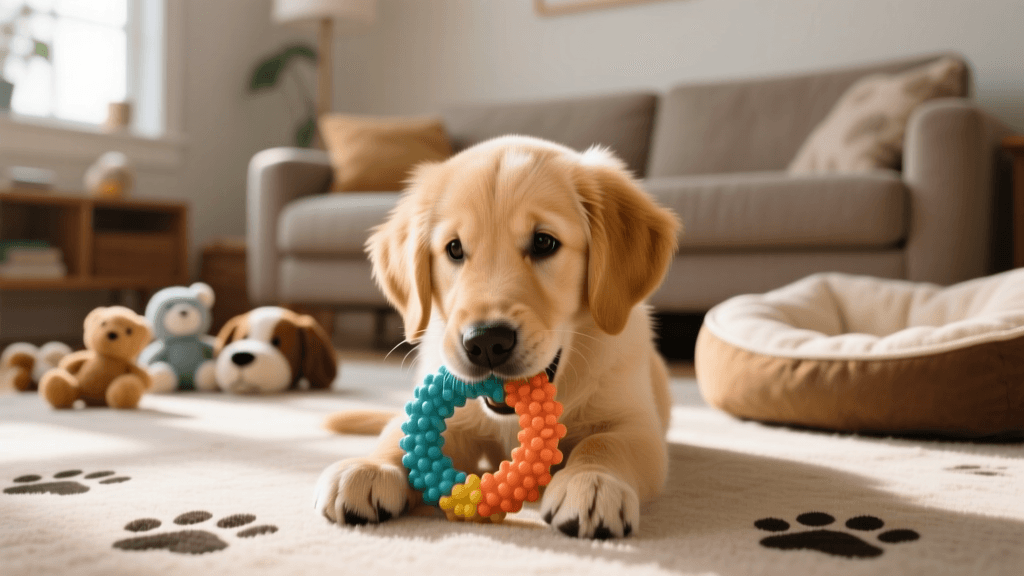
Between months 3 and 6, Golden puppies will lose their deciduous teeth and erupt adult molars. This coincides with a peak in destructive chewing. You must puppy-proof your home by elevating shoes, cords, and remote controls. Invest heavily in durable teething products like the KONG Classic (stuffed with frozen plain yogurt and puppy kibble) and Nylabone Power Chew rings to satisfy their urge to gnaw while protecting your baseboards and furniture.
Estimated First-Year Costs
Expect to spend between $2,500 and $3,500 in the first year. This includes the initial purchase price from a reputable breeder ($1,500-$2,500), large-breed puppy food, a full vaccination series, spay/neuter surgery, and essential gear like an oversized wire crate and heavy-duty leash.
French Bulldog: The Low-Energy Apartment Dweller
French Bulldogs have skyrocketed in popularity due to their compact size and relatively low exercise requirements, making them ideal for apartment living. However, their brachycephalic (flat-faced) anatomy introduces a unique set of first-year health and care challenges that demand vigilant ownership.
Respiratory and Temperature Management
Frenchie puppies cannot regulate their body temperature as efficiently as longer-snouted breeds. During the first year, you must strictly monitor their environment. Never leave a Frenchie puppy outdoors in temperatures exceeding 75°F (24°C) or below 40°F (4°C). Furthermore, you must abandon traditional neck collars for walks. A collar puts pressure on their delicate trachea, exacerbating brachycephalic airway syndrome. Instead, use a well-fitted, step-in harness like the Rabbitgoo No-Pull Dog Harness to distribute pressure evenly across their chest.
Grooming and Skin Fold Care
While their coat requires minimal brushing, their facial folds are a breeding ground for yeast and bacterial infections if neglected. Starting at 8 weeks old, establish a routine of cleaning their facial wrinkles twice a week using chlorhexidine wipes or a veterinarian-recommended solution like Vetericyn Plus. Failing to do so during the puppy year can lead to chronic intertrigo (skin fold dermatitis), resulting in costly veterinary interventions.
Estimated First-Year Costs
French Bulldogs are expensive to maintain. First-year costs typically range from $3,500 to $5,000. The higher end accounts for premium brachycephalic-specific pet insurance, specialized harnesses, cooling mats for summer months, and potential veterinary visits for skin or gastrointestinal sensitivities, which are common in the breed.
Border Collie: The High-Octane Working Genius
Border Collies are widely considered the most intelligent dog breed in the world. They are not merely pets; they are working athletes. Bringing a Border Collie puppy into a standard suburban home without a dedicated plan for mental and physical enrichment is a recipe for severe behavioral issues, including obsessive-compulsive disorders, neurotic barking, and destructive escapism.
Mental Stimulation vs. Physical Exercise
A common misconception is that you can simply 'tire out' a Border Collie puppy with physical exercise. In reality, physical exercise alone only builds a stronger athlete with endless stamina. During the first year, while their growth plates are still open (closing around 14-18 months), you must adhere to the '5 minutes of structured exercise per month of age' rule to prevent joint damage. Therefore, a 4-month-old puppy should only have 20 minutes of physical walking per day. The rest of their energy must be drained mentally. Utilize puzzle toys like the Outward Hound Nina Ottosson Dog Brick, engage in daily 10-minute clicker training sessions, and use a flirt pole to satisfy their herding and chasing instincts safely in the backyard.
Managing the Herding Instinct
Border Collie puppies will instinctively try to herd moving objects, including children's running feet, bicycles, and cars. This often manifests as ankle-nipping. You must redirect this behavior immediately using positive reinforcement. Teach a strong 'leave it' and 'drop it' command by week 12, and always have a tug toy handy to redirect their mouth away from human skin.
Estimated First-Year Costs
First-year costs range from $2,800 to $4,000. While the initial purchase price and food costs are moderate, you will likely spend significantly more on professional obedience classes, agility foundation courses, interactive puzzle toys, and potentially doggy daycare to ensure they receive adequate stimulation while you work.
First-Year Puppy Care Comparison Chart
| Breed | Adult Weight | Daily Puppy Exercise (Mos 3-6) | Grooming Focus | Est. First-Year Cost | Primary Training Focus |
|---|---|---|---|---|---|
| Golden Retriever | 55-75 lbs | 15-30 mins | Weekly brushing, ear cleaning | $2,500 - $3,500 | Impulse control, leash manners |
| French Bulldog | 16-28 lbs | 10-15 mins | Wrinkle cleaning, nail trims | $3,500 - $5,000 | Potty training, handling |
| Border Collie | 30-55 lbs | 20-30 mins + mental | Weekly brushing, deshedding | $2,800 - $4,000 | Redirection, advanced obedience |
Navigating the 8 to 16-Week Socialization Window
Regardless of the breed you select, the most critical developmental milestone in a puppy's first year is the socialization window, which peaks between 8 and 14 weeks of age and closes rapidly thereafter. Fear Free Pets emphasizes that during this brief period, a puppy's brain is uniquely wired to accept new experiences without fear. If a puppy is isolated during this time, they are at a significantly higher risk of developing lifelong fear-based aggression and anxiety.
The socialization window closes rapidly after 14 weeks. Prioritize positive exposure over strict obedience during this critical developmental milestone.
While the ASPCA notes the importance of protecting unvaccinated puppies from diseases like Parvovirus, modern veterinary consensus supports safe, controlled socialization. Carry your puppy in a sling or use a stroller to expose them to the sounds of traffic, the sight of umbrellas, and the presence of diverse people. Host puppy playdates in your private yard with fully vaccinated, temperate adult dogs to build their canine communication skills before enrolling in formal group classes.
Actionable Advice: Your First 30 Days Action Plan
To set your new puppy up for success, follow this structured 30-day integration plan:
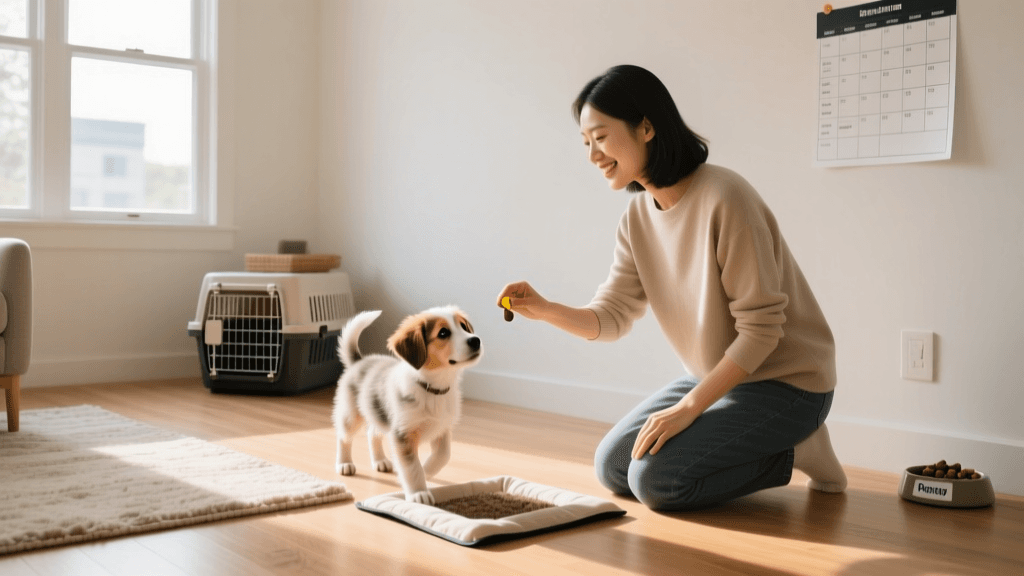
- Days 1-3 (The Decompression Phase): Limit visitors and outings. Establish a strict potty schedule (taking the puppy out every 2 hours, immediately upon waking, and 15 minutes after meals). Set up an exercise pen attached to their crate to create a safe 'puppy zone'.
- Days 4-10 (Routine Building): Introduce handling exercises. Gently touch their paws, ears, and mouth while offering high-value treats like boiled chicken. This desensitization is crucial for future grooming and veterinary visits, especially for sensitive breeds like the Frenchie or high-energy breeds like the Collie.
- Days 11-20 (Safe Socialization): Begin environmental exposure. Sit on a park bench with your puppy and reward them with kibble for calmly observing passing bicycles, joggers, and other dogs from a safe distance.
- Days 21-30 (Foundation Training): Start formal marker training (using a clicker or a verbal 'Yes!'). Focus on capturing calm behaviors and teaching foundational cues like 'sit', 'down', and 'touch' (hand target) in short, 3-minute sessions to prevent mental burnout.
Selecting the right breed is the first and most important step in responsible puppy care. By understanding the specific financial, physical, and behavioral demands of the Golden Retriever, French Bulldog, and Border Collie, you can ensure a harmonious first year and a lifetime of companionship.
robin-maitland
All our authors care for dogs every day — read more of their work on the authors page.