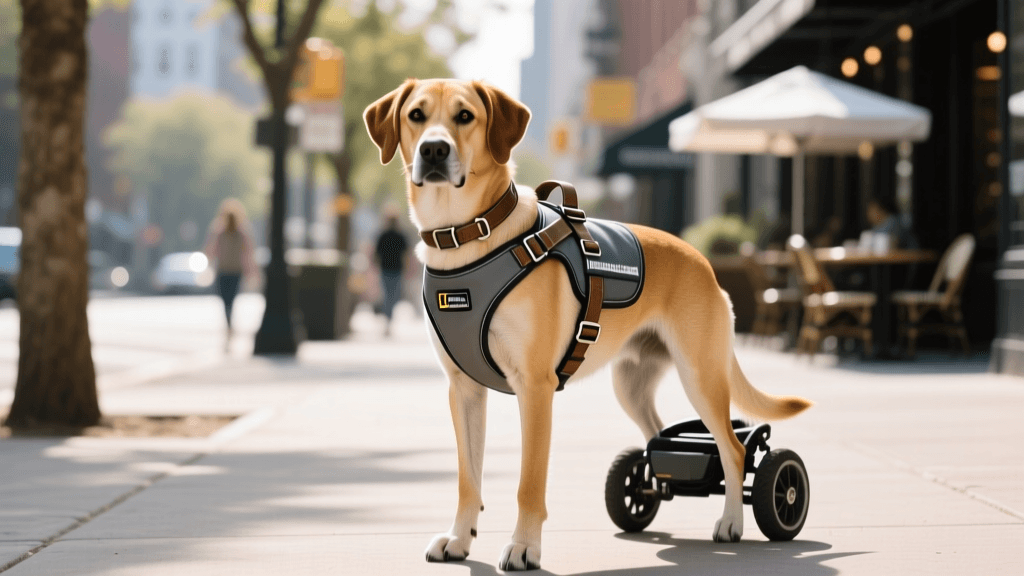
Getting a Mobility Service Dog in 2026: Breeds and Gear Guide
Discover the best mobility service dog breeds, custom harness options, and 2026 training costs to find the perfect working companion for your needs.
Understanding Mobility Assistance Dogs in 2026
Getting a mobility service dog is a profound, life-changing decision that requires careful planning, significant financial investment, and a deep understanding of canine biomechanics. Unlike emotional support animals, mobility assistance dogs are rigorously trained to perform specific physical tasks that mitigate their handler's disability. These tasks include providing brace support for standing or walking, counterbalancing to prevent falls, retrieving dropped items, and even pulling manual wheelchairs over short distances.
As of 2026, the demand for highly trained mobility dogs has surged, leading to updated breeding standards and advanced ergonomic gear designed to protect the dog's skeletal structure. According to the Assistance Dogs International (ADI), modern mobility dogs must pass stringent orthopedic screenings and advanced public access tests before being placed with a handler. If you are considering getting a mobility service dog this year, understanding the physical requirements, breed capabilities, and necessary gear is essential for the long-term health of your working partner.
Top Breeds for Mobility and Brace Work
Not every dog is physically suited for mobility work. Brace and counterbalance tasks place immense stress on a dog's joints, spine, and shoulders. Therefore, selecting a breed with the correct structural build, weight, and temperament is critical. The general rule of thumb in the service dog community is that a mobility dog must weigh at least 50 pounds and possess a sturdy, broad-chested frame to safely support human weight.
1. Great Dane
Great Danes are often considered the gold standard for heavy brace work and wheelchair pulling due to their massive size and height. Standing up to 32 inches at the shoulder, they provide an excellent natural brace height for taller handlers. However, their lifespan is notably shorter, and joint health must be meticulously monitored.
2. Bernese Mountain Dog
With a calm demeanor and a robust, heavy-boned structure, the Bernese Mountain Dog is an exceptional choice for counterbalance and light brace work. Their thick double coats make them ideal for handlers living in colder climates, though they require extensive grooming and climate control in the summer months.
3. Labrador Retriever
While generally lighter than Danes or Bernese, field-bred and heavily boned Labrador Retrievers are the most common mobility dogs in 2026. They excel at retrieving, opening doors, and providing light counterbalance. Their eagerness to please and high trainability make them a favorite among ADI-accredited training programs.
4. Golden Retriever
Similar to Labs, Golden Retrievers offer a softer temperament and high emotional intelligence, making them ideal for handlers who require both mobility assistance and psychiatric support. They are best suited for light mobility tasks rather than full-weight bracing.
Breed Comparison Chart for Mobility Tasks
| Breed | Weight Range | Height | Best Mobility Task | Orthopedic Risk |
|---|---|---|---|---|
| Great Dane | 110 - 175 lbs | 28 - 32 in | Heavy brace, wheelchair pull | High (Hip/Elbow Dysplasia) |
| Bernese Mountain Dog | 70 - 115 lbs | 23 - 27.5 in | Counterbalance, light brace | Moderate-High (Joint issues) |
| Labrador Retriever | 55 - 85 lbs | 21.5 - 24.5 in | Retrieve, door pull, light brace | Moderate (Hip/Elbow) |
| Golden Retriever | 55 - 75 lbs | 21.5 - 24 in | Retrieve, grounding, light brace | Moderate (Hip/Elbow) |
Note: When acquiring a puppy or adult prospect for mobility work, always verify the parents' health clearances through the Orthopedic Foundation for Animals (OFA). Dogs with fair or poor hip scores must never be used for brace work.
Essential 2026 Gear: Harnesses and Paw Protection
Equipping your mobility service dog with the correct gear is not just about identification; it is a matter of biomechanical safety. Using a standard walking harness for brace work can cause severe spinal and tracheal injuries. In 2026, the industry standard for mobility gear focuses on weight distribution and ergonomic padding.
The Bold Lead Designs Mobility Harness
The Bold Lead Designs Mobility Harness remains the premier choice for handlers and trainers. Priced around $450 in 2026, this custom-fitted harness features a rigid, padded handle that allows the handler to lean on the dog without the harness shifting or compressing the dog's ribcage. The harness distributes the downward force across the dog's chest and sternum rather than the spine. It also includes a martingale-style neck piece to prevent the dog from slipping backward out of the gear during a brace command.
Paw Protection: Muttluks and Rex Specs
Mobility dogs often work on harsh surfaces like hot asphalt, icy sidewalks, or slippery indoor tiles. Protecting their paw pads is vital for maintaining traction and preventing burns or abrasions. The Muttluks Pawz or high-traction working dog boots (approx. $95 per set) provide essential grip when a dog is asked to counterbalance on smooth surfaces. Additionally, for handlers in bright or debris-heavy environments, protective eyewear like Rex Specs ensures the dog's vision remains uncompromised while working in public spaces.
Preparing Your Home for a Large Working Dog
Bringing a large mobility dog into your home requires environmental modifications to ensure the dog can work safely and rest comfortably. Large breeds are highly susceptible to joint degradation, and your home environment must mitigate these risks.
- Non-Slip Flooring: Hardwood and tile floors are hazardous for large working dogs. Invest in interlocking foam mats or secure, low-pile non-slip area rugs in all primary working and resting zones to prevent splaying and hip strain.
- Orthopedic Resting Zones: A high-quality orthopedic bed is non-negotiable. The Big Barker 7-inch Pillow Top Orthopedic Dog Bed (approx. $330 in 2026) is clinically proven to prevent joint pain and is large enough to support a Great Dane or Bernese Mountain Dog's full frame.
- Accessible Ramps: If your dog needs to access furniture or vehicles, use ramps with a gentle incline (no steeper than an 18-degree angle) and a minimum width of 24 inches to accommodate the dog's broad stance and harness.
- Crate Sizing: For a Great Dane or large Bernese, a 54-inch heavy-duty steel crate is necessary. Ensure the crate has a raised, padded cot inside rather than a flat plastic pan to promote joint circulation during rest.
2026 Training Timelines and Financial Breakdown
The financial and temporal investment required to obtain a fully trained mobility service dog is substantial. Handlers generally have two routes: applying to an ADI-accredited program or owner-training with the help of a professional service dog trainer.
ADI-Accredited Programs
In 2026, the average cost of a fully trained mobility dog from an accredited program ranges from $35,000 to $55,000. This price reflects the extensive veterinary care, specialized mobility task training, and public access conditioning the dog receives over 18 to 24 months. While the upfront cost is high, many non-profit organizations offer fundraising assistance, grants, and scholarship programs to help offset the financial burden.
Owner-Training Route
Owner-training is significantly cheaper in terms of upfront capital but requires immense dedication. Expect to spend between $4,000 and $8,000 over two years on professional training sessions, specialized gear, and veterinary clearances. The timeline for owner-training a mobility dog is typically 2 to 3 years, as the dog must physically mature before any heavy brace work can begin.
Important 2026 ADA Guideline: Under the Americans with Disabilities Act (ADA), service dogs in training do not have federal public access rights. Handlers must work with a professional trainer who has legal access to public venues to properly socialize and train the dog in real-world environments before the dog officially graduates to full service status.
Navigating Public Access and Legal Rights
Once your mobility service dog is fully trained and task-ready, you are protected under federal law. The ADA mandates that mobility service dogs are permitted in all public areas where the general public is allowed, including restaurants, hospitals, and public transit. Staff members are legally only allowed to ask two questions: (1) Is the dog a service animal required because of a disability? and (2) What work or task has the dog been trained to perform?
As a handler, it is your responsibility to ensure your dog remains under control at all times. A mobility dog must be harnessed, leashed, or tethered unless these devices interfere with the service animal's work or the individual's disability prevents using them. In 2026, public awareness of service dog etiquette has improved, but handlers must still be prepared to advocate for their rights calmly and confidently. Maintaining a detailed training journal and carrying a veterinary health certificate can help smooth over any unexpected access challenges while traveling with your mobility partner.
priya-sutaria
All our authors care for dogs every day — read more of their work on the authors page.


