Best Mobility Service Dog Home Modifications for 2026
Discover essential 2026 home modifications, smart gear, and rigid harnesses for mobility service dogs. Ensure ADA compliance and canine comfort today.
Introduction to Mobility Service Dogs in 2026
Welcoming a mobility service dog into your life is a transformative experience that fosters independence, safety, and companionship. As we navigate 2026, the landscape of service dog integration has evolved significantly. Advances in smart home technology, ergonomic canine gear, and a deeper understanding of large-breed ergonomics have made it easier than ever to prepare your living space for a working dog. Mobility assistance dogs—typically larger breeds like Labrador Retrievers, Golden Retrievers, Bernese Mountain Dogs, and German Shepherds—are trained to perform physically demanding tasks such as bracing for balance, pulling wheelchairs, retrieving dropped items, and opening doors. Because these tasks require significant physical exertion and spatial awareness, your home environment must be meticulously optimized to protect both the dog's joints and your own accessibility. This comprehensive guide outlines the exact home modifications, gear selections, and spatial requirements you need to implement in 2026 to ensure a seamless transition for your mobility service dog.
Understanding Mobility Tasks and Spatial Requirements
Before purchasing gear or tearing up floors, it is crucial to understand the physical footprint a mobility dog requires. Unlike emotional support animals or smaller medical alert dogs, mobility dogs must have ample room to maneuver alongside a wheelchair, walker, or an individual with an unsteady gait. According to the ADA National Network, service animals must be permitted to accompany their handlers in all areas where the public is allowed, but preparing your private residence requires going beyond basic legal compliance to ensure functional comfort. A mobility dog performing a brace task needs a solid, non-slip base to absorb the handler's weight without sustaining orthopedic injuries. Furthermore, when navigating tight hallways or turning corners, a dog wearing a rigid mobility harness extends the handler's overall footprint by at least two to three feet. Consequently, standard residential pathways must be cleared of clutter, and furniture arrangements should prioritize wide, unobstructed transit lanes measuring a minimum of 36 to 48 inches in width.
Crucial Home Modifications for Accessibility
1. Upgrading to Slip-Resistant Flooring
Hardwood and polished tile are notoriously dangerous for large working dogs, especially when they are applying lateral force during a brace or pull task. In 2026, the gold standard for service dog homes is Luxury Vinyl Plank (LVP) featuring a specialized textured, slip-resistant wear layer. When selecting LVP, look for products with a minimum 20-mil wear layer and an embossed-in-register (EIR) finish that mimics the natural grain of wood, providing micro-traction for canine paw pads. Additionally, applying a pet-safe, invisible anti-slip floor coating can further enhance traction on existing hard surfaces. This simple modification prevents catastrophic cruciate ligament tears and hip dysplasia flare-ups, ensuring your dog remains healthy and capable of working for years to come.
2. Smart Door Mechanisms and Lever Handles
Traditional round doorknobs are impossible for a mobility dog to operate, even with specialized training. Replacing all interior and exterior doorknobs with ergonomic lever handles is a mandatory first step. However, 2026 has brought incredible advancements in smart home accessibility. Installing smart locks equipped with Bluetooth proximity sensors or low-profile, paw-accessible wall buttons allows your dog to trigger door releases by nudging a large, padded target button mounted at canine shoulder height. These systems integrate seamlessly with motorized door openers, drastically reducing the physical strain on the dog's teeth and neck that traditional rope-pull training can cause over time.
3. Custom Resting and Orthopedic Zones
A mobility dog works hard and requires a dedicated, draft-free recovery zone. Standard dog beds are insufficient for large breeds prone to joint degradation. Invest in an orthopedic bed constructed from high-density, temperature-regulating memory foam, measuring at least 48 by 36 inches for breeds over 70 pounds. Place this bed in a quiet corner of the main living area or bedroom where the dog can rest but still maintain visual contact with you. The bed cover should be made from a durable, ballistic nylon or heavy-duty canvas that can withstand the wear and tear of harness friction and frequent machine washing.
Selecting the Right Mobility Harness and Gear
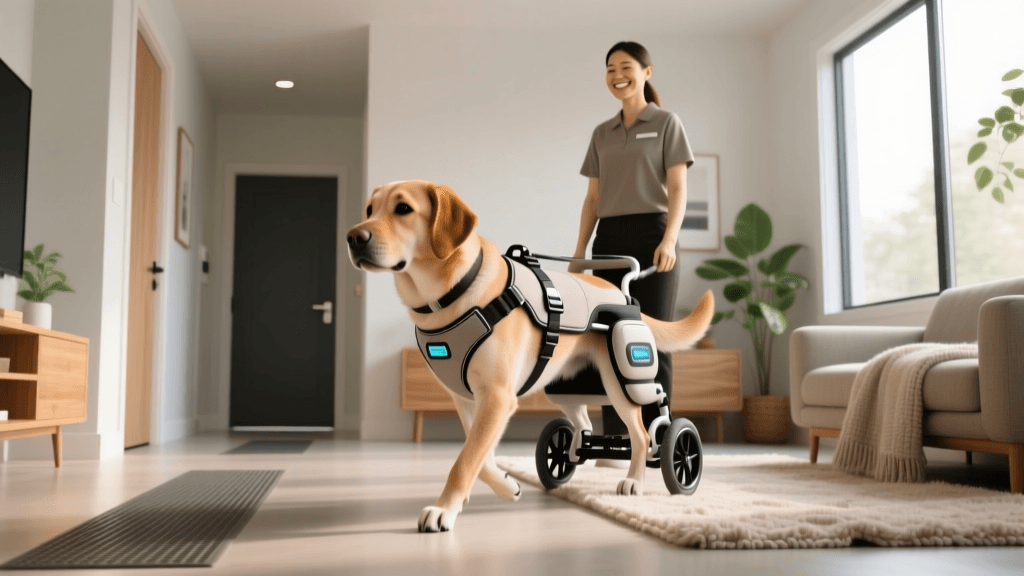
The harness is the most critical piece of equipment for a mobility service dog. In 2026, custom-fitted rigid handle mobility harnesses are the industry standard. Unlike soft walking harnesses, a rigid mobility harness features a solid, aircraft-grade aluminum or carbon-fiber handle that does not collapse when weight is applied. This rigidity is essential for balance support, as it prevents the harness from shifting and causing chafing or spinal misalignment in the dog. When measuring your dog for a custom harness, you will need precise measurements of the withers, the deepest part of the chest, and the girth. Look for harnesses that feature dual-padded girth straps, a breastplate with a sheepskin or neoprene liner to prevent sternum abrasion, and quick-release buckles for easy removal during rest periods. For wheelchair pulling tasks, a specialized pulling harness with a spreader bar and padded traces is required to distribute the load evenly across the dog's chest and shoulders, completely avoiding pressure on the trachea or spine.
Preparing Yard and Outdoor Relief Stations
Outdoor accessibility is just as important as interior modifications. If you have a yard, ensure it is secured with a minimum six-foot privacy fence to prevent distractions and keep your working dog safe from wildlife or off-leash neighborhood pets. For the relief area, avoid rough gravel or thorny landscaping that can damage paw pads. Instead, designate a specific quadrant of the yard with soft, short-blade artificial turf designed for high drainage and easy sanitization. Install motion-sensor LED pathway lighting along the route from your back door to the relief station to ensure safe nighttime navigation for both you and your dog, particularly during inclement weather or late-night emergencies.
2026 Cost and Timeline Breakdown
Budgeting and planning are essential components of getting a mobility service dog. The following table outlines the estimated costs and timelines for essential home modifications and gear as of 2026. Keep in mind that prices can vary based on your geographic location, the specific breed of your dog, and the extent of your home's required renovations.
| Modification or Gear | Estimated Cost (2026) | Implementation Timeline |
|---|---|---|
| Slip-Resistant LVP Flooring (Per Room) | $800 - $1,500 | 2 - 4 Days |
| Lever Handle Replacements (Whole Home) | $150 - $400 | 1 Day |
| Smart Lock and Paw-Button System | $350 - $600 | 1 - 2 Days |
| Custom Rigid Mobility Harness | $450 - $900 | 3 - 6 Weeks (Custom Build) |
| Orthopedic Memory Foam Bed (Large) | $200 - $350 | 1 Week |
| Artificial Turf Relief Station (10x10) | $600 - $1,200 | 2 - 3 Days |
Training Integration and Legal Protections
Once your physical environment is prepared, the focus shifts to integrating the dog into your daily routines. Training a mobility service dog is a rigorous process that often takes 18 to 24 months, encompassing basic obedience, advanced task training, and exhaustive public access socialization. The U.S. Department of Housing and Urban Development (HUD) provides clear guidelines ensuring that individuals with disabilities are granted reasonable accommodations for their assistance animals, meaning landlords and homeowners associations must waive pet fees and breed restrictions for verified service dogs. However, it is your responsibility to ensure your dog is housebroken, well-behaved, and under your control at all times within your residence and shared community spaces. By combining a meticulously modified home environment with top-tier ergonomic gear and rigorous training, you set the foundation for a deeply rewarding, functional, and safe partnership with your mobility service dog in 2026 and beyond.
robin-maitland
All our authors care for dogs every day — read more of their work on the authors page.