Puppy Fear Periods & Reactivity Management: 2026 Guide
Learn how to manage puppy fear periods and early reactivity in 2026 using Adaptil pheromones, ThunderShirts, and structured desensitization protocols.
Navigating Puppy Reactivity and Anxiety in 2026
Raising a puppy in 2026 comes with unique challenges, particularly when it comes to early behavioral development and socialization. With shifts in urban living environments and the lasting generational impacts on canine breeding lines, veterinary behaviorists are seeing a noticeable increase in early-onset puppy reactivity and anxiety. If your puppy is displaying signs of fear, leash reactivity, or extreme hesitation during walks, you are not alone. Understanding the developmental milestones of your puppy's first year is critical to preventing lifelong behavioral issues. This comprehensive guide will walk you through identifying fear periods, reading subtle canine stress signals, and utilizing the most effective, science-backed calming products and desensitization protocols available today.
Understanding the Puppy Fear Periods
Puppies go through specific developmental windows known as 'fear periods.' During these times, a puppy's brain is highly receptive to environmental stimuli, and a single traumatic or highly stressful event can create a lasting negative association. According to the Humane Society of the United States, proper socialization during these windows is crucial, but it must be done carefully to avoid flooding the puppy with overwhelming experiences.
There are two primary fear periods in a puppy's first year:
- The First Fear Period (8 to 11 Weeks): This coincides with the time a puppy is typically brought to their new home. During this stage, puppies are naturally wired to be cautious of new objects, loud noises, and unfamiliar people. It is an evolutionary survival mechanism. Avoid forcing interactions, and never use harsh corrections during this window, as the puppy will directly associate the pain or fear with the trigger.
- The Second Fear Period (6 to 14 Months): Often occurring during adolescence, this period is highly variable depending on the breed and individual maturation rate. A puppy who was previously confident may suddenly become reactive to garbage cans, strangers, or other dogs. This is the stage where leash reactivity often first manifests, requiring immediate, positive counter-conditioning.
Reading Canine Stress Signals
Before you can manage reactivity, you must learn to speak your puppy's language. Reactivity is rarely born out of aggression; it is almost always rooted in fear and anxiety. By the time a puppy is barking or lunging, they have already been screaming in their native language. Watch for these early, subtle signs of anxiety:
- Whale Eye: The puppy turns their head away but keeps their eyes fixed on the trigger, showing the whites of their eyes.
- Lip Licking and Yawning: When not related to food or waking up, these are classic displacement behaviors indicating internal conflict and stress.
- Shake-Offs: Shaking their entire body as if wet, used to literally 'shake off' adrenaline after a stressful encounter.
- Freezing: A complete cessation of movement. A frozen puppy is a ticking time bomb for reactivity; do not pull their leash, as this can trigger a bite reflex.
Top Calming Products for Reactive Puppies in 2026
The pet care industry has made significant advancements in anxiety management. While products cannot replace training, they are invaluable tools for lowering a puppy's baseline stress levels so that learning can occur. Below is a comparison of the most effective, veterinarian-recommended calming aids available in 2026.
| Product | Mechanism | 2026 Est. Price | Best Use Case |
|---|---|---|---|
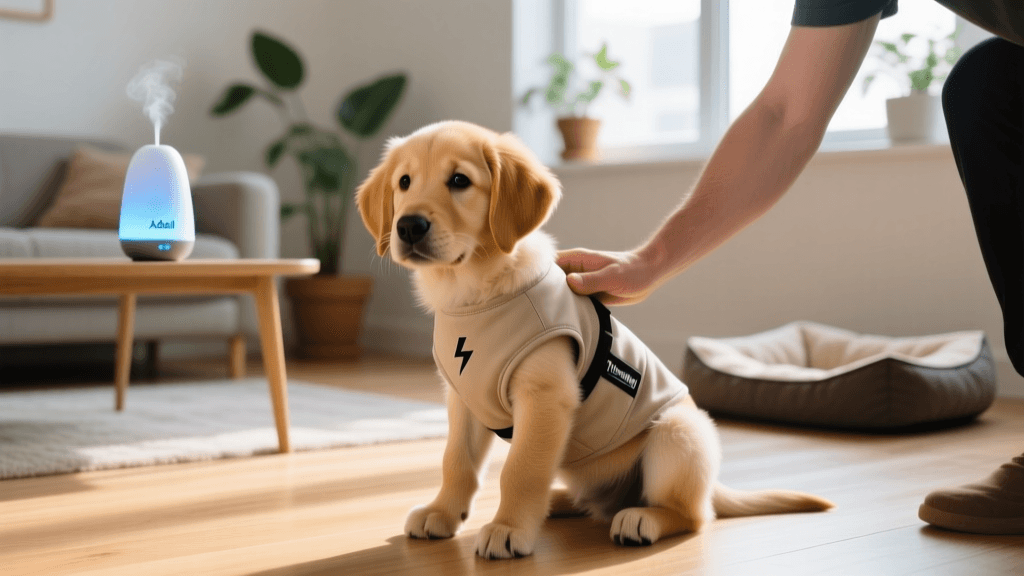
| Adaptil Calm Smart Diffuser | Synthetic Dog Appeasing Pheromone (DAP) | $65.00 | Lowering general household anxiety and aiding sleep. |
| ThunderShirt Classic | Constant, gentle swaddling compression | $48.00 | Acute stress events (thunderstorms, car rides, vet visits). |
| Zesty Paws Calming Bites | L-Theanine, Chamomile, Hemp Seed | $29.00 | Mild daily nervousness and separation anxiety. |
| Snuggle Puppy Behavioral Aid | Physical heartbeat and thermal heat pack | $45.00 | Nighttime crate training and early separation distress. |
When utilizing the Adaptil Calm Diffuser, place it in the room where your puppy spends the most time, ideally near their crate or safe space. The pheromones mimic those produced by a nursing mother, signaling safety to the puppy's brain. For outdoor reactivity, pairing a ThunderShirt with a well-fitted Y-front harness can provide a dual layer of security and comfort, reducing the dog's physiological fight-or-flight response when encountering triggers on walks.
Step-by-Step Desensitization Protocol for Early Reactivity
If your puppy is reacting to environmental triggers like strangers, bicycles, or other dogs, you must implement a structured desensitization and counter-conditioning protocol. The American Veterinary Society of Animal Behavior (AVSAB) strongly advocates for reward-based, force-free methods to address fear-based reactivity, noting that punitive measures only exacerbate the underlying anxiety.
Step 1: Establish a Baseline (Threshold Training)
Every reactive puppy has a 'threshold'—the distance at which they notice a trigger but remain under their stress limit. At this distance, your puppy should be able to make eye contact with you and readily accept high-value treats (such as boiled chicken, freeze-dried beef liver, or low-sodium cheese). If your puppy refuses the treat, you are too close to the trigger. Find the exact distance where your puppy is aware of the scary object but still capable of eating. This is your working baseline.
Step 2: The Engage-Disengage Game
This is the gold standard for managing leash reactivity. Armed with a clicker (or a verbal marker word like 'Yes!') and a pouch of high-value treats, follow this sequence:
- Engage: Allow your puppy to look at the trigger from a sub-threshold distance. The moment they look at the trigger, click or say 'Yes!'
- Disengage: Immediately present the treat. Your puppy will turn away from the trigger to eat the reward. This builds a positive neurological association: 'Seeing the scary thing predicts amazing food.'
- Progression: After several successful repetitions over multiple days, wait for the puppy to look at the trigger and then voluntarily turn back to look at you before you mark and reward. This teaches the puppy to self-regulate and check in with you when they feel uncertain.
Step 3: Utilizing Calming Pheromones During Exposure
To accelerate the desensitization process, apply a pheromone spray (like Adaptil Transport Spray) to your puppy's harness or bandana 15 minutes before heading out for a training walk. This lowers their baseline arousal, making the threshold distance slightly closer and the learning curve less steep. Combine this with a structured 'sniffari'—allowing the puppy to engage in deep sniffing in a quiet grassy area before the walk begins. Sniffing naturally lowers a dog's heart rate and engages the parasympathetic nervous system.
Nutrition and the Gut-Brain Axis in Anxious Puppies
In 2026, veterinary nutritionists are placing a heavy emphasis on the gut-brain axis when treating canine anxiety. A puppy experiencing chronic stress often suffers from gastrointestinal upset, which in turn produces more cortisol, creating a vicious cycle. Feeding a high-quality diet rich in prebiotics, probiotics, and Omega-3 fatty acids (specifically EPA and DHA from wild-caught fish oils) can significantly improve cognitive function and emotional resilience. Consider adding a veterinary-formulated probiotic supplement containing Bifidobacterium longum (BL999), which has been clinically shown to reduce anxious behaviors in canines by modulating the central nervous system.
When to Seek Professional Help
While mild fear periods can be managed at home with patience, consistency, and the right tools, severe reactivity requires professional intervention. If your puppy is exhibiting redirected aggression, biting the leash, or showing signs of extreme panic (such as excessive drooling, frantic escape attempts, or loss of bowel control), it is time to consult a professional. The ASPCA recommends seeking out a certified professional dog trainer (CPDT-KA) or a board-certified veterinary behaviorist (DACVB) who specializes in fear-free, positive reinforcement methodologies.
Remember that managing a reactive puppy is a marathon, not a sprint. Celebrate the micro-victories—a single moment of eye contact, a relaxed tail wag, or a successful threshold retreat. By combining modern calming aids with structured, empathetic desensitization protocols, you can guide your anxious puppy through their fear periods and lay the foundation for a confident, well-adjusted adult dog.
aaron-whyte
All our authors care for dogs every day — read more of their work on the authors page.