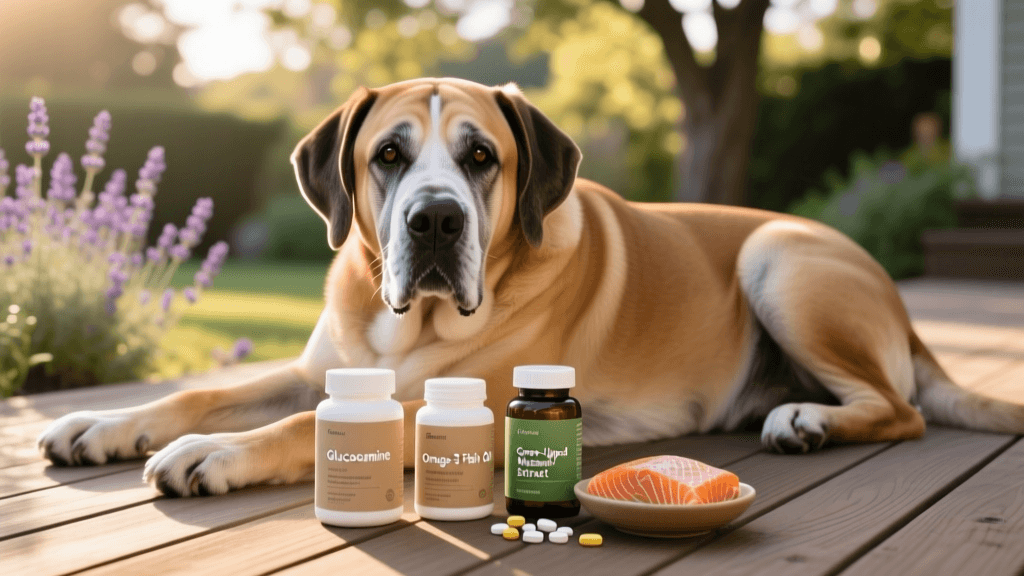
Best Joint Supplements for Large Dogs in 2026: Vet-Approved Guide
Discover the best joint supplements for large dogs in 2026. Learn how to integrate glucosamine, omega-3s, and green-lipped mussel into daily routines.
The Reality of Joint Health in Large Breeds
Large breed dogs like German Shepherds, Golden Retrievers, Bernese Mountain Dogs, and Labrador Retrievers bring immense joy, loyalty, and energy to our lives. However, their impressive size comes with a biological tax: accelerated joint wear and tear. As we navigate 2026, veterinary orthopedics has shifted dramatically from reactive pain management to proactive joint preservation. Osteoarthritis (OA) is no longer considered just an 'old dog' disease. In fact, microscopic cartilage degradation and synovial inflammation begin long before your dog ever shows a visible limp or hesitates to jump into the car.
According to the American Kennel Club, up to 20% of dogs over the age of one, and a staggering 80% of dogs over the age of eight, show clinical or radiographic signs of osteoarthritis. For large and giant breeds, these numbers skew even higher, and the onset is often earlier due to the sheer mechanical load placed on their hips, knees, and shoulders. Understanding how to support your dog's cartilage, synovial fluid, and surrounding musculature is one of the most impactful things you can do to ensure their golden years are truly golden.
Key Ingredients to Look For in 2026
Walking down the pet supplement aisle or browsing online marketplaces in 2026 can be overwhelming. Marketing buzzwords often overshadow clinical efficacy. When selecting a joint supplement for a large breed dog, you must look beyond the front label and examine the active ingredient panel for these four scientifically backed compounds.
1. Glucosamine HCl and Chondroitin Sulfate
Glucosamine is a natural amino sugar that serves as a fundamental building block for glycosaminoglycans (GAGs), which are essential for cartilage matrix formation. While glucosamine sulfate is common in human supplements, veterinary formulations typically utilize Glucosamine Hydrochloride (HCl) due to its higher concentration of active glucosamine and superior stability in chewable formats. Chondroitin sulfate works synergistically with glucosamine by inhibiting the destructive enzymes (like metalloproteinases) that break down cartilage, while also drawing water into the joint space to improve shock absorption. For a 70-pound dog, clinical dosages generally hover around 1000mg of Glucosamine and 800mg of Chondroitin daily during the initial loading phase.
2. Omega-3 Fatty Acids (EPA and DHA)
Omega-3s are not technically 'joint builders,' but they are arguably the most critical component for managing joint inflammation. The specific marine-derived fatty acids EPA (eicosapentaenoic acid) and DHA (docosahexaenoic acid) compete with pro-inflammatory Omega-6 fatty acids for the COX and LOX enzyme pathways, effectively reducing the production of inflammatory prostaglandins in the joint capsule. The Tufts University Cummings School of Veterinary Medicine emphasizes that pet owners must look at the specific EPA and DHA concentrations on the back of the bottle, rather than just the total 'fish oil' volume on the front. For a large dog with active joint inflammation, a combined EPA/DHA dose of 1000mg to 1500mg per day is often recommended by veterinary nutritionists.
3. Green-Lipped Mussel (Perna canaliculus)
Sourced from the pristine waters of New Zealand, Green-Lipped Mussel (GLM) has become a staple in premium 2026 joint formulations. GLM is unique because it contains ETA (eicosatetraenoic acid), a rare Omega-3 that actively binds to the enzymes responsible for cartilage degradation. Furthermore, GLM provides a natural, highly bioavailable matrix of glycosaminoglycans, zinc, and amino acids that synthetic supplements struggle to replicate. It is particularly effective for dogs with mild to moderate stiffness who may not yet require prescription NSAIDs.
4. Undenatured Type II Collagen (UC-II)
UC-II represents a fascinating shift in joint supplementation. Rather than providing raw building blocks, UC-II works via a mechanism called 'oral tolerance.' When the undenatured collagen interacts with the gut-associated lymphoid tissue (GALT) in the dog's intestines, it trains the immune system to stop attacking the body's own Type II collagen in the joints. Because it relies on immune modulation rather than systemic absorption, the required dose is incredibly small—typically just 40mg per day—making it an excellent, low-calorie option for large dogs prone to obesity.
Top Joint Supplement Formats Compared
Choosing the right delivery method is just as important as the ingredients. A supplement is only effective if your dog actually consumes it consistently. Below is a comparison of the primary formats available on the market today.
| Format | Pros | Cons | Avg. Monthly Cost (70lb Dog) | Best For |
|---|---|---|---|---|
| Soft Chews | High palatability, easy to dose, feels like a daily treat | Contains extra calories and binders, higher cost per active dose | $55 - $85 | Picky eaters, training-oriented dogs, owners who travel frequently |
| Soft Gels / Capsules | Precise dosing, no extra calories, longer shelf life, protects oils from oxidation | Difficult to administer to pill-shy dogs, can cause 'fish burps' | $30 - $50 | Owners comfortable with pilling, calorie-restricted dogs on weight management plans |
| Liquids / Pumps | Fast absorption, easily mixed into wet food, highly customizable dosing | Messy, requires refrigeration after opening, shorter shelf life | $40 - $60 | Senior dogs with dental issues, raw feeders, dogs that eat homemade diets |
| Powders | Cost-effective for multi-dog homes, easily hidden in moist food | Can alter food texture, requires thorough mixing to avoid clumping | $25 - $45 | Multi-pet households, budget-conscious owners, dogs that eat wet food |
Integrating Supplements into Your Daily Routine
Consistency is the golden rule of joint supplementation. Unlike prescription pain medications that work within hours, nutraceuticals require time to alter the biochemical environment of the joint. It typically takes 4 to 6 weeks of daily administration to see noticeable improvements in mobility, stair climbing, and morning stiffness.
Here is a practical, actionable daily routine for a 75-pound large breed dog:
- Morning (Breakfast): Administer your Omega-3 fish oil liquid or soft gel. Fats are best absorbed when given with a meal containing dietary fat. If you use a pump, dispense it directly over the kibble and stir to ensure it coats the food.
- Afternoon (Activity): Keep your dog moving with low-impact exercises. Swimming, leash walks on soft surfaces, and targeted canine conditioning exercises (like cavaletti poles) help circulate synovial fluid, which delivers the supplements you are feeding directly into the avascular cartilage.
- Evening (Bedtime): Provide your Glucosamine/Chondroitin or UC-II soft chew as a 'bedtime treat.' This creates a positive behavioral association and ensures the supplement is given at a consistent time every day. If your dog is on a calorie-restricted diet, simply deduct the calories of the chew from their daily kibble allowance.
Pro Tip: Take a 15-second video of your dog walking and getting up from a resting position on Day 1, and again on Day 45. Because you see your dog every day, gradual improvements in their gait and mobility are often imperceptible to the naked eye. Video evidence provides objective proof of the supplement's efficacy.
Real Costs: Budgeting for Canine Joint Care in 2026
Managing a large breed dog's joint health is a financial commitment. In 2026, premium, clinically tested joint supplements (such as those bearing the NASC seal of quality) typically cost between $40 and $85 per month for a large dog. While generic, budget-friendly alternatives can be found for $20 a month, they often rely on sub-therapeutic dosages, low-quality ingredients sourced from unverified suppliers, and lack third-party testing for heavy metals or contaminants.
When budgeting, it is crucial to understand the regulatory landscape. The U.S. Food and Drug Administration (FDA) notes that animal dietary supplements are not subject to the same rigorous pre-market approval process as pharmaceutical drugs. This means the burden of quality assurance falls on the manufacturer. Always look for products that display the National Animal Supplement Council (NASC) Quality Seal, which indicates the company has passed independent facility audits and adheres to strict labeling and adverse event reporting guidelines.
When to Consult Your Veterinarian
While joint supplements are generally safe and well-tolerated, they are not a replacement for veterinary diagnosis. If your dog is exhibiting acute lameness, crying out when touched, or refusing to bear weight on a limb, you must see a veterinarian immediately to rule out tears, fractures, or neurological issues.
Furthermore, if your dog is already taking prescription Non-Steroidal Anti-Inflammatory Drugs (NSAIDs) like Carprofen, Meloxicam, or Galliprant, or neurological pain modulators like Gabapentin, you must consult your vet before introducing high-dose Omega-3s or systemic joint supplements. High doses of fish oil can have a mild blood-thinning effect, which may interact with certain medications or complicate upcoming surgical procedures. By combining high-quality, targeted nutraceuticals with veterinary-guided weight management and physical therapy, you can profoundly impact your large dog's quality of life, keeping them active, comfortable, and happy well into their senior years.
hannah-wickes
All our authors care for dogs every day — read more of their work on the authors page.