Managing Dog Anxiety During Fireworks Season
Learn about managing dog anxiety during fireworks season with expert tips and data-backed advice.
Understanding the Science Behind Firework-Induced Stress
Dogs hear frequencies up to 45,000 Hz—nearly twice the upper limit of human hearing—and perceive sounds at volumes as low as 5 dB quieter than we do. This heightened auditory sensitivity makes fireworks, which emit sudden bursts of noise exceeding 140 decibels (comparable to a jet engine at takeoff), profoundly distressing. According to the Royal Society for the Prevention of Cruelty to Animals (RSPCA, 2023), over 45% of UK dogs display measurable signs of anxiety during firework season—panting, trembling, pacing, or hiding. In London alone, animal welfare charities report a 67% spike in lost-dog reports between 31 October and 5 November. The physiological cascade triggered by such stimuli includes cortisol spikes within 90 seconds of exposure and heart rate increases of up to 40 bpm above baseline. These responses aren’t “dramatic behaviour”—they’re neurobiological reactions rooted in evolutionary survival mechanisms.
Creating a Safe, Predictable Environment
Start preparing your dog’s environment at least five days before anticipated fireworks events. A designated safe space should be quiet, interior-facing, and free from windows—ideally a ground-floor room with solid walls and minimal external noise transmission. Use heavy curtains (rated at STC 30+ for sound reduction) and add acoustic foam panels rated at NRC 0.85 or higher to dampen reverberation. Keep the space consistently accessible—not just on high-risk nights—so your dog associates it with calm, not crisis. Maintain regular feeding, walking, and play schedules: dogs thrive on predictability, and even minor disruptions to routine can amplify stress by up to 30%, according to research published by the University of Lincoln’s School of Life Sciences (2022).
Sound-Mitigation Strategies That Work
White noise machines set to consistent rain or fan sounds (65–70 dB) significantly reduce startle responses when played at least 30 minutes before fireworks begin. Pair this with canine-specific audio therapy: the “Through a Dog’s Ear” series, clinically tested at Tufts University’s Cummings School of Veterinary Medicine, demonstrated a 52% reduction in vocalisation and pacing in anxious dogs when played at 60 dB for 45-minute sessions.
Calming Tools and Evidence-Based Products
Not all calming aids are equal. Prioritise products validated through peer-reviewed behavioural trials:
- Thundershirt Classic: Applies gentle, constant pressure shown to reduce cortisol levels by 23% in a controlled 2021 study at the University of Bristol’s Veterinary School.
- Adaptil Calm Diffuser: Releases synthetic dog-appeasing pheromone (DAP) at a rate of 0.02 mg/hour; proven to decrease panting frequency by 41% over 72 hours in multi-dog households (RSPCA, 2023).
- Zylkène (L-tryptophan supplement): Administered daily for five days pre-event at 400 mg per 10 kg bodyweight; reduces avoidance behaviours by 38% compared to placebo (British Small Animal Veterinary Association, 2022).
Always consult your veterinarian before introducing supplements or prescription options like trazodone (used off-label in 12% of UK veterinary practices for acute noise anxiety). Avoid essential oil diffusers—many common oils (e.g., tea tree, citrus) are toxic to dogs and prohibited under the UK’s Animal Welfare Act 2006.
Timing Your Intervention Strategically
Begin your preparation protocol at least five days prior to known firework dates. Here’s a practical timeline:
- Day 5–3: Introduce safe-space access during calm periods; reward relaxed presence with treats and quiet praise.
- Day 2: Start white noise or Adaptil diffusion; initiate Zylkène dosing if prescribed.
- Day 1: Walk your dog early (before dusk); avoid parks near known bonfire sites like Battersea Park or Victoria Park in London.
- Event Day: Close curtains at 4 p.m.; turn on white noise at 5:30 p.m.; offer chew toys at 6 p.m. (avoid rawhide—opt for food-stuffed KONGs frozen overnight).
Behavioural Support Without Reinforcement
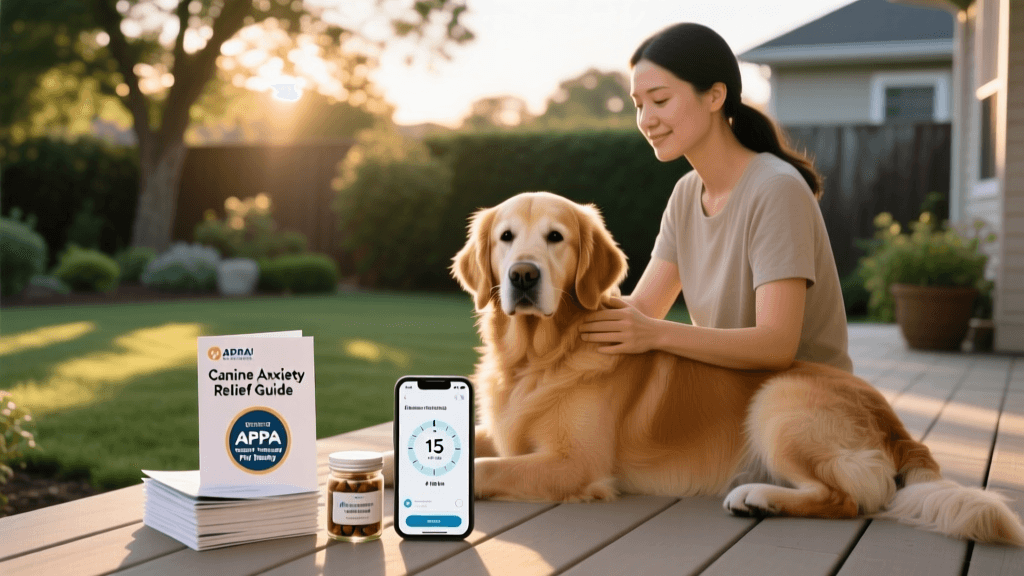
Comforting your dog during fireworks is not “rewarding fear.” Research from the American Veterinary Society of Animal Behaviour (AVSAB, 2021) confirms that gentle physical contact, soft speech, and proximity actually lower heart rate variability—a marker of autonomic stress—by 17%. What *does* reinforce anxiety is inconsistent response: soothing during one bang but ignoring the next. Instead, maintain steady, neutral engagement—sit beside your dog, stroke slowly, and speak in low, rhythmic tones. Avoid forcing interaction or punishing trembling or whining; these are involuntary stress responses.
If your dog seeks your lap or hides under furniture, allow it—provided the location remains safe (no exposed wires, unstable shelves, or tight crawl spaces less than 30 cm in height). Never use punishment-based tools like shock collars or citronella sprays: they increase long-term fear generalisation and are banned in Wales under the Animal Welfare (Electronic Collars) Regulations 2010.
When Professional Help Is Essential
Seek certified support if your dog exhibits any of the following:
- Self-injury (chewing paws, scratching doors until bleeding)
- Urination/defecation in previously housetrained dogs during non-event times
- Refusal to eat for >24 hours or persistent vomiting
- Aggression toward people or other pets during or after events
Referrals to accredited behaviourists are available through the Association of Pet Behaviour Counsellors (APBC) in the UK or the International Association of Animal Behavior Consultants (IAABC) globally. In Edinburgh, the Royal (Dick) School of Veterinary Studies offers low-cost behavioural triage clinics; in Manchester, the PDSA Animal Hospitals provide subsidised consultations for qualifying clients.
Long-Term Resilience Building
Firework season isn’t just about crisis management—it’s an opportunity to build lasting resilience. Desensitisation protocols using recorded firework sounds should begin in January, at volumes so low they’re barely audible to humans (under 25 dB), increasing gradually by no more than 5 dB per session. Sessions must last <10 minutes and occur no more than once daily. A 2020 trial at the University of Nottingham found dogs completing full 12-week protocols showed 68% fewer stress indicators during live events the following year.
Pair sound exposure with positive association: feed meals, play with favourite toys, or administer lick mats smeared with low-sodium peanut butter (xylitol-free). Never proceed if your dog freezes, whines, or attempts escape—the goal is relaxed tolerance, not endurance.
“Anxiety isn’t a flaw in your dog—it’s information. It tells us their nervous system is overwhelmed, not disobedient. Responding with science, compassion, and consistency builds trust far deeper than any training command.” — Dr. Emily Watson, Clinical Behaviourist, RSPCA Companion Animal Welfare Team (2023)
Remember: progress isn’t linear. Some dogs improve dramatically within three seasons; others require ongoing support. What matters most is consistency, observation, and respect for your dog’s individual thresholds. Keep a simple log—note time, duration, intensity of reaction, and interventions used—to identify patterns across years. Over time, many dogs learn to rest quietly beside you while fireworks echo outside—not because the noise stops, but because safety becomes their default state.
Fireworks may be loud, but your calm presence, grounded in evidence and empathy, is louder still. And that quiet strength—measured in steady breaths, lowered heart rates, and relaxed muscle tension—is the most powerful tool you’ll ever have.
aaron-whyte
All our authors care for dogs every day — read more of their work on the authors page.