Best Low-Energy Puppy Breeds For Remote Workers 2026
Discover the best low-energy puppy breeds for remote workers in 2026. Learn essential first-year care, potty training, and WFH socialization tips.
Why Low-Energy Puppies Are Ideal for Remote Workers
As hybrid and fully remote work models solidify in 2026, millions of professionals are leveraging their flexible schedules to welcome a puppy into their homes. However, sharing a home office with a dog requires careful consideration. While high-energy working breeds like Border Collies or Siberian Huskies might seem appealing, they often demand hours of vigorous exercise and mental stimulation that can severely disrupt your productivity and lead to destructive behaviors in a confined home environment.
For remote workers, the ideal canine companion is a low-energy, adaptable breed that is content to snooze under your desk while you tackle deep work, yet playful enough to provide a welcome screen break. According to the American Kennel Club, selecting a breed that matches your daily routine is the most critical factor in ensuring a harmonious work-from-home (WFH) lifestyle. This guide explores the best low-energy puppy breeds for remote workers and provides a comprehensive first-year care roadmap tailored to the home office environment.
Top 4 Puppy Breeds for Work-From-Home Professionals
1. Cavalier King Charles Spaniel
The Cavalier King Charles Spaniel is widely considered the ultimate lap dog. Weighing between 13 to 18 pounds as adults, these puppies are incredibly affectionate and thrive on proximity to their owners. During their first year, Cavaliers require moderate socialization and basic obedience training, but they lack the intense drive of sporting breeds. A typical first-year feeding schedule involves three small meals a day of high-quality, breed-appropriate kibble, transitioning to two meals by month six. Their primary WFH benefit is their tendency to sleep up to 18 hours a day as puppies, making them perfect, silent companions during long video conferences.
2. Bichon Frise
If your home office is small or you suffer from mild pet allergies, the Bichon Frise is an exceptional choice. Known for their hypoallergenic, powder-puff coats, Bichons are cheerful and adaptable. While they do have bursts of playful energy (often called the 'Bichon Blitz'), these episodes are brief and easily managed with a quick game of indoor fetch. First-year care for a Bichon requires a strict grooming commitment; you must establish a daily brushing routine early on and schedule professional grooming every four to six weeks to prevent painful matting. Their bright disposition makes them a joy to have in the room, and they rarely bark without a good reason.
3. Basset Hound
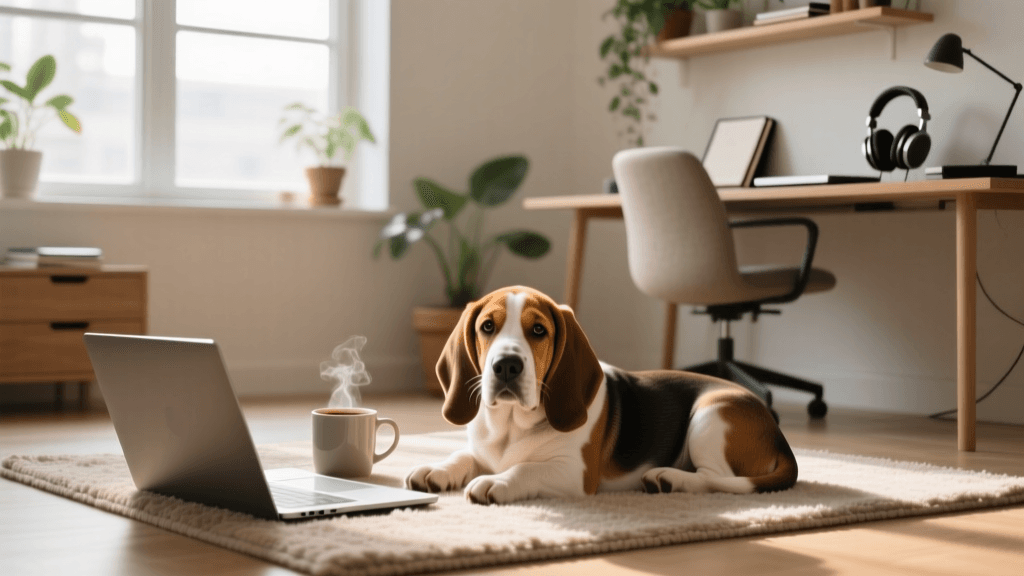
Don't let their long ears and soulful eyes fool you; Basset Hounds are notoriously low-energy and stubborn. As scent hounds, their idea of a perfect afternoon is following a fascinating smell across the yard and then sleeping heavily for the rest of the day. Potty training a Basset Hound puppy during your first year will require immense patience and high-value treats, as they are easily distracted by scents. However, once trained, their incredibly calm indoor demeanor makes them fantastic WFH companions. Just be prepared to manage their shedding and keep their long ears clean to prevent infections.
4. Pug
Pugs are the comedians of the dog world. They are highly sociable, deeply devoted to their humans, and require minimal exercise. A short morning walk and a brief evening play session are usually sufficient to tire out a Pug puppy. Because they are a brachycephalic (flat-faced) breed, first-year care must heavily focus on temperature regulation; ensure your home office is well-ventilated and air-conditioned during the warmer months of 2026 to prevent overheating. Pugs are notorious for snoring, which you may need to manage by investing in a high-quality noise-canceling headset for your professional calls.
Comparison Chart: WFH Puppy Breeds at a Glance
| Breed | Adult Weight | Daily Exercise Need | Trainability | WFH Suitability Score |
|---|---|---|---|---|
| Cavalier King Charles Spaniel | 13 - 18 lbs | 30 - 45 mins | High | 9.5 / 10 |
| Bichon Frise | 12 - 18 lbs | 30 - 60 mins | Moderate-High | 8.5 / 10 |
| Basset Hound | 40 - 65 lbs | 30 - 45 mins | Moderate | 8.0 / 10 |
| Pug | 14 - 18 lbs | 20 - 30 mins | Moderate | 9.0 / 10 |
First-Year Milestones: Managing Puppy Care on Zoom
Potty Training Between Meetings
The most challenging aspect of raising a puppy while working from home is managing potty breaks without disrupting your workflow. During the critical 8-to-16-week window, puppies need to eliminate frequently. Remote workers can effectively use the Pomodoro technique to align their work sprints with their puppy's biological needs. Work for 45 minutes, then take a 10-minute screen break to escort your puppy to their designated outdoor potty spot. According to the Humane Society, maintaining a rigid, predictable schedule is the fastest way to house-train a puppy and helps them understand what is expected of them in a busy household.
Teething and Cord Management
Between 3 and 6 months of age, your puppy will begin teething, and their natural instinct will be to chew on anything within reach. In a home office, laptop chargers, monitor cables, and ethernet wires are prime targets. Before bringing your puppy home, invest in heavy-duty, bite-proof cord concealers and elevate all power strips out of reach. To redirect their chewing, keep a rotation of durable rubber chew toys in your desk drawer. Stuffing these toys with puppy-safe peanut butter and freezing them overnight provides excellent relief for sore gums and can keep your puppy occupied for up to an hour while you are in a critical meeting.
Preventing Separation Anxiety in WFH Puppies
The single greatest risk for puppies raised by remote workers is separation anxiety. Because you are physically present in the home 24/7 during their crucial first year, the puppy may never learn how to self-soothe or tolerate being alone. When you eventually need to leave the house for a hybrid office day or a weekend errand, the dog may panic, leading to destructive behavior and excessive vocalization. The ASPCA strongly recommends practicing intentional departures. Even if you are just working from a local coffee shop for two hours, or stepping out to the mailbox, practice leaving your puppy in a secure playpen or crate. Start with five-minute absences and gradually build up to several hours, ensuring the puppy learns that your departure is temporary and safe.
Essential 2026 WFH Puppy Gear
To successfully balance your career and your puppy's developmental needs, leverage the latest pet technology available in 2026:
- Smart Pet Cameras with Treat Tossing: Devices like the latest Furbo models allow you to monitor your puppy from your smartphone while you are in another room, dispense treats to reward quiet behavior, and even use two-way audio to soothe them if they whine.
- Automated Puzzle Feeders: Instead of feeding your puppy from a bowl during your lunch break, use automated puzzle feeders that dispense kibble slowly. This provides vital mental stimulation and tires them out while you eat or take a personal call.
- Modular Indoor Playpens: A modular, aesthetically pleasing playpen placed near your desk allows your puppy to see you (reducing anxiety) while keeping them safely contained away from your office chair's wheels and your trash can.
Conclusion
Raising a puppy during the first year of their life while working from home is a highly rewarding experience, provided you choose the right breed and implement structured routines. Low-energy companion breeds like the Cavalier King Charles Spaniel, Bichon Frise, Basset Hound, and Pug offer the perfect balance of affection and independence for the modern remote worker. By proactively managing potty training schedules, puppy-proofing your office electronics, and intentionally practicing separations to prevent anxiety, you will raise a well-adjusted, happy dog who will be your best colleague for years to come.
beth-carrasco
All our authors care for dogs every day — read more of their work on the authors page.