Best Puppy Breeds For Remote Workers In 2026 Guide
Discover the best puppy breeds for remote workers in 2026. Learn about canine psychology, low-anxiety traits, and ideal companions for home offices.
The Psychology of the Home Office Dog
As hybrid and fully remote work models solidify in 2026, the home office has become a permanent fixture for millions of professionals. With this shift, the demand for the perfect 'co-worker' puppy remains incredibly high. However, choosing a puppy based solely on internet popularity or aesthetics often leads to severe behavioral mismatches. To truly understand which puppy will thrive in a home office environment, we must look beyond cuteness and dive deep into canine psychology, breed instincts, and genetic predispositions.
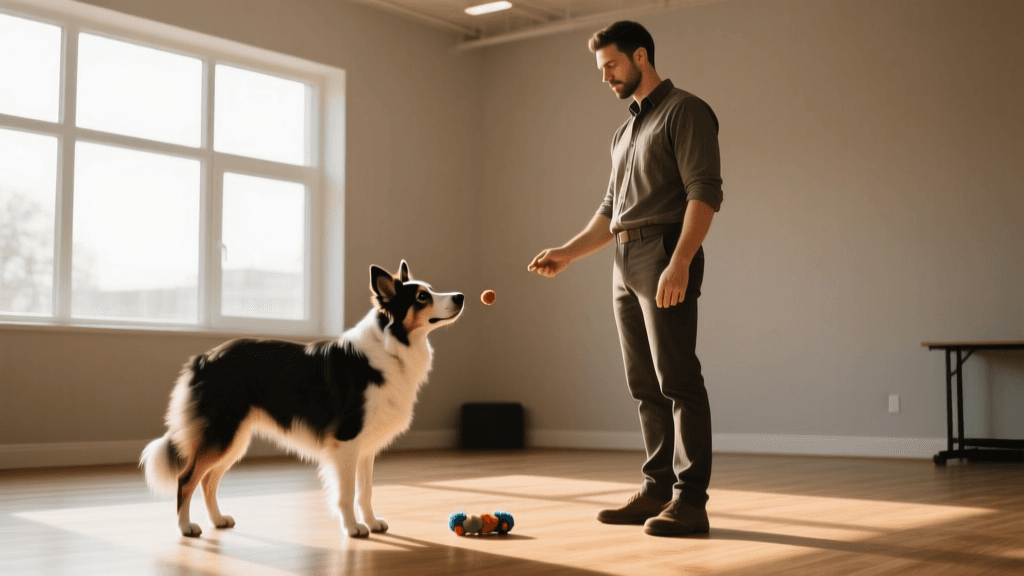
Dogs are not simply humans in fur suits; they are driven by centuries of selective breeding. A Border Collie's instinct to herd moving objects means your pacing during a phone call might trigger intense frustration, nipping, or anxiety. Conversely, breeds selected specifically for 'companionship' possess a genetic predisposition to mirror human sedentary behavior. For a remote worker, the ideal canine companion is one that possesses a strong 'settle instinct,' low vocalization triggers, and the emotional resilience to handle the quiet hum of a home office without demanding constant stimulation.
Key Behavioral Traits for Remote Work Companions
When evaluating puppy breeds for a work-from-home lifestyle in 2026, canine behaviorists recommend prioritizing three core psychological traits:
- The Settle Instinct: This is the innate ability of a dog to down-regulate their nervous system and relax when there is no active job to do. Breeds with high settle instincts do not require constant entertainment to feel fulfilled.
- Low Alert Barking: In an era of frequent video calls and virtual meetings, a dog that barks at every passing delivery driver or neighborhood squirrel can severely disrupt your professional life. Breeds with low territorial or alert instincts are paramount.
- Moderate to Low Exercise Needs: While all dogs need physical and mental enrichment, a remote worker needs a breed whose exercise requirements can be met with a brisk morning walk and an evening play session, rather than hours of intense running or agility work.
Top 5 Puppy Breeds for Remote Workers in 2026
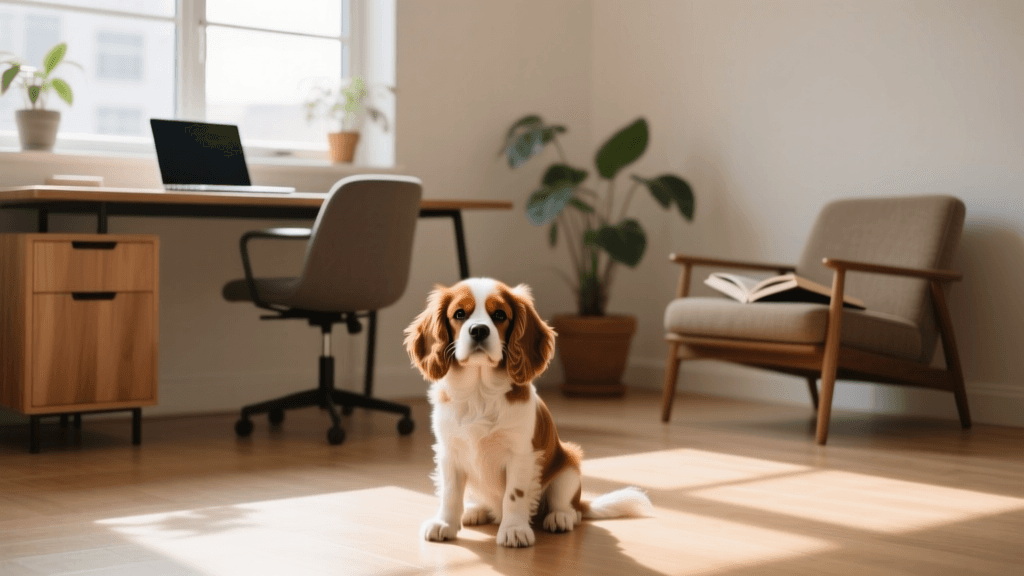
1. The Cavalier King Charles Spaniel (The Empathic Settler)
Bred for centuries to warm the laps of royalty, the Cavalier King Charles Spaniel is the quintessential home office companion. Psychologically, they are highly empathic and excel at reading human micro-expressions and cortisol levels. When you are stressed during a tight deadline, a Cavalier is more likely to offer quiet, physical pressure therapy (leaning against your leg) than to demand a game of fetch. In 2026, a well-bred Cavalier puppy from health-tested lineage typically costs between $2,800 and $3,800. Their low prey drive means they are rarely distracted by birds outside your window, keeping their focus gently anchored to you.
2. The Greyhound (The Couch Potato Sprinter)
It is a common misconception that Greyhounds require massive amounts of space and constant running. In reality, they are sprinters, not marathon runners. Their physiological makeup relies on fast-twitch muscle fibers, meaning a 20-minute burst of running in a secure area is often followed by 22 hours of deep sleeping. For a remote worker, a Greyhound (often available through specialized rescues for $300 to $500) acts as a silent, dignified rug in your office. They rarely bark, have minimal grooming needs, and possess a remarkably low reactivity threshold to household noises.
3. The Bichon Frise (The Cheerful but Quiet Observer)
Unlike terriers, which were bred to hunt and kill vermin (resulting in high alertness and frequent barking), the Bichon Frise was bred to be a charming companion on maritime voyages and in European courts. They are incredibly cheerful and bond deeply with their owners, but they lack the sharp, reactive edge of hunting breeds. Furthermore, their hypoallergenic, hair-like coat makes them an excellent choice for closed, climate-controlled home offices where dander can accumulate. Expect to invest around $2,500 to $3,500 for a Bichon puppy in 2026.
4. The Pug (The Shadow Companion)
Pugs are often described as 'multum in parvo' (a lot in a small package). Psychologically, they are shadow dogs—they want to be in the same room as you, observing your work, but they do not necessarily need to be physically on top of you. Their brachycephalic (flat-faced) anatomy naturally limits extreme physical exertion, enforcing a mandatory 'settle' state for much of the day. They are deeply humorous and affectionate, providing excellent mental health boosts during stressful workdays. A health-tested Pug puppy in 2026 averages $2,000 to $3,000.
5. The Whippet (The Gentle Lounger)
Similar to the Greyhound but in a more compact, apartment-friendly size, the Whippet is the ultimate silent observer. They are notoriously quiet dogs; in fact, finding a Whippet that barks frequently is incredibly rare. This makes them the absolute best breed for professionals who spend their days on open-mic conference calls. They are sensitive, gentle, and deeply attuned to the emotional atmosphere of the home. Whippet puppies generally range from $1,800 to $2,800 from reputable breeders.
Behavioral Comparison Chart
| Breed | Primary Instinct | Vocalization Level | Daily Exercise Need | 2026 Avg. Cost |
|---|---|---|---|---|
| Cavalier King Charles | Empathic Companionship | Low | 30-45 mins | $2,800 - $3,800 |
| Greyhound | Sprint & Rest | Very Low | 20-30 mins (sprint) | $300 - $500 (Rescue) |
| Bichon Frise | Cheerful Observation | Moderate | 45-60 mins | $2,500 - $3,500 |
| Pug | Shadow Companionship | Low-Moderate | 20-30 mins | $2,000 - $3,000 |
| Whippet | Gentle Lounging | Very Low | 30-45 mins | $1,800 - $2,800 |
Training Your Puppy for the Home Office Environment
Even the most genetically predisposed 'settler' breed requires intentional training to thrive in a home office. The most effective protocol for remote workers is 'Capturing Calmness.' This involves keeping a treat jar on your desk and silently tossing a high-value reward onto your puppy's bed whenever they voluntarily choose to lie down and relax without being prompted. Over time, the puppy's brain maps the act of settling to a positive neurological reward.
Additionally, leverage modern technology to your advantage. Many remote workers in 2026 utilize advanced AI-driven pet cameras that can distinguish between a dog pacing anxiously and a dog resting quietly. These devices can be programmed to automatically dispense a treat or play a soothing pre-recorded message from you when the AI detects prolonged, calm resting behavior, reinforcing the settle instinct even when you are deeply focused on a spreadsheet and cannot actively monitor them.
Avoiding the 'Velcro Dog' Trap
One of the most significant psychological risks for remote workers is inadvertently creating severe separation anxiety. When you work from home, it is tempting to allow your new puppy to follow you from the bedroom to the kitchen, to the office, and to the couch. However, according to the ASPCA's comprehensive guide on separation anxiety, dogs that never learn to self-soothe and spend time alone can develop severe panic disorders the moment you eventually have to leave the house for an in-person meeting or a doctor's appointment.
Veterinary behaviorists at VCA Animal Hospitals emphasize that independence training is just as crucial as obedience training. To prevent the 'Velcro Dog' syndrome, implement strict boundaries. Use baby gates to keep the puppy in an adjacent room where they can hear you but not see you for at least two hours a day. Provide them with long-lasting enrichment items, like frozen Kong toys or lick mats, during these independent periods. By teaching your puppy that being apart from you is safe, predictable, and rewarding, you ensure they remain a mentally balanced, stress-free companion in your home office for years to come.
Pro Tip for 2026: Schedule 'fake departures.' Put on your shoes, grab your keys, walk out the front door, and immediately return. This desensitizes your puppy to the environmental triggers that typically signal a long absence, keeping their cortisol levels stable throughout the workday.
hannah-wickes
All our authors care for dogs every day — read more of their work on the authors page.