Top Puzzle Toys for New Rescue Dog Decompression in 2026
Discover the best mental enrichment puzzle toys, including the LickiMat Soother and Nina Ottosson Dog Brick, to help your new rescue dog decompress in 2026.
The 3-3-3 Rule and the Power of Mental Enrichment
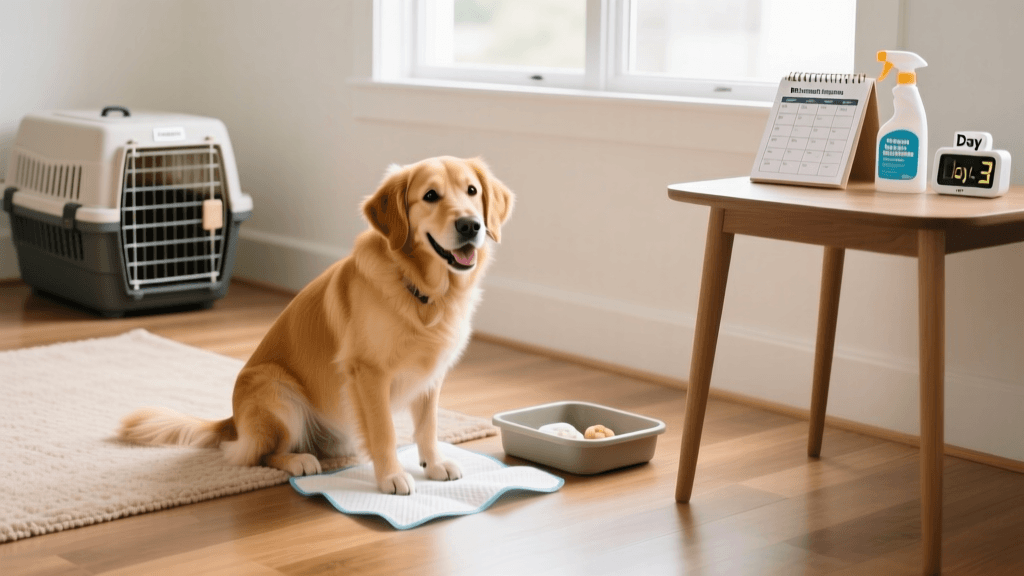
Bringing a newly adopted rescue dog into your home is an incredibly rewarding milestone, but the transition can be highly stressful for the animal. In 2026, modern canine behavioral science heavily emphasizes the '3-3-3 Rule' of adoption: three days to decompress, three weeks to learn your routine, and three months to truly feel at home. During those critical first 72 hours, your new dog is likely experiencing sensory overload, elevated cortisol levels, and profound uncertainty. This is where setting up a dedicated mental enrichment zone becomes vital.
According to the Humane Society of the United States, providing a quiet, safe space with engaging but low-stress activities is one of the most effective ways to help a newly adopted dog acclimate. Rather than relying solely on physical exercise—which can sometimes overstimulate an already anxious rescue—mental enrichment and puzzle games tap into a dog's natural foraging instincts, promoting a state of calm and building confidence from the inside out.
Why Licking and Sniffing Lower Cortisol
Before investing in a mountain of toys, it is important to understand the physiological mechanics of canine enrichment. The American Kennel Club highlights that mental stimulation is just as tiring for a dog as physical exercise, if not more so. Activities that involve sniffing and licking trigger the release of endorphins and dopamine in the canine brain. These neurochemicals act as natural stress relievers, actively lowering the dog's heart rate and reducing cortisol production.
When a rescue dog arrives in a new environment, their sympathetic nervous system is often in overdrive. By offering structured puzzle games that require licking and foraging, you manually engage their parasympathetic nervous system (the 'rest and digest' mode). This makes enrichment not just a fun pastime, but a critical behavioral tool for preventing separation anxiety, resource guarding, and destructive chewing during the vulnerable decompression phase.
The 2026 Decompression Zone Toolkit: Top 3 Puzzle Toys
To build an effective enrichment sanctuary for your new rescue, you need tools that are durable, intuitive, and tailored to different stress-relief mechanisms. Here are the top three puzzle toys recommended by veterinary behaviorists for new dog decompression in 2026.
1. LickiMat Soother (The Anxiety Reducer)
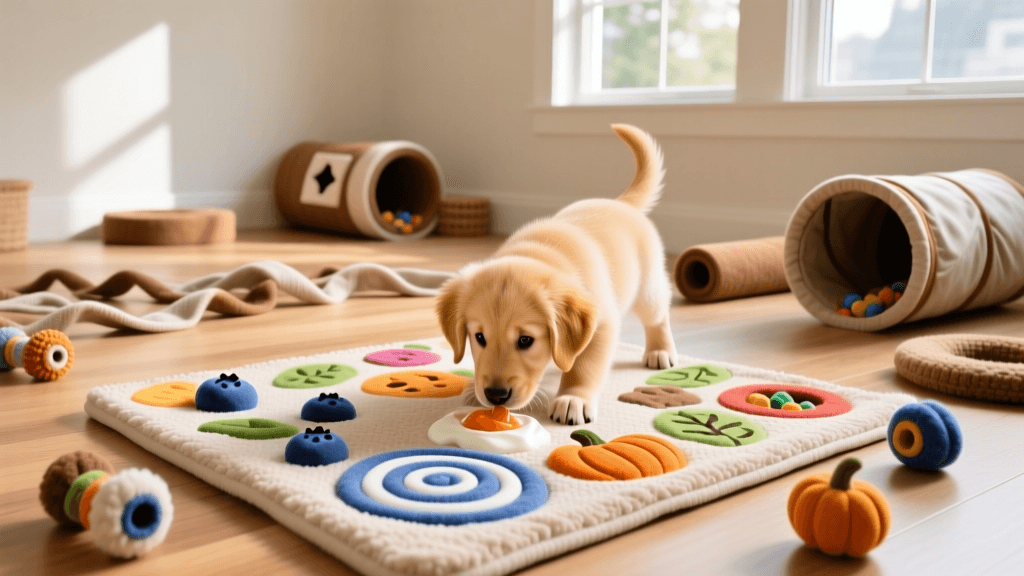
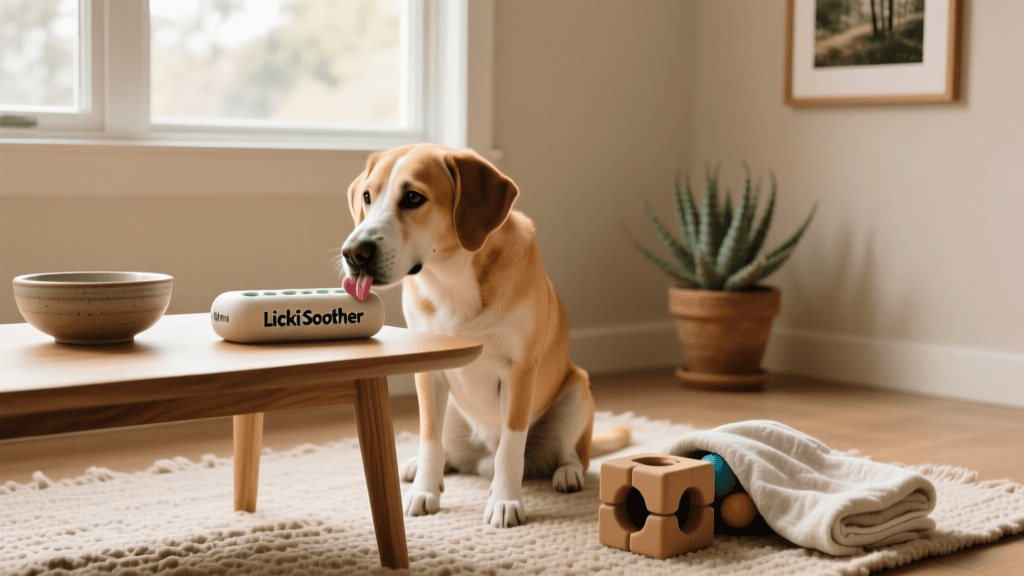
The LickiMat Soother remains the gold standard for licking-based enrichment. Priced between $12 and $16 in 2026, this flexible, food-grade rubber mat features raised nubs and grooves designed to hold soft spreads. The repetitive motion of licking is self-soothing for dogs, mimicking the grooming behaviors they exhibit when trying to calm themselves.
Pro-Tip for Rescues: Freeze the LickiMat! Freezing extends the activity time from five minutes to over twenty minutes, providing a prolonged period of endorphin release.
2026 Decompression Recipe: Mix plain, unsweetened canned pumpkin puree with a splash of lactose-free goat milk and a few mashed blueberries. Spread it thinly into the grooves and freeze overnight. The antioxidants in blueberries also help combat oxidative stress caused by anxiety.
2. Nina Ottosson Dog Brick (The Confidence Builder)
Retailing for roughly $24 to $29, the Nina Ottosson Dog Brick is an intermediate-level interactive treat puzzle. It measures approximately 12.5 x 9 inches and features three distinct challenges: flipping lids, sliding blocks, and removing bone-shaped pegs. For a newly adopted dog, this toy is invaluable for building problem-solving confidence without causing frustration.
How to Introduce It: During the first week, leave all the sliding compartments open and place high-value treats (like boiled chicken or freeze-dried liver) directly on top. Let the dog realize that interacting with the toy yields rewards. Over the next two weeks, gradually begin closing the lids and introducing the sliding blocks, always supervising to ensure they do not chew on the plastic components.
3. West Paw Toppl (The Modern Chew Classic)
While traditional rubber chew toys are great, the West Paw Toppl ($18 to $24) offers a superior enrichment experience. Made in the USA from infinitely recyclable Zogoflex rubber, the Toppl features inner ridges that trap treats and kibble. The genius of the Toppl in 2026 lies in its interlocking design: you can connect a small Toppl to a large Toppl to create a complex, trap-like puzzle that requires significant manipulation to extract the food.
Best Use Case: Fill the large Toppl with a mixture of plain Greek yogurt and mashed sweet potato, then plug the hole with a piece of carrot. This is perfect for crate training sessions, giving your rescue dog a positive association with their new sleeping space.
Step-by-Step: Setting Up Your Enrichment Sanctuary
Having the right toys is only half the battle; the environment in which you present them is equally crucial. Follow these steps to set up a decompression zone in your home:
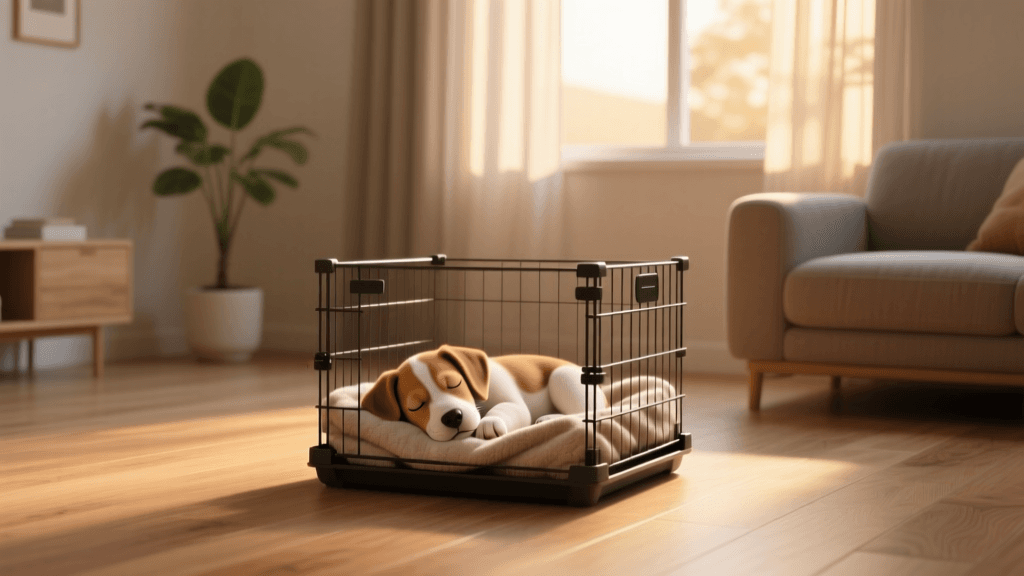
- Choose a Low-Traffic Area: Set up the dog's crate or a gated pen in a quiet corner of the living room or a spare bedroom. Avoid high-traffic hallways where sudden movements could trigger a startle response.
- Implement White Noise: Rescue dogs are often hyper-vigilant to new sounds. Place a white noise machine or a fan near the enrichment zone to muffle household noises and street traffic.
- Use Scent Anchors: Place an unwashed t-shirt that smells like you inside the crate alongside the puzzle toys. This helps the dog associate your scent with the calming effects of the enrichment activities.
- Rotate the Puzzles: Do not leave all puzzles in the crate at once. Offer the LickiMat in the morning, the Dog Brick in the afternoon, and the Toppl in the evening. Rotation prevents boredom and keeps the novelty high, which is essential for maintaining mental engagement.
Comparison Chart: Puzzle Toys for Rescue Decompression
| Toy Name | Primary Mechanism | Best For | Supervision Required? | Avg. 2026 Price |
|---|---|---|---|---|
| LickiMat Soother | Licking / Foraging | Acute anxiety, crate training, post-walk cool down | Yes (if chewing rubber) | $12 - $16 |
| Nina Ottosson Dog Brick | Sliding / Flipping | Building confidence, mental fatigue, bonding | Strictly Required | $24 - $29 |
| West Paw Toppl | Chewing / Extracting | Teething puppies, heavy chewers, meal replacement | Minimal (highly durable) | $18 - $24 |
Common Mistakes to Avoid in the First 30 Days
When implementing a mental enrichment routine for a new rescue dog, enthusiasm can sometimes lead to missteps. Avoid these common pitfalls to ensure a smooth transition:
1. Overstimulating the Dog: It is tempting to buy ten different puzzle toys and dump them in the dog's space. This can cause frustration and overstimulation. Stick to one or two toys at a time and let the dog process the experience.
2. Ignoring Calorie Intake: Puzzle toys often involve high-value treats and spreads. If you are using peanut butter, yogurt, or meat purees, you must reduce your dog's standard kibble portions accordingly to prevent rapid weight gain and gastrointestinal upset.
3. Leaving Destructible Puzzles Unsupervised: While hard rubber toys like the West Paw Toppl are generally safe for unsupervised crate time, plastic puzzles like the Dog Brick and rubber mats like the LickiMat can become choking hazards if a stressed dog decides to chew them to pieces. The ASPCA strongly advises supervising dogs with new toys until you are absolutely certain of their chewing style and stress thresholds.
4. Forcing Interaction: Some rescue dogs are so shut down during their first three days that they will not eat or play. If your dog ignores the LickiMat or the Dog Brick, do not force it. Simply remove the toy, offer a plain, high-value treat by hand, and try again in a few days. Decompression happens on the dog's timeline, not yours.
Conclusion
Adopting a rescue dog in 2026 comes with a wealth of behavioral knowledge that was simply unavailable a decade ago. By shifting your focus from purely physical exercise to targeted mental enrichment, you provide your new companion with the neurological tools they need to self-soothe, build confidence, and bond with you. The LickiMat Soother, Nina Ottosson Dog Brick, and West Paw Toppl are more than just toys; they are essential instruments for translating a stressed shelter dog into a relaxed, happy family member. Take the time to set up a proper decompression zone, respect the 3-3-3 rule, and watch your new best friend truly blossom.
marcus-aldridge
All our authors care for dogs every day — read more of their work on the authors page.