Canine OA Treatment 2026: Librela vs Galliprant Compared
Compare Librela and Galliprant for canine osteoarthritis in 2026. Discover efficacy, side effects, costs, and the best OA pain management plan for your dog.
The Evolution of Canine Osteoarthritis Treatment in 2026
Osteoarthritis (OA) is a progressive, degenerative joint disease that affects millions of dogs worldwide. According to the American Kennel Club, it is estimated that one in five adult dogs and up to 80% of senior dogs suffer from some form of OA. As we navigate the veterinary landscape in 2026, the paradigm of canine pain management has shifted dramatically. Gone are the days when traditional, non-selective nonsteroidal anti-inflammatory drugs (NSAIDs) were the only line of defense. Today, targeted therapies like Galliprant and Librela have revolutionized how veterinarians and pet parents approach canine OA treatment, offering superior safety profiles and enhanced quality of life for our aging companions.
Recognizing the Subtle Signs of Canine OA
Before diving into treatments, it is vital to recognize that dogs are masters at hiding pain. In the early stages of osteoarthritis, your dog may not limp overtly. Instead, look for subtle behavioral shifts: reluctance to jump into the car, lagging behind on walks, sleeping more than usual, licking at specific joints, or a general decrease in enthusiasm for play. Catching these signs early in 2026 allows for proactive intervention before severe cartilage degradation occurs.
Galliprant (Grapiprant): The Targeted NSAID Alternative
Approved by the FDA and widely adopted over the last few years, Galliprant (grapiprant tablets) remains a cornerstone of canine OA treatment in 2026. Manufactured by Elanco, Galliprant is not a traditional NSAID. Instead, it is a prostaglandin E2 (PGE2) EP4 receptor antagonist.
How Galliprant Works
In a dog's body, PGE2 is a key mediator of inflammation and pain associated with OA. By specifically targeting and blocking the EP4 receptor—the primary receptor responsible for mediating PGE2-induced inflammation and pain—Galliprant effectively stops the pain signal at its source. Because it does not inhibit the COX-1 and COX-2 enzymes like traditional NSAIDs (such as carprofen or meloxicam), Galliprant preserves the protective prostaglandins that maintain gastrointestinal mucosal integrity, renal blood flow, and platelet function.
Administration and Efficacy
Galliprant is administered as a once-daily oral tablet. According to the official Galliprant website, it is indicated for the control of pain and inflammation associated with osteoarthritis in dogs. Most pet owners report a noticeable improvement in their dog's mobility and willingness to exercise within the first two weeks of daily administration.
Librela (Bedinvetmab): The Monoclonal Antibody Breakthrough
If Galliprant represented a major step forward, Librela (bedinvetmab injection) by Zoetis has completely transformed the canine OA treatment landscape. As a fully caninized monoclonal antibody, Librela offers a completely different mechanism of action that bypasses the liver and kidneys entirely.
How Librela Works
Librela targets Nerve Growth Factor (NGF), a protein that plays a crucial role in the transmission of pain signals in dogs with osteoarthritis. In dogs with OA, NGF levels are elevated, leading to heightened pain sensitivity and joint degradation. By binding to and neutralizing NGF, Librela effectively turns down the volume on OA pain. The Librela official site notes that because it is a protein-based therapy, it is metabolized like natural antibodies, making it exceptionally safe for dogs with pre-existing renal or hepatic conditions.
Administration and Efficacy
Unlike daily pills, Librela is administered as a subcutaneous injection by a veterinarian once a month. This ensures 100% compliance, as there is no risk of a dog spitting out a pill or a pet owner forgetting a dose. Clinical trials and real-world data from 2026 show that peak efficacy is typically achieved after the second or third monthly injection, resulting in profound improvements in mobility, playfulness, and overall vitality.
Head-to-Head Comparison: Librela vs. Galliprant
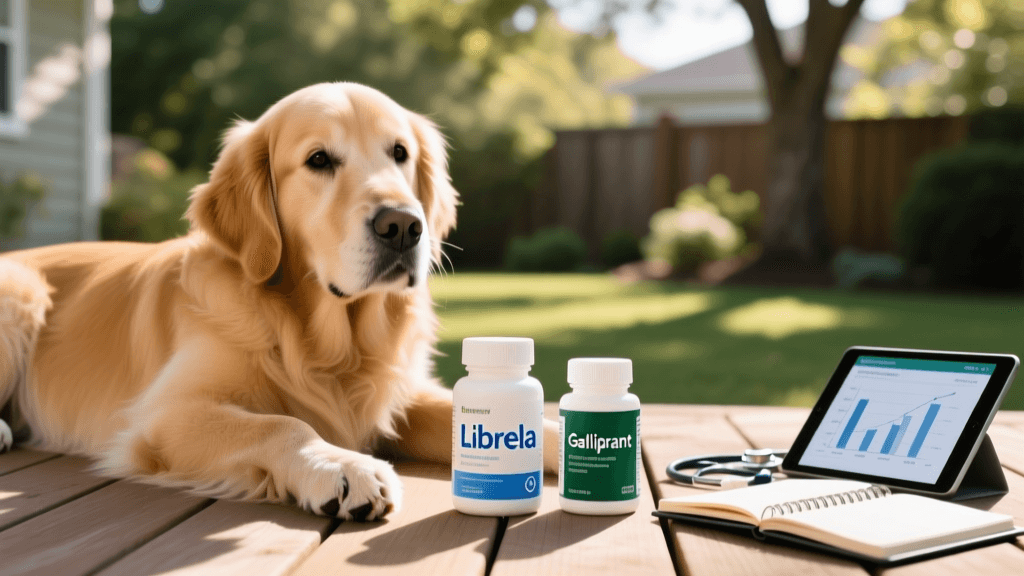
Choosing between these two modern marvels depends on the dog's specific health profile, the owner's lifestyle, and the dog's response to therapy. Below is a comprehensive comparison chart for 2026.
| Feature | Galliprant (Grapiprant) | Librela (Bedinvetmab) |
|---|---|---|
| Drug Class | EP4 Receptor Antagonist | Anti-NGF Monoclonal Antibody |
| Administration | Daily oral tablet | Monthly subcutaneous injection |
| Metabolism/Excretion | Hepatic (liver) / Fecal | Cellular degradation (like natural proteins) |
| Safety Profile | High; spares GI and kidneys | Exceptional; bypasses liver and kidneys |
| Onset of Action | Days to 2 weeks | 2 to 3 monthly injections for peak effect |
| Average Monthly Cost (2026) | $50 - $90 | $45 - $85 (plus vet visit fee) |
Cost Analysis and Pet Insurance Coverage in 2026
Financial considerations are always a factor in long-term chronic disease management. In 2026, the cost of Galliprant typically ranges from $50 to $90 per month, depending on the dog's weight and the pharmacy used. Librela, administered in the clinic, generally costs between $45 and $85 per monthly injection, which includes the veterinary office visit fee in some practices, though many clinics now offer nurse-visit discounts for established Librela patients.
Fortunately, the majority of comprehensive pet insurance providers in 2026 cover both Galliprant and Librela under their chronic illness and prescription medication benefits, provided the dog was not showing clinical signs of OA before the policy's effective date. For uninsured dogs, many veterinary clinics offer chronic care packages that bundle monthly Librela injections with bi-annual wellness exams at a discounted rate.
The Multimodal Approach: Beyond Medication
Veterinary experts universally agree that medication alone is not a silver bullet. The gold standard for canine OA treatment in 2026 is a multimodal approach that combines targeted pharmaceuticals with lifestyle and environmental modifications.
Weight Management
Excess body weight places exponential stress on compromised joints. Keeping your dog at a lean body condition score (BCS of 4 or 5 on a 9-point scale) is arguably the most effective non-pharmacological intervention for OA.
Joint Supplements and Nutrition
Diets rich in eicosapentaenoic acid (EPA) and docosahexaenoic acid (DHA) help modulate the inflammatory cascade. In 2026, veterinary therapeutic diets like Hill's Prescription Diet j/d and Royal Canin Mobility Support remain highly recommended. Additionally, supplements containing undenatured type II collagen (UC-II), green-lipped mussel extract, and high-quality glucosamine/chondroitin complexes provide synergistic cartilage support.
Physical Rehabilitation and Environmental Modifications
Canine physical rehabilitation has exploded in popularity. Underwater treadmills, therapeutic laser therapy (class IV cold laser), and targeted strengthening exercises help maintain muscle mass, which in turn stabilizes arthritic joints. Acupuncture is another modality that has gained significant clinical backing. Veterinary medical acupuncture can help stimulate local blood flow, release endogenous opioids, and modulate pain pathways. When combined with Librela or Galliprant, acupuncture provides a holistic safety net that addresses both the biochemical and neurological components of chronic pain.
At home, providing orthopedic memory foam beds, non-slip rugs on hardwood floors, and ramp access to vehicles or furniture can drastically reduce daily joint strain.
Frequently Asked Questions
Can I give my dog Librela and Galliprant at the same time?
In 2026, veterinary consensus generally advises against combining Librela and Galliprant unless explicitly directed by a board-certified veterinary pain specialist. While both have excellent safety profiles, combining an anti-NGF monoclonal antibody with an EP4 antagonist is usually unnecessary and lacks long-term safety data. Most veterinarians will trial one medication for 4 to 8 weeks before considering a switch or an adjunct therapy.
Are there any side effects to watch for?
While both medications are remarkably safe, mild gastrointestinal upset, lethargy, or localized injection site reactions (for Librela) can occasionally occur. Always monitor your dog closely when starting a new medication and report any anomalies to your veterinarian.
Conclusion
The landscape of canine OA treatment in 2026 offers unprecedented hope for dogs suffering from joint pain. Whether you opt for the daily, targeted relief of Galliprant or the monthly, systemic nerve-calming benefits of Librela, the most important step is consulting with your veterinarian to tailor a multimodal pain management plan. By combining modern medicine with proactive home care, you can ensure your dog's golden years are truly golden, filled with comfort, mobility, and joy.
priya-sutaria
All our authors care for dogs every day — read more of their work on the authors page.