Top Canine OA Treatments in 2026: Librela, Rehab, and Home Care
Discover the top 2026 canine osteoarthritis treatments. Learn how Librela, targeted NSAIDs, joint supplements, and home rehab can restore your dog's mobility.
The Evolution of Canine OA Treatment in 2026
Osteoarthritis (OA) is a progressive, degenerative joint disease that affects roughly 20% of adult dogs and over 80% of senior canines. As we navigate the veterinary landscape in 2026, the approach to managing canine OA has fundamentally shifted. We have moved away from reactive, single-modality pain management toward proactive, multimodal disease modification. The goal is no longer just to mask pain on bad days, but to alter the disease trajectory, preserve joint architecture, and maintain a high quality of life for our aging companions. Understanding the synergistic effects of biologic therapies, targeted pharmaceuticals, clinical nutrition, and environmental modifications is essential for every dog owner dealing with this pervasive condition.
Librela (Bedinvetmab): The Monoclonal Antibody Standard
By 2026, anti-NGF (Nerve Growth Factor) monoclonal antibodies have cemented their place as a cornerstone of canine OA management. Librela (bedinvetmab), administered as a once-monthly subcutaneous injection, targets the NGF protein that is responsible for transmitting pain signals from damaged joints to the brain. Unlike traditional systemic painkillers that must be metabolized by the liver or excreted by the kidneys, Librela works similarly to the body's own immune system, breaking down naturally over time. This makes it an exceptionally safe option for senior dogs with concurrent renal or hepatic compromises.
Long-term safety data reviewed in 2026 confirms that continuous use of Librela over several years does not degrade joint proprioception or accelerate joint destruction, a concern that historically plagued some chronic pain protocols. According to Zoetis Petcare, the maker of Librela, clinical trials and post-market surveillance demonstrate significant improvements in mobility, stair climbing, and overall activity levels within the first 30 to 60 days of treatment. In 2026, pet owners can expect to pay between $75 and $130 per monthly injection, depending on the dog's weight tier and regional veterinary pricing, making it a highly accessible option for long-term care.
Rethinking NSAIDs: Galliprant and Targeted Relief
While Librela has revolutionized baseline pain control, Non-Steroidal Anti-Inflammatory Drugs (NSAIDs) remain vital for managing acute flare-ups or breakthrough pain. However, the 2026 veterinary consensus heavily favors targeted NSAIDs over older, non-selective COX inhibitors. Galliprant (grapiprant) is an EP4 receptor antagonist that specifically blocks the prostaglandin E2 receptor responsible for OA pain and inflammation, while largely sparing the COX-1 and COX-2 pathways that protect the gastrointestinal lining and maintain renal blood flow.
This targeted approach significantly reduces the risk of gastrointestinal ulceration and kidney strain, which are common concerns with traditional NSAIDs like carprofen or meloxicam. The U.S. Food and Drug Administration (FDA) emphasizes that while all NSAIDs carry some risk, routine blood work and targeted therapies like Galliprant have vastly improved the safety profile for chronic use. Many veterinarians in 2026 now prescribe a daily monoclonal antibody alongside an as-needed EP4 antagonist for flare-ups, creating a highly effective, organ-sparing pain matrix.
Nutrition and Joint Supplements: What Actually Works?
The joint supplement market is heavily saturated, but evidence-based veterinary nutrition highlights a few key ingredients that genuinely alter the joint environment. In 2026, the focus is on ingredients that reduce synovial inflammation and provide the building blocks for cartilage repair. Omega-3 fatty acids (specifically EPA and DHA) remain the gold standard for their potent anti-inflammatory properties, while Undenatured Type II Collagen (UC-II) has gained massive traction for its ability to modulate the immune system's attack on joint cartilage.
Below is a comparison of the most effective, clinically validated joint supplements recommended by veterinary orthopedic specialists in 2026:
| Supplement Type | Primary Active Ingredient | Mechanism of Action | Recommended 2026 Daily Dosage (50lb Dog) |
|---|---|---|---|
| Marine Lipid Extracts | EPA / DHA (Omega-3s) | Competes with Omega-6 to reduce inflammatory prostaglandins | 1,000 - 1,500 mg combined EPA/DHA |
| Immune Modulators | UC-II (Undenatured Type II Collagen) | Oral tolerance; stops immune-mediated cartilage degradation | 40 mg (standardized) |
| Mollusk Extracts | Green Lipped Mussel (GLM) | Provides glycosaminoglycans (GAGs) and natural COX inhibitors | 1,000 - 2,000 mg |
| Cartilage Protectors | ASU (Avocado Soybean Unsaponifiables) | Inhibits cartilage breakdown and stimulates matrix synthesis | 300 mg |
When selecting a supplement, always look for products carrying the National Animal Supplement Council (NASC) seal, ensuring rigorous third-party testing for heavy metals and label accuracy.
Physical Rehabilitation and Environmental Modifications
Mobility is a use-it-or-lose-it proposition. According to the American College of Veterinary Surgeons (ACVS), physical rehabilitation is a critical component of multimodal OA therapy. In 2026, access to canine rehabilitation has expanded beyond specialty centers. Underwater treadmills provide buoyancy to unload painful joints while the water's resistance builds atrophied muscle. Class IV therapeutic laser treatments are now widely available to stimulate cellular repair and reduce localized synovial inflammation.
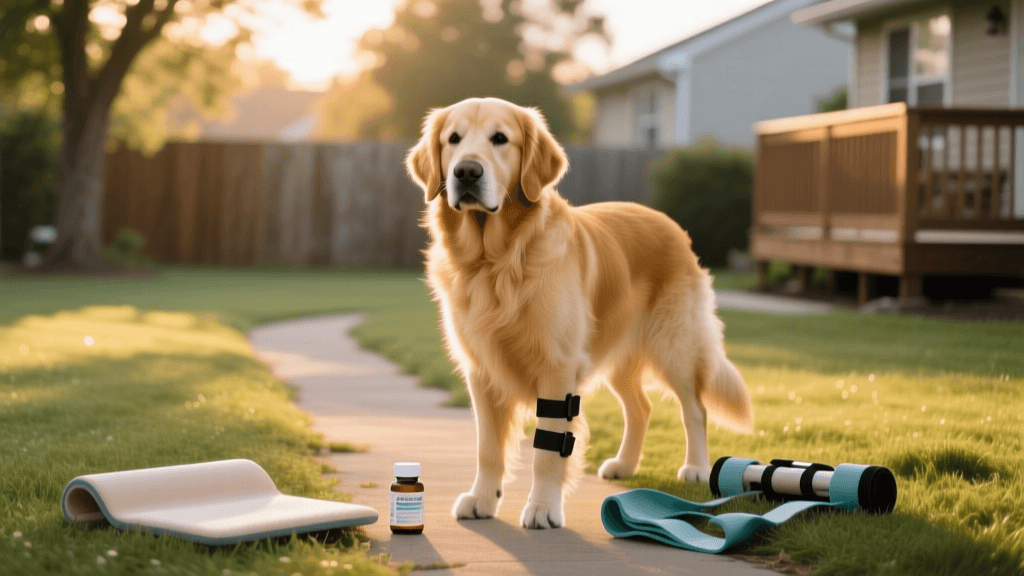
At home, environmental modifications are non-negotiable. Hardwood and tile floors are the enemy of the arthritic dog. Covering high-traffic areas with interlocking foam mats or non-slip yoga rugs provides the traction necessary for confident movement. Furthermore, investing in a high-quality orthopedic bed with memory foam or supportive bolsters prevents joint compression during sleep. Ramps should be utilized for all vehicle entries and exits, and low-profile steps should be placed next to elevated furniture to eliminate the concussive force of jumping.
The Non-Negotiable: Weight Management
No medication, supplement, or surgical intervention can fully overcome the mechanical disadvantage of excess body weight. Adipose tissue is not merely inactive storage; it is a highly active endocrine organ that secretes pro-inflammatory cytokines, directly worsening joint pain and systemic inflammation. In 2026, veterinary professionals utilize the 9-point Body Condition Score (BCS) system, aiming for an ideal score of 4/9. At this score, the ribs are easily palpable without excess fat covering, and a distinct abdominal tuck is visible.
If your dog is overweight, a structured weight loss program utilizing a prescription metabolic diet is often required. These diets are formulated to maintain lean muscle mass while promoting fat loss, fortified with high levels of L-carnitine and joint-supporting nutrients. Even a 6% to 8% reduction in total body weight can result in a clinically significant improvement in lameness and comfort levels, often reducing the required dosage of pharmaceutical pain relievers.
Building Your 2026 OA Action Plan
Managing canine osteoarthritis requires a dynamic, multimodal strategy tailored to your dog's specific stage of disease and lifestyle needs. By combining the nerve-targeting relief of Librela, the acute inflammation control of modern NSAIDs, evidence-based clinical nutrition, and rigorous home modifications, you can rewrite the narrative of your dog's senior years. Consult with your veterinarian to establish a baseline mobility assessment and craft a comprehensive 2026 OA action plan that keeps your best friend moving comfortably for years to come.
robin-maitland
All our authors care for dogs every day — read more of their work on the authors page.