Look At That Protocol for Reactive Dogs: 2026 Training Guide
Master the Look At That (LAT) protocol to manage leash reactivity in dogs. Our 2026 guide covers threshold metrics, gear, and step-by-step conditioning.
Understanding Leash Reactivity in 2026
Leash reactivity remains one of the most pervasive behavioral challenges for dog owners, but the methodologies we use to address it have evolved significantly. As of 2026, the veterinary and professional dog training communities have reached a unified consensus: force-free, desensitization-based protocols are not just kinder, they are neurologically superior for long-term behavioral modification. According to the American Veterinary Society of Animal Behavior (AVSAB), punishment-based training exacerbates fear and anxiety, often suppressing warning signs without addressing the underlying emotional response. Instead, modern behaviorists advocate for counter-conditioning and desensitization techniques that rewire the canine brain's emotional response to triggers.
Reactivity is fundamentally an emotional response, not a disobedience issue. When a dog lunges, barks, or freezes at the sight of another dog, a person, or a moving vehicle, their amygdala has initiated a fight-or-flight response. The goal of training is not to force compliance through intimidation, but to change the dog's underlying emotional state from 'threat detected' to 'predictor of good things.' This is where the 'Look At That' (LAT) protocol shines.
The Science Behind the 'Look At That' (LAT) Protocol
Developed by certified dog behavior consultant Leslie McDevitt in her groundbreaking book Control Unleashed, the LAT protocol is a sophisticated blend of classical and operant conditioning. In classical conditioning, we pair a neutral or scary stimulus (the trigger) with a high-value reward (food or play) to change the emotional response. In operant conditioning, we reward a specific behavior (looking at the trigger and then looking back at the handler).
By combining these, LAT teaches the dog that the presence of a trigger is simply a cue to check in with their handler for a reward. Recent 2026 behavioral studies on canine neuroplasticity confirm that when a dog voluntarily disengages from a trigger to look at their handler, they are actively engaging their prefrontal cortex, which helps down-regulate the amygdala's panic response. This cognitive shift is the cornerstone of modern Fear Free training practices.
Essential Gear for Reactive Dog Training in 2026
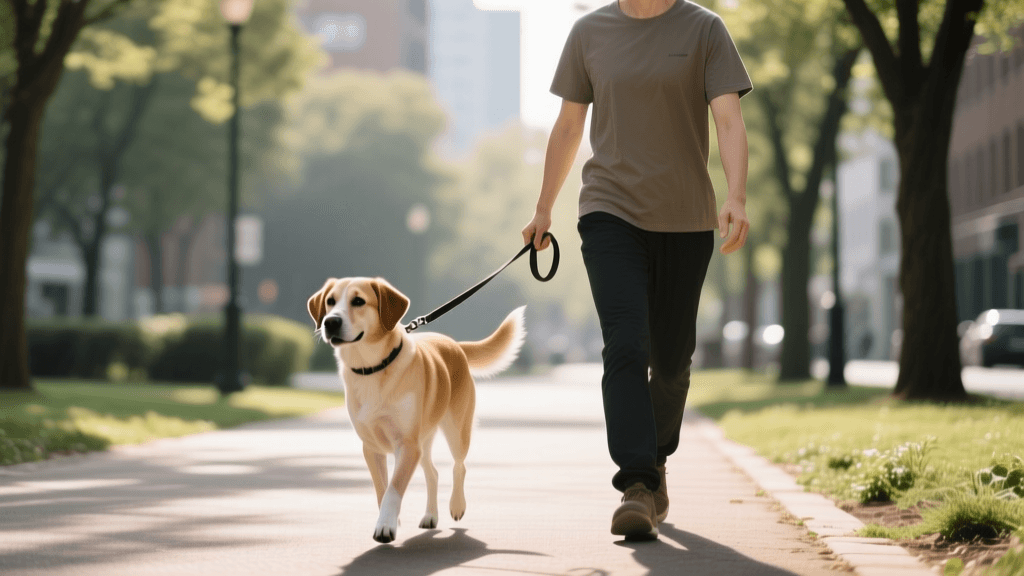
Success with the LAT protocol requires the right equipment to ensure safety and clear communication. The gear landscape in 2026 offers excellent, ergonomic options designed specifically for reactive dogs.
- Dual-Clip Harness: A well-fitted harness with both front and back leash attachment points (such as the 2026 updated Perfect Fit or Rabbitgoo No-Pull models) is crucial. The front clip provides gentle steering if the dog lunges, while the back clip is used for relaxed walking.
- 15-Foot Biothane Long Line: Standard 6-foot leashes restrict a dog's ability to move away from triggers, increasing frustration. A 15-foot biothane long line gives the dog the autonomy to increase their distance if they feel overwhelmed, while remaining waterproof and easy to clean.
- Wide-Mouth Treat Pouch: Speed is critical in marking behavior. A treat pouch with a wide, open top (like the Frosty Boy or Doggie Style tactical pouch) allows for rapid treat delivery without fumbling with zippers or magnets.
- High-Value Reinforcers: Dry kibble will not override an adrenaline spike. You need 'A-list' treats: boiled chicken breast, freeze-dried beef liver, or low-sodium string cheese, cut into pea-sized pieces.
Step-by-Step: Implementing the LAT Game
The LAT game is deceptively simple but requires precise timing and environmental management. Here is the step-by-step breakdown for implementing the protocol.
Step 1: Establish Your Sub-Threshold Baseline
Before you begin, you must find your dog's 'sub-threshold' distance. This is the distance at which your dog notices the trigger but does not react with barking, lunging, or extreme stress signals (whale eye, lip licking, panting). If your dog reacts to other dogs at 30 feet, your starting distance might be 60 or 80 feet. According to AKC expert trainers, starting under threshold is the single most important factor in reactivity rehabilitation.
Step 2: The Mark (The 'Click' or 'Yes')
When your dog looks at the trigger, immediately use a marker word (a crisp 'Yes!') or a mechanical clicker. The marker tells the dog, 'That exact thing you just did earned you a reward.' Do not wait for the dog to look back at you to mark; mark the exact moment they look at the trigger.
Step 3: The Reward and Disengage
After marking, deliver the treat. Ideally, deliver the treat in a position that encourages the dog to turn their head away from the trigger and toward you. Once the dog eats the treat, they will naturally disengage and look back at you. This voluntary disengagement is the ultimate goal.
Step 4: Repetition and Gradual Proximity
Repeat this process. Dog looks at trigger -> Mark -> Reward -> Dog disengages. Over multiple sessions, as the dog's emotional response shifts, you can decrease the distance to the trigger by a few feet, provided the dog remains under threshold.
Threshold Management and Action Plan Chart
Managing your dog's threshold is a dynamic process. Use the following 2026 updated metric chart to assess your dog's state and determine your next action during a training session.
| Distance to Trigger | Dog's Body Language | Latency to Disengage | Action Plan |
|---|---|---|---|
| Far (Sub-Threshold) | Relaxed ears, soft eyes, loose wag, willing to eat treats gently. | Less than 2 seconds after marker. | Continue LAT protocol. Praise heavily. Slowly decrease distance in future sessions. |
| Mid (Approaching Threshold) | Stiff posture, closed mouth, ears pinned forward, taking treats harder. | 3 to 5 seconds; requires multiple marks. | Hold distance. Increase treat value. Create more space laterally. Do not push closer. |
| Close (At Threshold) | Whale eye, lip licking, yawning, trembling, refusing treats. | Does not disengage; fixated. | Emergency U-turn. Increase distance immediately. Session is over; dog needs decompression. |
| Too Close (Over Threshold) | Barking, lunging, snapping, piloerection (raised hackles). | N/A (Amygdala hijack). | Do not train. Safely remove dog from situation. Re-evaluate management and starting distance. |
A 4-Week LAT Progression Plan
Consistency is vital. Here is a structured 4-week plan to build your dog's confidence and emotional regulation.
- Week 1: The Setup Phase. Work exclusively in controlled environments. Use a 'stooge' dog (a calm dog owned by a friend) at a massive distance (e.g., across a large park). Focus purely on the mechanics of marking and rewarding. Goal: 50 successful LAT reps at a sub-threshold distance.
- Week 2: Adding Environmental Context. Move to a slightly more distracting environment, but keep the trigger distance the same. Introduce mild environmental sounds. Goal: Dog can disengage from the trigger even when minor distractions (like a distant bicycle) are present.
- Week 3: Decreasing Distance. If the dog is consistently disengaging in under 2 seconds, decrease the distance to the trigger by 10%. Watch body language closely. If stress signals appear, immediately increase distance back to Week 2 parameters.
- Week 4: Generalization and Spontaneous LAT. Begin to notice when your dog offers a 'spontaneous LAT'—meaning they see a trigger and voluntarily look at you without you prompting or marking first. Reward these spontaneous check-ins with a 'jackpot' of 5-10 treats to heavily reinforce the dog's independent choice to disengage.
Troubleshooting Common LAT Mistakes
Even experienced handlers make errors when implementing the LAT protocol. Here are the most common pitfalls in 2026 and how to fix them:
Mistake 1: Luring Instead of Marking
Many handlers make the mistake of waving a treat in front of the dog's face to distract them from the trigger. This is luring, not LAT. Luring prevents the dog from processing the trigger and learning that the trigger predicts good things. You must let the dog look, mark the look, and then deliver the treat.
Mistake 2: Pushing Over Threshold
Impatience is the enemy of counter-conditioning. If your dog had a great session at 50 feet, do not drop the distance to 20 feet the next day. Progress in reactivity training is measured in inches and weeks, not miles and days. If the dog goes over threshold, you have moved too fast.
Mistake 3: Using Low-Value Treats
If your dog is sniffing the ground or ignoring your rewards, your treat value is too low for the environment. In high-distraction settings, you must compete with the environment. Upgrade to real meat or specialized commercial high-value pastes.
When to Seek Professional Help
While the LAT protocol is highly effective for mild to moderate reactivity, severe cases involving aggression, bite history, or extreme panic require professional intervention. If your dog is injuring themselves trying to escape, or if you feel unsafe handling them, consult a certified veterinary behaviorist or a Fear Free certified professional trainer. In 2026, many veterinary clinics offer integrated behavioral medicine, combining pharmacological support (like SSRIs or situational anti-anxiety medications) with behavioral modification to lower the dog's baseline anxiety, making protocols like LAT significantly more effective.
Reactivity is not a reflection of your dog's character or your worth as an owner. It is a neurological response that, with patience, precise management, and the Look At That protocol, can be successfully rewired for a calmer, happier life together.
hannah-wickes
All our authors care for dogs every day — read more of their work on the authors page.