Leash Reactivity Versus Aggression: Expert Behavior Guide
Discover the behavioral differences between leash reactivity and true aggression. Expert analysis on thresholds, triggers, and desensitization protocols.
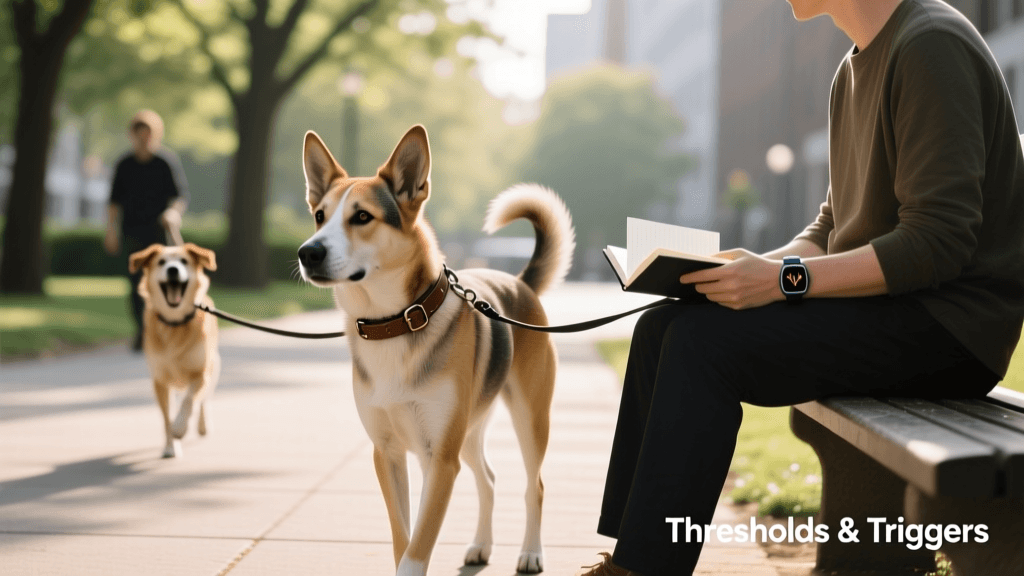
The Misunderstood Epidemic of Leash Reactivity
As a canine behaviorist, one of the most common and distressing misconceptions I encounter in clinical practice is the conflation of leash reactivity with true aggression. When a dog lunges, barks, or snaps at the end of a leash, the immediate human assumption is often that the dog is inherently 'vicious' or 'mean.' However, from an ethological and behavioral analysis perspective, leash reactivity is rarely rooted in a desire to cause harm. Instead, it is typically a manifestation of barrier frustration, fear, or a maladaptive stress response to feeling trapped. Understanding the profound difference between a reactive dog and an aggressive dog is the first critical step toward effective behavioral modification and improving the human-canine bond.
According to the American Kennel Club (AKC), reactivity is fundamentally an overreaction to specific stimuli—such as other dogs, strangers, or bicycles—often exacerbated by the physical restriction of a leash. True aggression, conversely, involves a deliberate intent to increase distance through the threat or infliction of harm, regardless of whether a leash is present. By analyzing the neurobiology, biomechanics, and environmental triggers of your dog's behavior, we can move away from punitive measures and toward evidence-based desensitization protocols.
Neurobiology of the Threshold: Amygdala Hijacking
To effectively modify behavior, we must first understand the canine brain under stress. When a dog spots a trigger (e.g., an unfamiliar dog approaching), the visual information is processed by the amygdala, the brain's emotional processing center. If the dog perceives a threat or experiences intense frustration, the amygdala triggers the hypothalamic-pituitary-adrenal (HPA) axis, flooding the bloodstream with cortisol and adrenaline. This is commonly referred to as 'amygdala hijacking.'
Once a dog crosses their stress threshold—the exact distance or intensity at which they can no longer process rational thought—learning becomes neurologically impossible. The prefrontal cortex, responsible for operant conditioning and decision-making, essentially goes offline. Therefore, expert behavior analysis dictates that all counter-conditioning and desensitization must occur sub-threshold. If your dog is barking and lunging, they are over threshold, and no amount of treat-bribing or verbal correction will forge new neural pathways. You must increase the distance from the trigger immediately to allow the parasympathetic nervous system to down-regulate.
Behavioral Matrix: Reactivity vs. True Aggression
Distinguishing between reactivity and aggression requires careful observation of the dog's motivation, body language, and recovery time. The following data table outlines the primary behavioral metrics used by veterinary behaviorists to differentiate the two states.
| Behavioral Metric | Leash Reactivity (Frustration/Fear) | True Aggression (Offensive/Defensive) |
|---|---|---|
| Primary Motivation | Barrier frustration, fear, or desire to approach/play | Intent to cause harm or forcefully increase distance |
| Off-Leash Behavior | Often friendly, submissive, or avoids interaction entirely | Remains confrontational, stalks, or attacks off-leash |
| Body Language Precursors | Whale eye, lip licking, yawning, leaning away, whining | Hard staring, stiff posture, raised hackles, deep growling |
| Bite Inhibition | High; snaps at the air or leash, rarely makes contact | Low; intends to puncture, tear, or crush |
| Recovery Time | Rapid; calms down quickly once the trigger is removed | Prolonged; remains hyper-vigilant and aroused for hours |
As noted by Fear Free Pets, recognizing the subtle precursors of fear and frustration—such as 'whale eye' (showing the whites of the eyes) or repetitive lip licking—allows handlers to intervene before the dog crosses their threshold and resorts to explosive reactivity.
Biomechanics and Equipment: Setting the Stage for Success
Behavioral modification is not just about psychology; it is deeply intertwined with physical comfort and biomechanics. The equipment you use can either mitigate your dog's stress or inadvertently amplify it. Traditional chest-restricting harnesses or slip leads apply pressure to the trachea or restrict the natural extension of the shoulder joints. When a dog's forward momentum is physically choked or restricted, their frustration levels spike, directly correlating to an increase in reactive outbursts.
Recommended Gear Specifications for Reactive Dogs
- Y-Front Harness: A well-fitted Y-front harness, such as the Ruffwear Front Range Harness (approx. $39.95), allows for full scapular rotation and places zero pressure on the trachea. The dual-clip feature (front and back) provides steering control without relying on pain or choking.
- Biothane Long Line: Standard 6-foot nylon leashes do not provide enough space for a dog to process triggers sub-threshold. A 15-foot to 20-foot Biothane long line (e.g., from High Tail Hikes, approx. $45-$60) offers drag-free durability, allows for safe decompression, and gives the dog the illusion of freedom while maintaining handler safety.
- High-Value Reinforcers: Dry kibble is insufficient for counter-conditioning. You need biologically appropriate, high-odor treats to compete with environmental triggers. Stella & Chewy's Freeze-Dried Raw Beef Liver (approx. $15 for 8oz) broken into pea-sized (2-gram) pieces provides the necessary dopamine spike to rewire the brain's emotional response.
The Engage-Disengage Protocol: A Step-by-Step Guide
Developed from the foundational concepts of classical and operant conditioning, the 'Engage-Disengage' game is a cornerstone protocol for treating leash reactivity. The goal is to change the dog's emotional response from 'Trigger = Panic/Frustration' to 'Trigger = High-Value Reward.' This protocol requires a clicker or a consistent marker word (like 'Yes!'), a 15-foot line, and a controlled environment.
Phase 1: Classical Conditioning (Engage)
- Find the Sub-Threshold Distance: Position yourself 30 to 50 feet away from a predictable trigger (e.g., a park bench where dogs walk by). Use a laser rangefinder if you struggle to estimate distances accurately.
- The Mark: The exact millisecond your dog notices the trigger (ears prick, head turns) but before they bark or lunge, mark the behavior with your clicker or marker word.
- The Reward: Deliver the freeze-dried liver treat within 1 to 2 seconds of the mark. The treat must be delivered away from the trigger, encouraging the dog to disengage and orient back to you.
- Repetition: Repeat this 10 to 15 times per session. Keep sessions under 15 minutes to prevent cognitive fatigue and cortisol buildup.
Phase 2: Operant Conditioning (Disengage)
Once your dog reliably looks at the trigger and immediately whips their head back to you in anticipation of a treat, you have successfully shifted from classical to operant conditioning. The dog is now making a conscious choice to disengage from the trigger to earn a reward. At this stage, you can begin to decrease the distance to the trigger by 3 to 5 feet per week, provided the dog remains sub-threshold.
Expert Insight: Never punish a reactive outburst. Punishing a dog for barking or lunging suppresses the warning signs without changing the underlying emotional state. As the ASPCA warns, suppressing growling or lunging through aversive tools (like prong or shock collars) often results in a dog that bites without warning, significantly increasing the danger to the public and the owner.
Managing the Environment and Setting Realistic Timelines
Behavioral modification is a marathon, not a sprint. Rewiring years of ingrained neural pathways takes time, consistency, and meticulous environmental management. During the training period, it is vital to prevent your dog from 'rehearsing' the reactive behavior. Every time your dog practices lunging at the end of the leash, the neural pathway associated with that behavior is reinforced, setting your training back by weeks.
Implement strict management strategies: walk your dog during off-peak hours (early morning or late evening), use visual barriers like parked cars or hedges to block sudden line-of-sight triggers, and teach an emergency 'U-turn' cue using a high-value toy or treat magnet. If your dog's reactivity includes severe aggression, resource guarding, or a history of biting, it is imperative to seek the guidance of a board-certified veterinary behaviorist (DACVB) or a certified applied animal behaviorist (CAAB) rather than relying solely on general obedience trainers.
Conclusion
Leash reactivity is a complex behavioral issue rooted in neurobiology, biomechanics, and emotional regulation. By accurately distinguishing between barrier frustration and true aggression, equipping your dog with biomechanically sound gear, and rigorously applying sub-threshold desensitization protocols like Engage-Disengage, you can fundamentally alter your dog's emotional response to the world. Patience, precise timing, and a deep empathy for your dog's stress thresholds are the ultimate tools in transforming a chaotic walk into a harmonious shared experience.
anouk-beaumont
All our authors care for dogs every day — read more of their work on the authors page.